

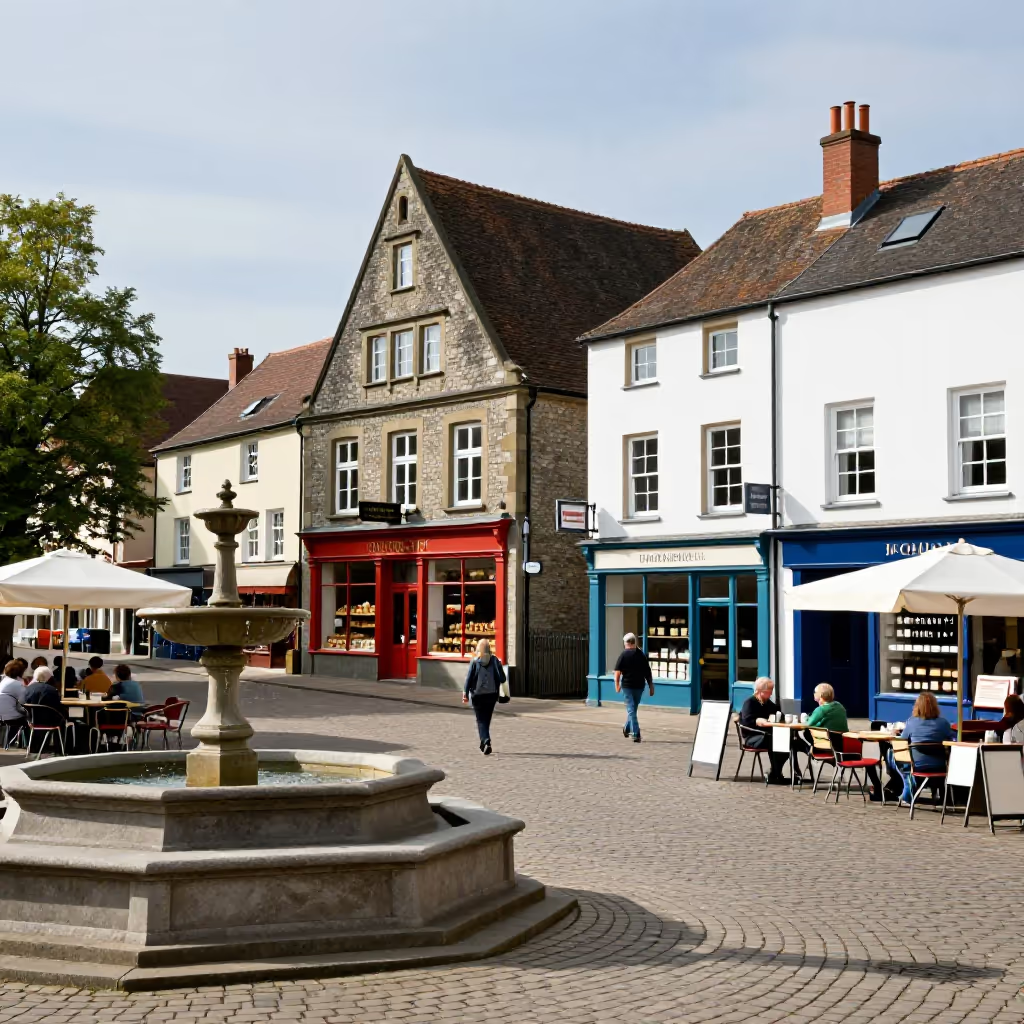
The central area of a town, village, or municipality, where shops, the market square, or important buildings are often located.
example
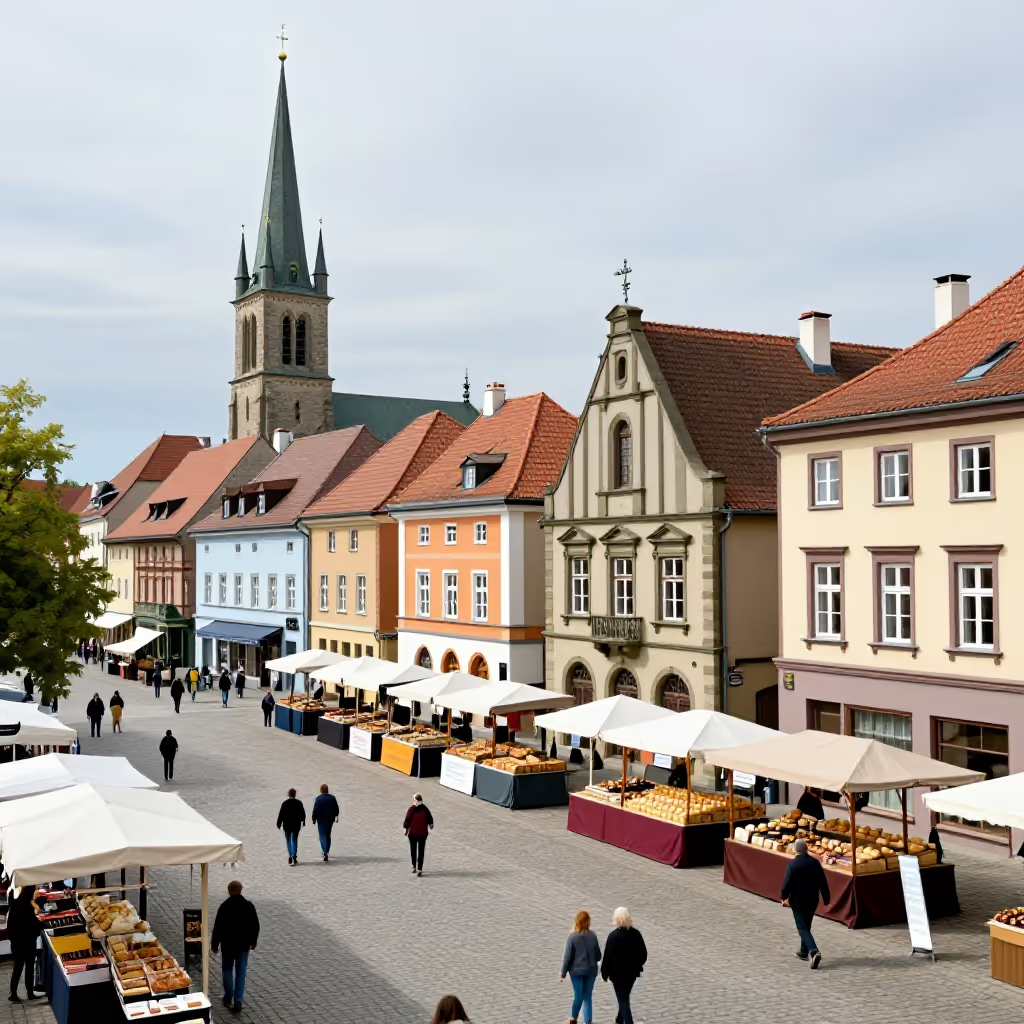
In der Ortsmitte findet jeden Samstag ein Wochenmarkt statt.
A weekly market takes place in the town center every Saturday.
Usage tips
Compound structure
This word is a clear compound made up of 'der Ort' (place / locality) + linking '-s-' + 'die Mitte' (middle / center). So it literally means 'the center of the place.'
EXAMPLE
Das alte Rathaus steht direkt in der Ortsmitte.
The old town hall stands right in the town center.
Correct preposition
Pay attention to the case with the preposition 'in': 'in der Ortsmitte' (dative) describes a location, while 'in die Ortsmitte' (accusative) expresses movement toward it.
EXAMPLE
Wir treffen uns in der Ortsmitte vor der Kirche.
We'll meet in the town center in front of the church.
Usage context
The word 'Ortsmitte' is typically used for the center of villages and smaller towns. It often conveys a cozier, smaller-scale atmosphere.
EXAMPLE
In der kleinen Ortsmitte gibt es nur einen Bäcker und einen kleinen Laden.
In the small town center, there is only a bakery and a small shop.
Compare with
near_synonym · confusable
Ortsmitte vs Zentrum
center
'das Zentrum' and 'die Ortsmitte' can both refer to the central area of a place. 'Zentrum' is more general and is used very often for cities, especially when referring to the city center or a busy area. 'Ortsmitte' fits well for villages, municipalities, or smaller towns and refers to the area around the market square, shops, or important buildings. Learners may confuse the words because both describe a center. As a simple guide: for larger cities, people often say 'Zentrum'; for smaller places, 'Ortsmitte' sounds more natural.
Ortsmitte
Vor dem Wochenende kaufen wir in der Ortsmitte noch Brot und Gemüse.
Before the weekend, we buy bread and vegetables in the town center.
Zentrum
Am Abend ist das Zentrum der Stadt voller Menschen und Musik.
In the evening, the city center is full of people and music.