

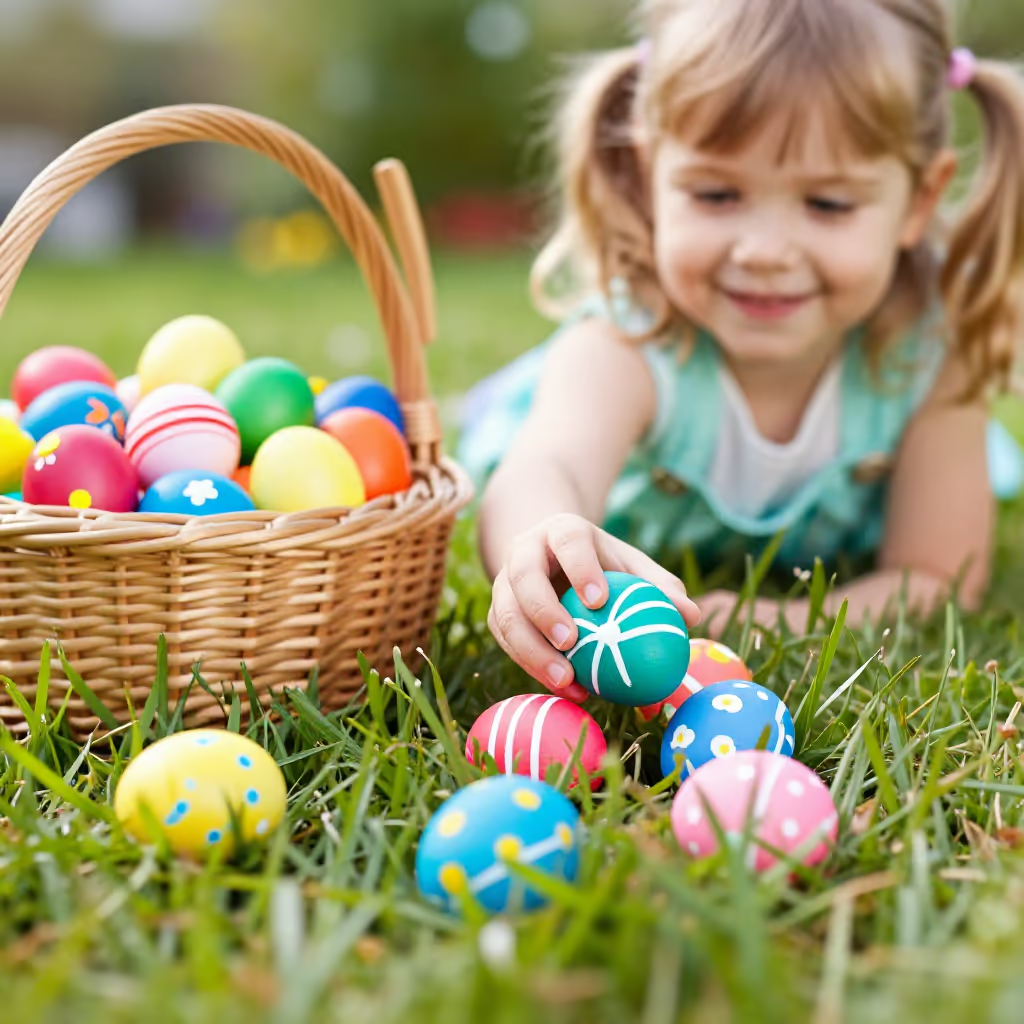
A colorfully painted or decorated egg that is traditionally given as a gift or hidden at Easter. It can be a real hen's egg or a replica made of chocolate, sugar, or plastic.
example
Die Kinder liefen am Ostersonntag aufgeregt durch den Garten, um die versteckten Ostereier zu suchen.
On Easter Sunday, the children ran excitedly through the garden looking for the hidden Easter eggs.

Usage tips
Word composition
'Osterei' (Easter egg) is a simple compound of 'Ostern' (Easter) and 'Ei' (egg). The '-er-' is a linking element that connects the two words. Literally, then, it simply means 'egg for Easter'.
EXAMPLE
Jedes Kind bekam ein großes Schokoladen-Osterei.
Each child got a large chocolate Easter egg.
Typical verbs
In connection with the Easter tradition, certain verbs are often used: children 'suchen' (look for) Easter eggs that were previously 'versteckt' (hidden). Before the holiday, the eggs are 'gefärbt' (dyed) or 'bemalt' (painted).
EXAMPLE
Wir haben gestern mit den Kindern Ostereier für das Fest bemalt.
Yesterday we painted Easter eggs with the children for the holiday.
Modern meaning
The second meaning is a direct adoption from English ('Easter egg'). It is used exclusively in the context of media such as software, video games, or films for a hidden surprise.
EXAMPLE
Der Entwickler hat ein lustiges Osterei im Programmcode hinterlassen.
The developer left a funny Easter egg in the program code.
Cultural context
Looking for Easter eggs is a central custom of the Easter holiday in Germany, especially for children. According to tradition, the eggs are brought and hidden by the 'Osterhase' (Easter Bunny).
EXAMPLE
Mein Neffe glaubt fest daran, dass der Osterhase die Ostereier bringt.
My nephew firmly believes that the Easter Bunny brings the Easter eggs.
Compare with
near_synonym · confusable
Osterei vs Ei
egg
'das Ei' and 'das Osterei' can both refer to an egg. 'Ei' is the general word, for example for a chicken egg to eat or for an egg from an animal. 'Osterei' is more specific: it is a painted, decorated, or chocolate egg for Easter. Learners may confuse the words because an Easter egg can often also be a real egg. But not every egg is an Easter egg. When talking about breakfast, cooking, or animals, you usually say 'Ei'. When talking about Easter, egg hunts, or chocolate, 'Osterei' fits.
Osterei
Die Kinder suchen im Garten bunte Ostereier.
The children are looking for colorful Easter eggs in the garden.
Ei
Zum Frühstück kocht Mehmet ein Ei und isst dazu Brot.
For breakfast, Mehmet boils an egg and eats bread with it.