

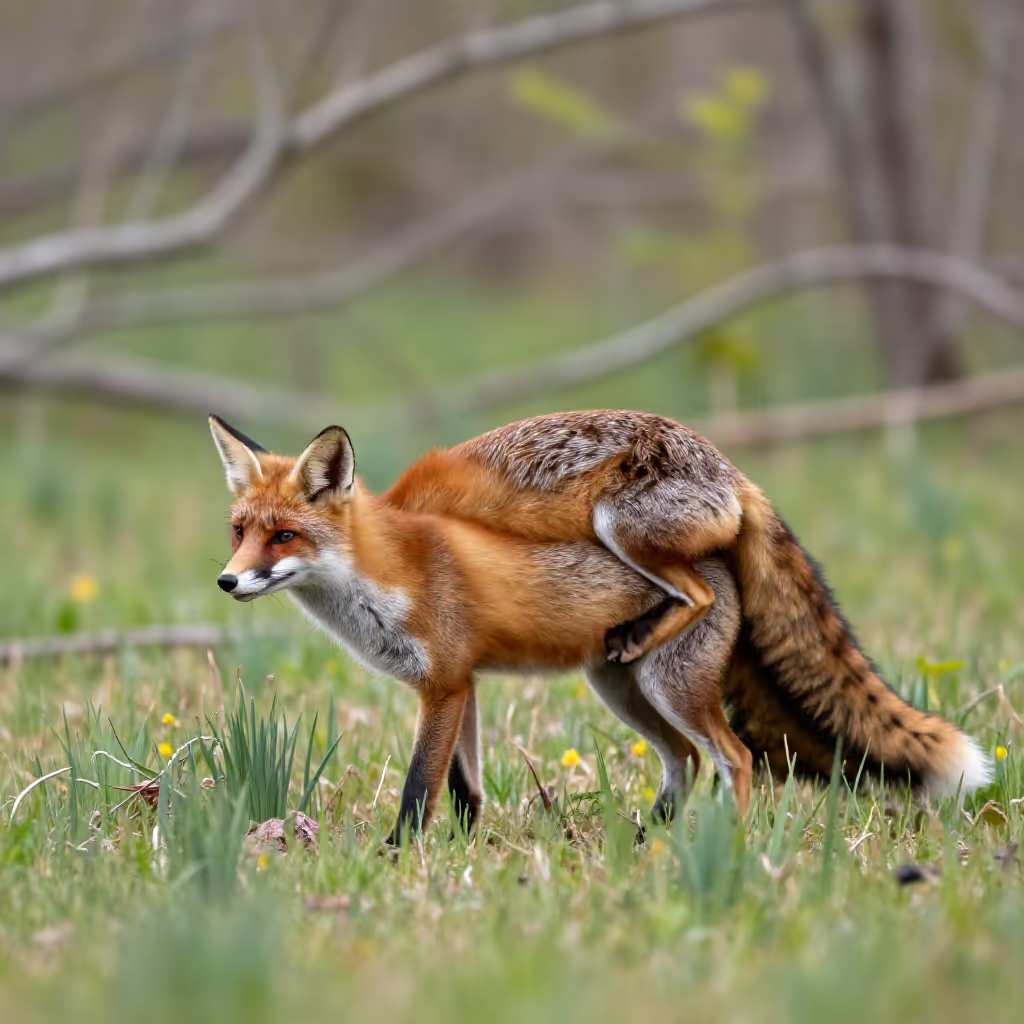
sich paaren
to mate
To unite sexually for reproduction. This term is mainly used for animals.
EXAMPLE
Im Frühling paaren sich die Störche und ziehen ihre Jungen auf.
In spring, the storks mate and raise their young.
to mate / pair
Loading your saved state.
to mate
To unite sexually for reproduction. This term is mainly used for animals.
Im Frühling paaren sich die Störche und ziehen ihre Jungen auf.
In spring, the storks mate and raise their young.
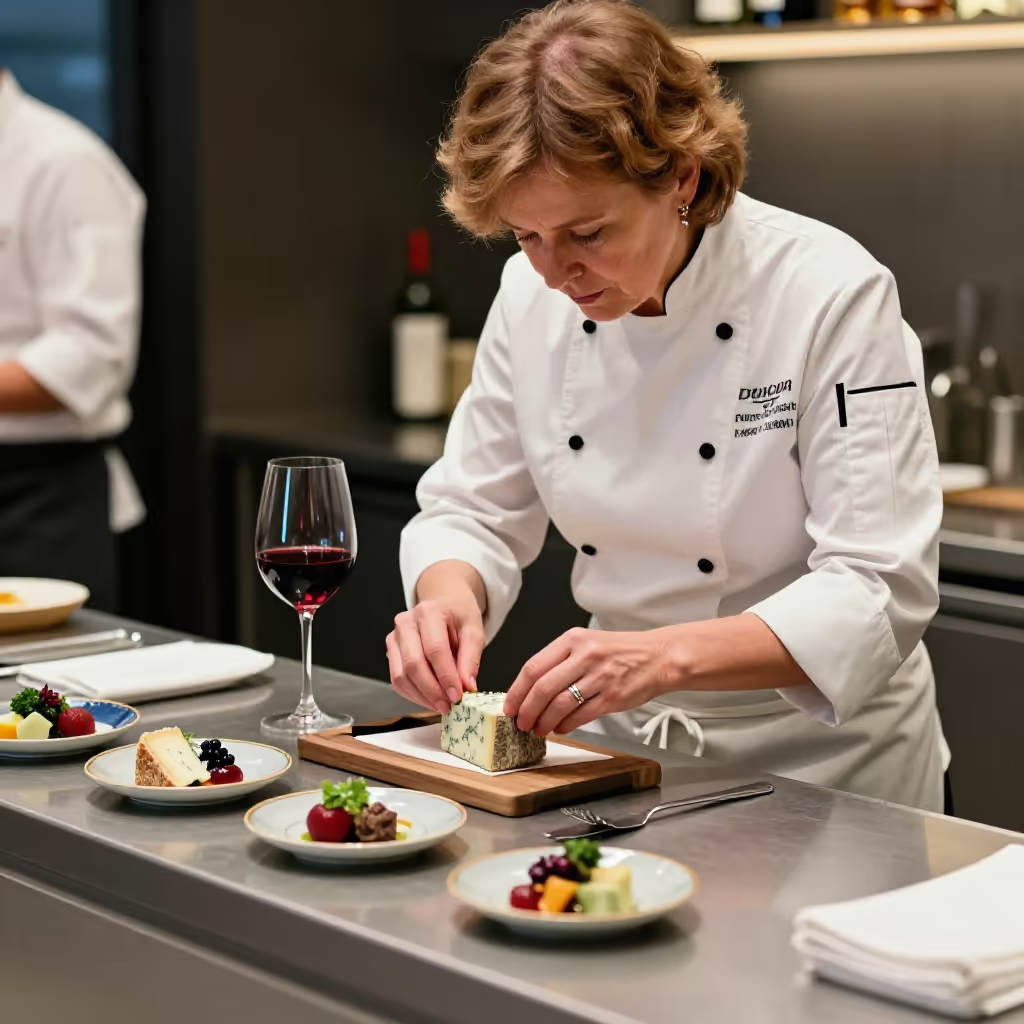
to pair with
To connect or combine two different things, qualities, or elements. This use is rather elevated or formal.
In ihrem Führungsstil paart sie Entschlossenheit mit großem Einfühlungsvermögen.
In her leadership style, she pairs determination with great empathy.
The verb 'paaren' (to pair/mate) derives directly from 'das Paar' (the pair/couple). So the basic meaning is always to join two elements together into a pair.
Die Socken werden nach dem Waschen gepaart.
The socks are paired after washing.
The grammatical structure reveals the meaning. The reflexive form 'sich paaren' (to mate) is used for animals, while 'etwas mit etwas paaren' (to pair something with something) describes the combination of qualities or things.
Im Frühling kann man beobachten, wie sich die Vögel paaren.
In spring, you can observe how the birds mate.
When abstract things are combined, the verb is followed by the fixed preposition 'mit' (with) and the dative. The structure is: subject pairs something (accusative) with something (dative).
Sie paart ihre Intelligenz mit einem starken Willen zum Erfolg.
She pairs her intelligence with a strong will to succeed.
The use of 'paaren' (to pair) in the sense of 'kombinieren' (to combine) is typical of elevated written language, for example in literature, art criticism, or sophisticated speeches.
In diesem Gericht wird traditionelle Küche mit modernen Ideen gepaart.
In this dish, traditional cuisine is paired with modern ideas.
to combine
Both words can describe connecting two different elements. „Kombinieren“ is the more general and common word for this, while „paaren“ places greater emphasis on this deliberate connection and sounds more elevated or formal. Use „kombinieren“ in everyday situations and „paaren“ in a consciously stylish formulation.

Die Designerin paarte die blaue Jacke mit einer goldenen Tasche.
The designer paired the blue jacket with a gold bag.
Die Designerin kombinierte die blaue Jacke mit einer goldenen Tasche.
The designer combined the blue jacket with a gold bag.