
To have something (often information, an answer, or an object) immediately available and at hand.
example
Der Pressesprecher hatte auf jede kritische Frage eine passende Antwort parat.
The press spokesperson had a suitable answer ready for every critical question.
Usage tips
Sentence structure
The adjective 'parat' (ready) is used almost exclusively predicatively, meaning it stands after the noun and the verb. Using it directly before a noun (attributively) is uncommon and sounds unnatural.
EXAMPLE
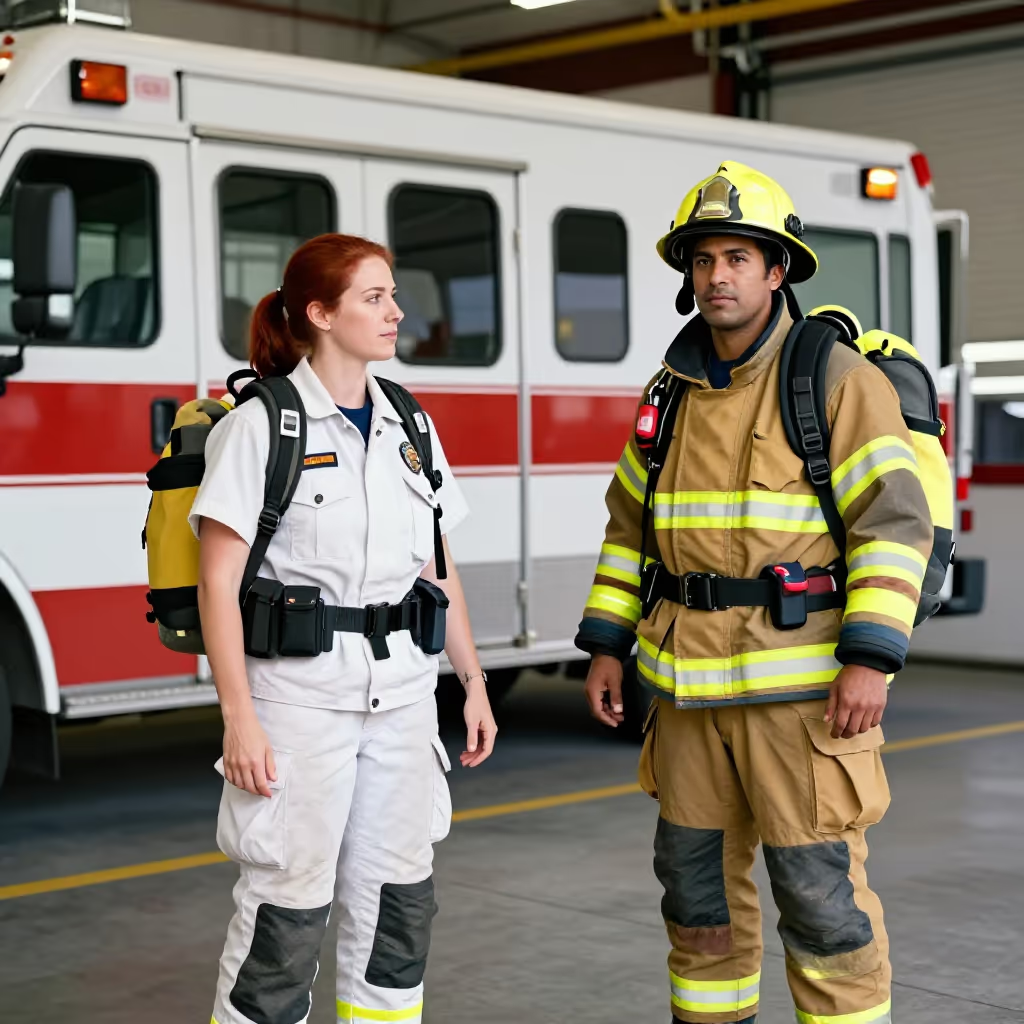
Die Feuerwehrleute sind für den Einsatz parat.
The firefighters are ready for the deployment.
Typical collocations
In the expression 'etwas parat haben' (to have something ready), 'etwas' often refers to information or small objects that you need quickly. Typical examples are: 'eine Antwort parat haben' (to have an answer ready), 'eine Ausrede parat haben' (to have an excuse ready), or 'die nötigen Unterlagen parat haben' (to have the necessary documents ready).
EXAMPLE
Für das Meeting hatte sie alle Zahlen sofort parat.
For the meeting, she had all the figures ready immediately.
Use with sein/stehen
In the meaning 'bereit sein' (to be ready), 'parat' is often combined with the verbs 'sein' (to be) or 'stehen' (to stand/be stationed). 'Parat stehen' is frequently used for organized groups or services that are waiting for deployment.
EXAMPLE
Die Sanitäter stehen am Rande des Festivals parat.
The paramedics are standing ready at the edge of the festival.
Compare with
near_synonym · confusable
parat vs bereit
ready
'bereit' and 'parat' both mean that someone or something is prepared for the next step. 'bereit' is very general and fits people, plans, or situations. It can also express the willingness to do something. 'parat' places more emphasis on something being immediately available or at hand, for example an answer, an ID, or a team for a deployment. With people, 'parat' sounds a bit more concrete: you can start or react immediately. The words are easy to confuse because both express preparation. When it is about inner readiness or agreement, 'bereit' is more natural. When something is directly at hand, 'parat' fits better.
parat
Für das Gespräch hat der Gast alle wichtigen Unterlagen parat.
The guest has all the important documents ready for the conversation.
bereit
Seid ihr bereit, wenn der Zug in fünf Minuten kommt?
Will you be ready when the train arrives in five minutes?