

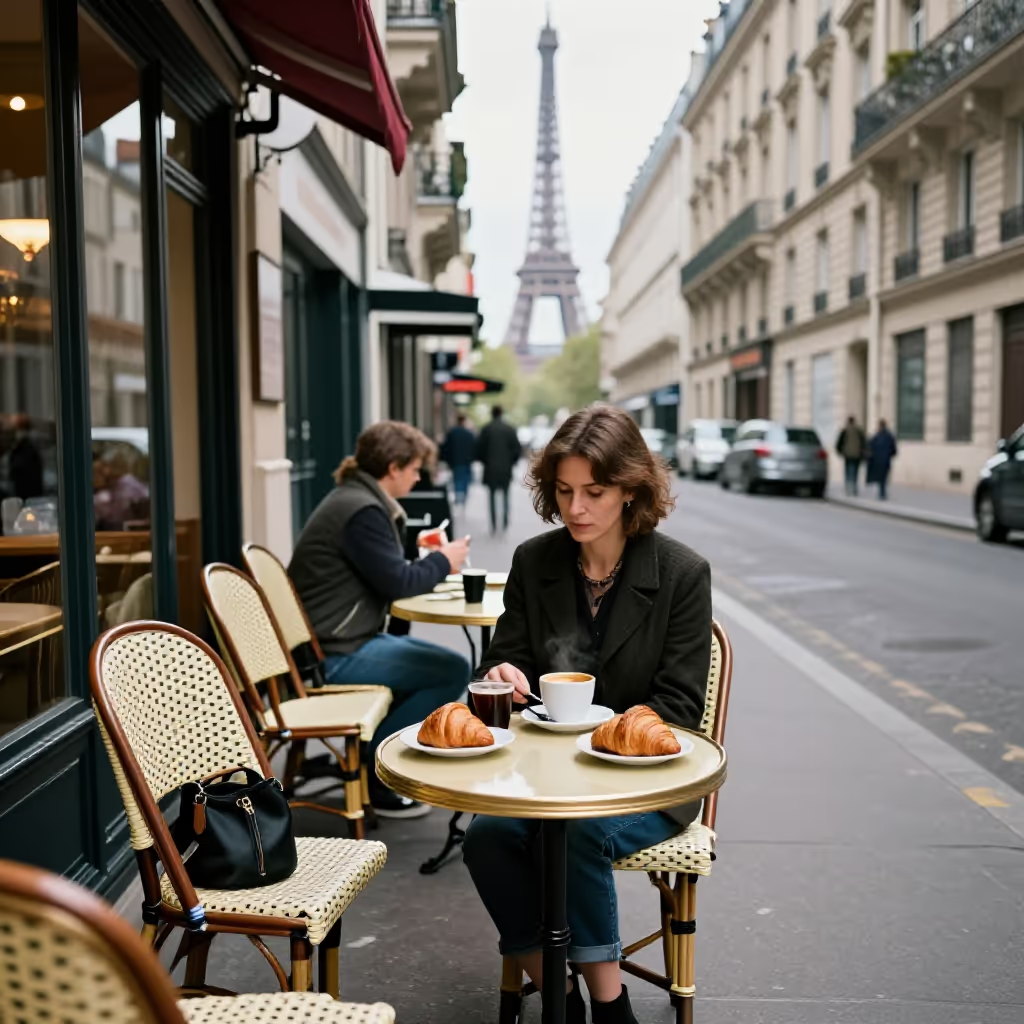
Refers to the city of Paris, its inhabitants, or its culture. It is used as an invariable adjective and usually comes before a noun.
example
Der Eiffelturm ist ein berühmtes pariser Wahrzeichen.
The Eiffel Tower is a famous Parisian landmark.
Usage tips
Invariable adjective
Adjectives derived from city names and ending in '-er' are not declined. The form 'pariser' (Parisian) always stays the same, regardless of the noun's case, gender, or number.
EXAMPLE
Ich mag den pariser Stil.
I like the Parisian style.
Lowercase spelling
As an adjective, 'pariser' (Parisian) is always written in lowercase, even though it is derived from the proper noun 'Paris'. It describes a quality or origin.
EXAMPLE
Sie trägt eine typisch pariser Baskenmütze.
She is wearing a typically Parisian beret.
Typical collocations
'Pariser' (Parisian) is often used to describe a certain style or atmosphere. Typical combinations are 'pariser Chic' (Parisian chic), 'pariser Flair' (Parisian flair), or 'pariser Lebensart' (Parisian way of life).
EXAMPLE
Das Café versucht, echtes pariser Flair zu vermitteln.
The café tries to convey real Parisian flair.
Compare with
confusable
pariser vs französisch
French
'französisch' and 'pariser' can both have something to do with France. 'französisch' is general and refers to the country of France, its language, culture, or people. 'pariser' is narrower and refers only to the city of Paris. Also, 'pariser' usually comes directly before a noun and does not change its form, for example 'ein Pariser Café' (a Parisian café). Learners may confuse the words because Paris is in France. If it is about all of France, 'französisch' is correct. If it is specifically about Paris, 'pariser' is more precise.
pariser
Das Pariser Museum war am Wochenende sehr voll.
The Parisian museum was very crowded at the weekend.
französisch
Für den Termin morgen lernt der Kunde ein paar französische Wörter.
For tomorrow's appointment, the customer is learning a few French words.