

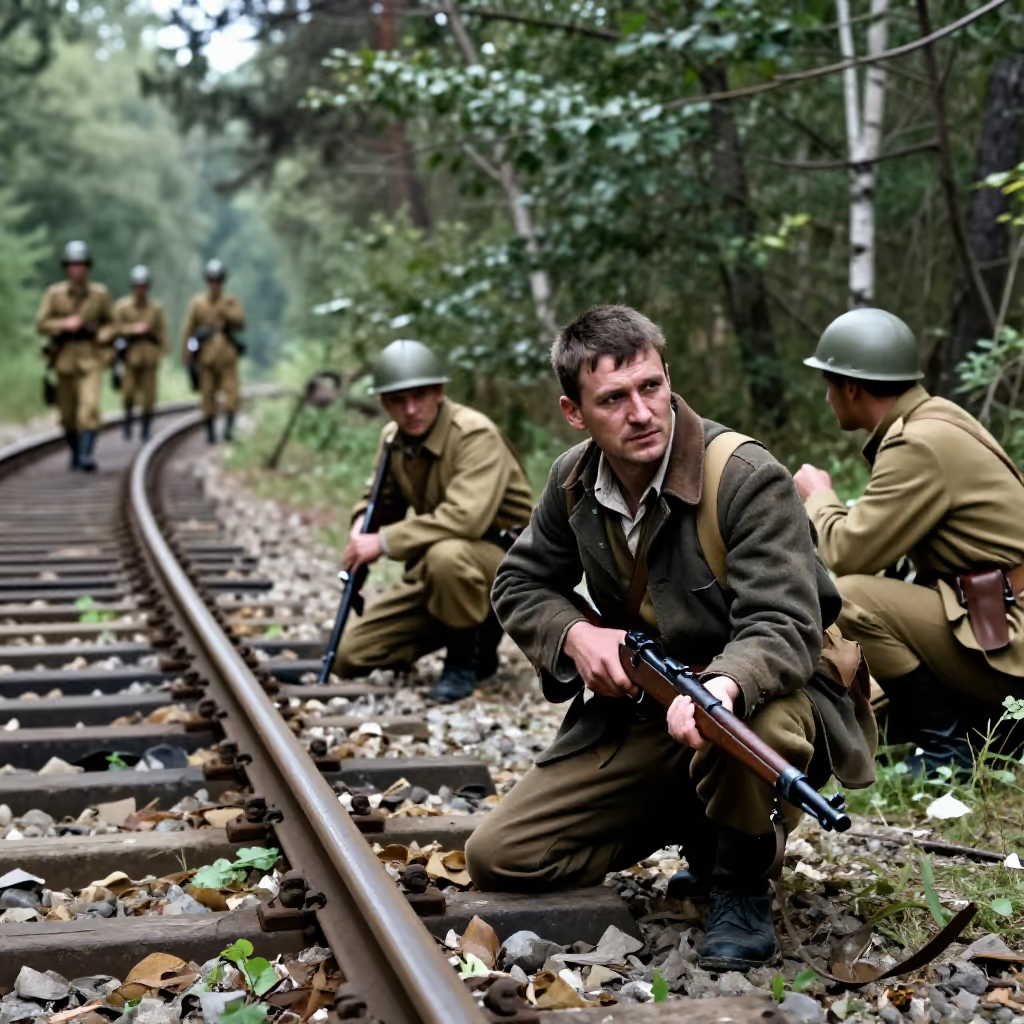
An armed fighter who does not belong to a regular army and fights underground, often in occupied territories, against an enemy power.
example
Im Zweiten Weltkrieg leisteten Partisanen in vielen Ländern Widerstand gegen die Besatzer.
In World War II, partisans in many countries resisted the occupying forces.
Usage tips
Grammar trap: N-declension
'Der Partisan' (the partisan) is a masculine noun of the N-declension. This means it takes the ending '-en' in all cases except the nominative singular.
EXAMPLE
Die Journalistin interviewte den Partisanen.
The journalist interviewed the partisan.
Typical collocations
The word is often used in historical contexts, especially in combination with verbs such as 'Widerstand leisten' (to resist / to offer resistance) or 'kämpfen gegen' (to fight against).
EXAMPLE
Die Partisanen leisteten jahrelang Widerstand.
The partisans resisted for years.
Word formation
The word stem 'Partisan-' is often used to form compound nouns that refer to this kind of fighting, such as 'Partisanenkampf' (partisan warfare) or 'Partisanengruppe' (partisan group).
EXAMPLE
Der Film dokumentiert den Partisanenkampf in den Bergen.
The film documents the partisan warfare in the mountains.
Compare with
confusable
Partisan vs Soldat
soldier
'Soldat' and 'Partisan' both refer to people who can fight, but they do not belong to the same kind of group. A 'Soldat' is part of a country's regular armed forces and has military training. A 'Partisan' fights with weapons but does not belong to a regular army. He often fights underground or in an occupied territory against an enemy power. The words can be confused because both occur in war or conflict situations. The important difference is membership: a 'Soldat' officially belongs to the army, while a 'Partisan' fights outside a regular army.
Partisan
Im besetzten Gebiet versteckt sich der Partisan in den Bergen.
In the occupied territory, the partisan is hiding in the mountains.
Soldat
Der Soldat trägt eine Uniform und arbeitet auf einem Militärstützpunkt.
The soldier wears a uniform and works at a military base.