

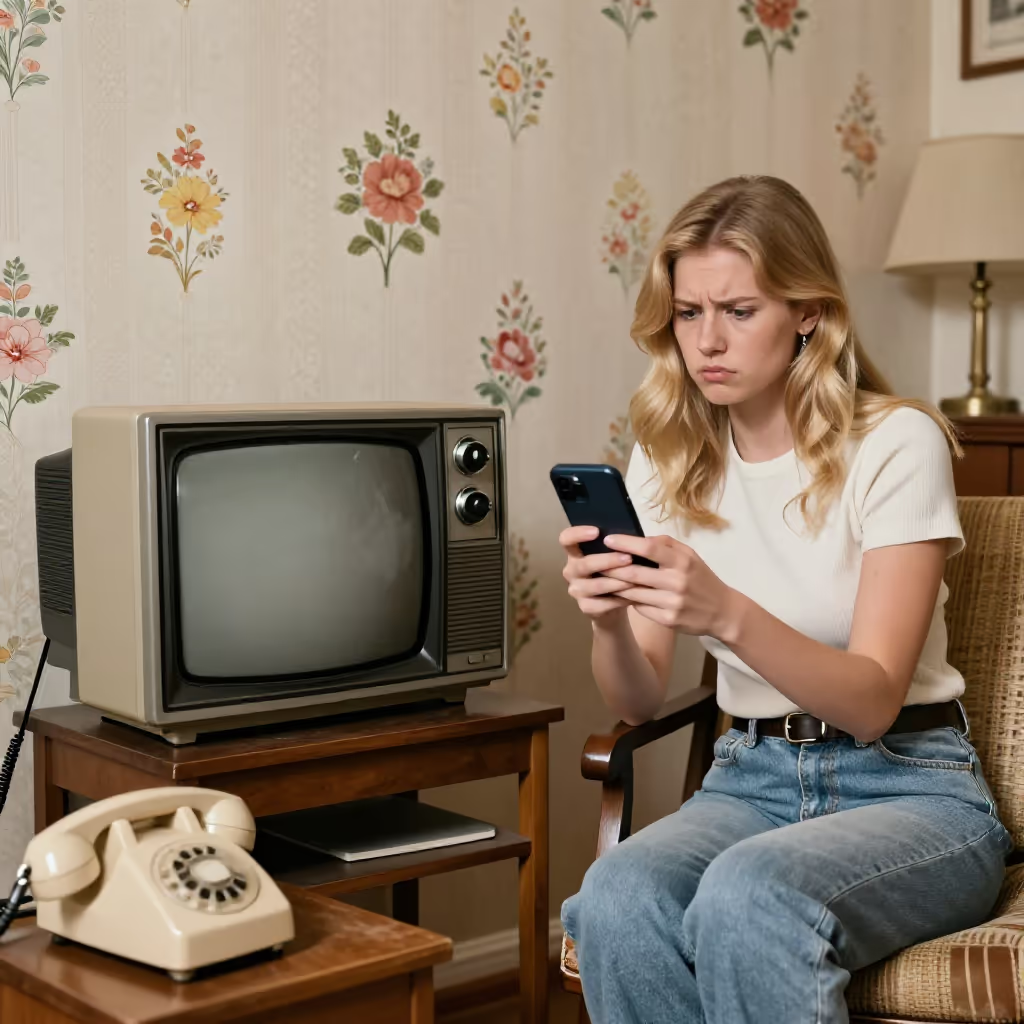
passé
No longer current, fashionable, or up to date; outdated or obsolete.
EXAMPLE
Die Idee, Briefe mit der Hand zu schreiben, ist für viele junge Leute völlig passé.
For many young people, the idea of writing letters by hand is completely passé.
passé
Loading your saved state.
No longer current, fashionable, or up to date; outdated or obsolete.
Die Idee, Briefe mit der Hand zu schreiben, ist für viele junge Leute völlig passé.
For many young people, the idea of writing letters by hand is completely passé.
The adjective 'passé' is used almost exclusively predicatively, meaning it comes after a verb such as 'sein' (to be). It is not placed before a noun and declined.
Diese Frisur ist mittlerweile total passé.
This hairstyle is now totally passé.
The word comes from French, which explains the special spelling with 'é' and the pronunciation. It often gives a statement a somewhat more elegant tone.
Die Zeiten, in denen man Kassetten hörte, sind längst passé.
The days when people listened to cassettes are long passé.
'Passé' is often combined with adverbs that intensify its meaning, for example 'längst passé' (long passé), 'völlig passé' (completely passé), or 'endgültig passé' (definitively passé).
Seit es Smartphones gibt, sind Stadtpläne aus Papier für viele völlig passé.
Since smartphones have existed, paper city maps are completely passé for many people.
old-fashioned
passe and altmodisch can both describe something as no longer up to date. altmodisch refers especially to visible style, taste, or technology; passe judges something more generally as no longer current or modern. Use altmodisch for the style itself, and passe for its loss of relevance.

Dieser Kleidungsstil ist inzwischen passé und wird kaum noch getragen.
This clothing style is now passé and is hardly worn anymore.
Ihre altmodische Kleidung fällt im modernen Büro sofort auf.
Her old-fashioned clothes immediately stand out in the modern office.