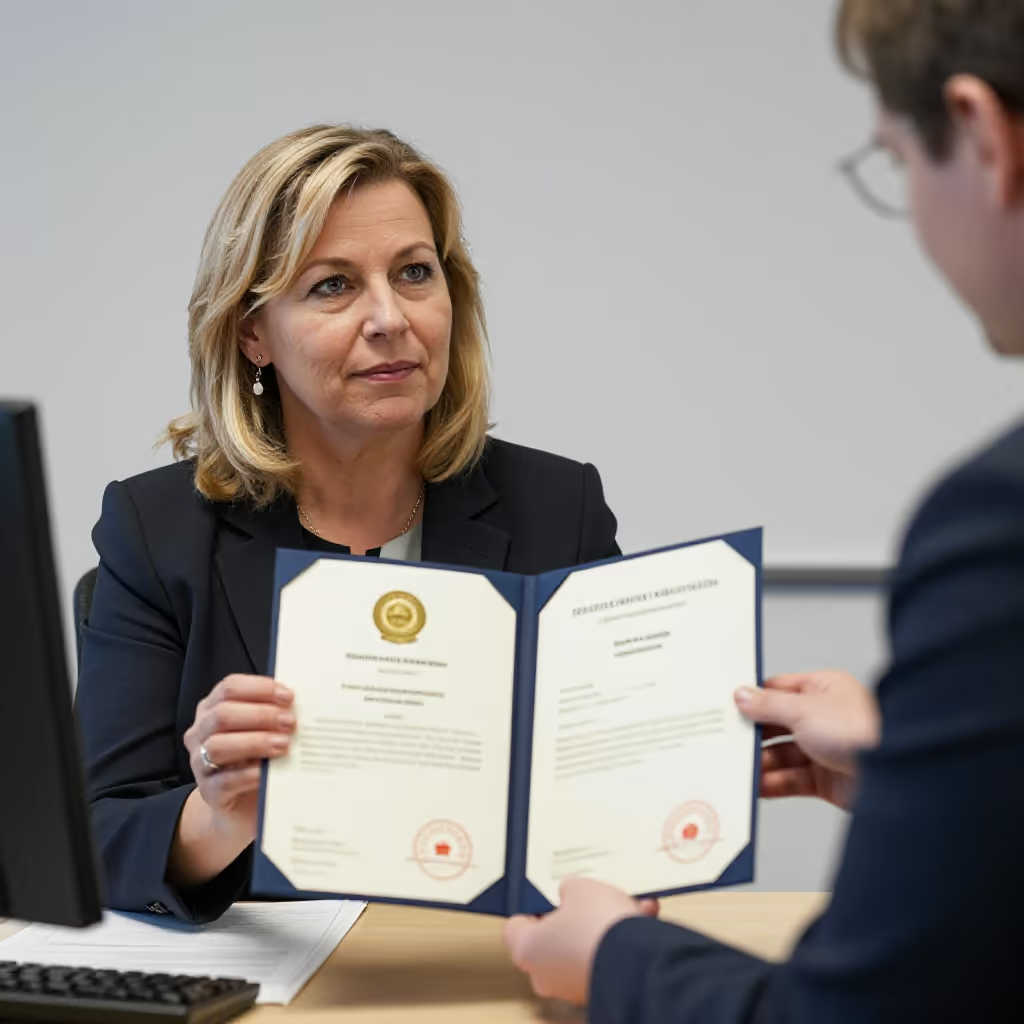
A time-limited protective right granted by the state for an invention, giving the holder the exclusive right to use and exploit it.
example
Das Pharmaunternehmen hat ein Patent für das neue Medikament angemeldet.
The pharmaceutical company has applied for a patent for the new medication.

Usage tips
The path to a patent
In connection with patents, there are fixed verb combinations that describe a process: you can 'ein Patent anmelden' (apply for/register a patent), 'es erteilt bekommen' (be granted it), and then 'es halten' or 'besitzen' (hold or own it).
EXAMPLE
Die Firma hat für die neue Technologie ein Patent angemeldet.
The company has applied for a patent for the new technology.
Correct preposition
To express what a patent applies to, German uses the preposition 'auf' followed by the accusative.
EXAMPLE
Der Erfinder hat ein Patent auf sein neues Verfahren erhalten.
The inventor received a patent for his new process.
Fixed expression
The figurative meaning is used almost exclusively in the negative expression 'kein Patent' or 'kein Patentrezept' für etwas haben/geben (to have/there be no magic formula or simple solution for something). It means that there is no simple, universally valid solution to a problem.
EXAMPLE
Auf die Frage, wie man glücklich wird, gibt es kein Patentrezept.
There is no magic formula for the question of how to become happy.
Common compounds
The word 'Patent' (patent) is often the first part of compound nouns in legal and economic contexts. Important examples are 'das Patentrecht' (patent law), 'der Patentanwalt' (patent attorney), or 'die Patentanmeldung' (patent application).
EXAMPLE
Die Patentanmeldung ist ein komplizierter und teurer Prozess.
The patent application is a complicated and expensive process.
Compare with
near_synonym · confusable
Patent vs Lösung
solution
'die Lösung' and 'das Patent' can both, in a figurative sense, have to do with a way to deal with a problem. 'die Lösung' is the normal word for a concrete method or idea that ends a problem. In this meaning, 'das Patent' is usually not used on its own, but in expressions like 'kein Patent haben' or 'kein Patentrezept haben'. Then it means: there is no simple solution that always works. The words can be confused because 'Patent' sounds like 'solution' here. In normal everyday sentences, however, 'Lösung' is almost always more natural.
Patent
Für gute Stimmung im Team gibt es kein Patent, aber regelmäßige Gespräche helfen.
There is no magic formula for a good team atmosphere, but regular conversations help.
Lösung
Am Bahnhof sucht die Familie eine Lösung, weil der Zug ausfällt.
At the train station, the family looks for a solution because the train is canceled.