

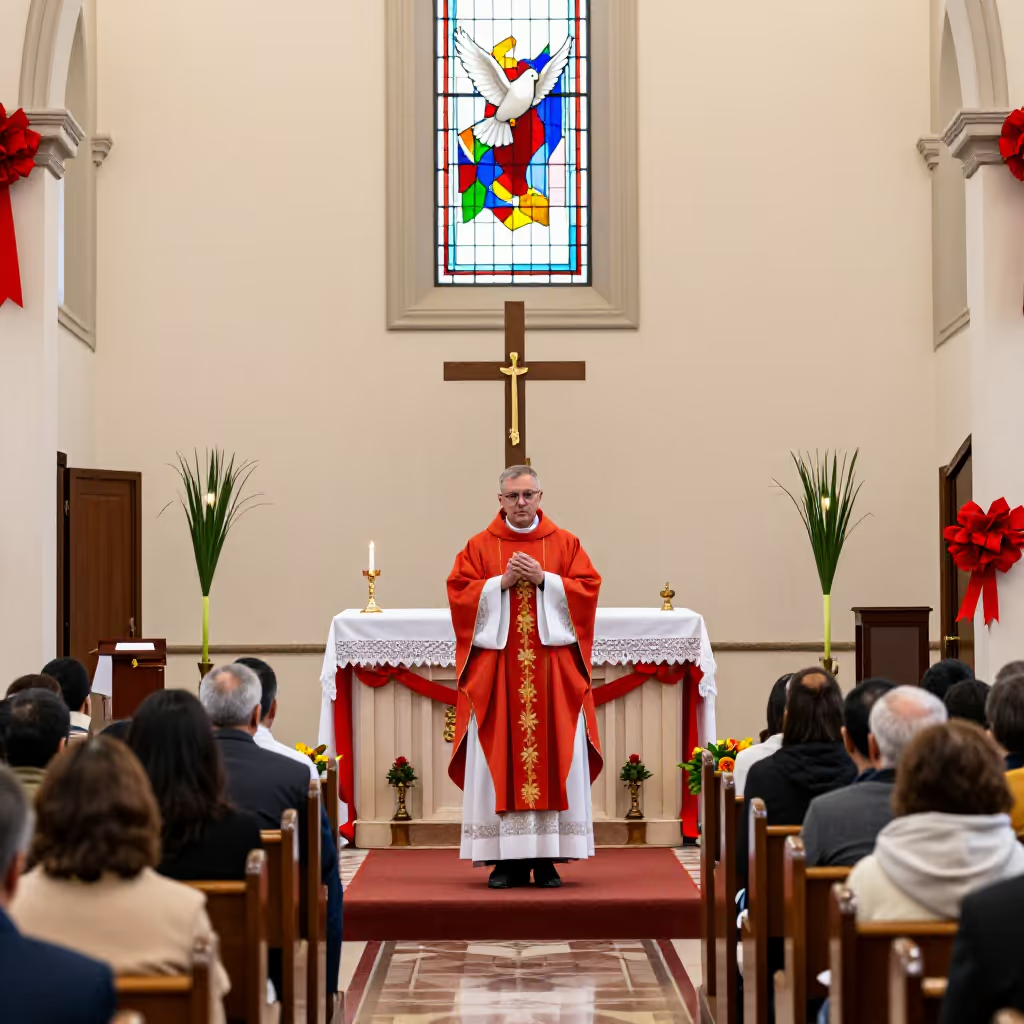
A Christian holiday celebrated 50 days after Easter, commemorating the descent of the Holy Spirit upon the apostles.
example
An Pfingsten machen wir immer einen Ausflug mit der ganzen Familie.
At Pentecost, we always take a trip with the whole family.
Usage tips
Use without a preposition
Similar to 'Ostern' (Easter) or 'Weihnachten' (Christmas), with 'Pfingsten' (Pentecost) you can leave out the preposition 'an' when saying when something happens. Both forms are correct.
EXAMPLE
Wir besuchen meine Großeltern Pfingsten.
We are visiting my grandparents at Pentecost.
Cultural context
In Germany, Austria, and Switzerland, 'Pfingstmontag' (Whit Monday) is a public holiday. For most people, 'Pfingsten' (Pentecost) therefore means a long weekend.
EXAMPLE
Da der Pfingstmontag frei ist, können wir einen Kurzurlaub machen.
Since Whit Monday is a day off, we can take a short vacation.
Typical collocations
Common expressions are 'frohe Pfingsten wünschen' (to wish someone a happy Pentecost) or the question 'Was machst du über Pfingsten?' (What are you doing over Pentecost?). The preposition 'über' emphasizes the duration of the holidays here.
EXAMPLE
Wir wünschen euch allen frohe Pfingsten!
We wish you all a happy Pentecost!
Compare with
confusable
Pfingsten vs Himmelfahrt
Ascension / suicide mission
'die Himmelfahrt' and 'das Pfingsten' are both Christian holidays and fall after Easter in the calendar. For that reason, learners can easily confuse them. 'Himmelfahrt' means the taking up of Jesus Christ into heaven and is a public holiday in Germany. 'Pfingsten' comes later and commemorates the Holy Spirit. A practical tip: Ascension is a single public holiday, while Pentecost is the holiday with Pentecost Sunday and Whit Monday.
Pfingsten
Zu Pfingsten besucht Maria ihre Eltern für ein langes Wochenende.
At Pentecost, Maria visits her parents for a long weekend.
Himmelfahrt
An Christi Himmelfahrt haben viele Menschen in Deutschland frei.
On Ascension Day, many people in Germany have the day off.