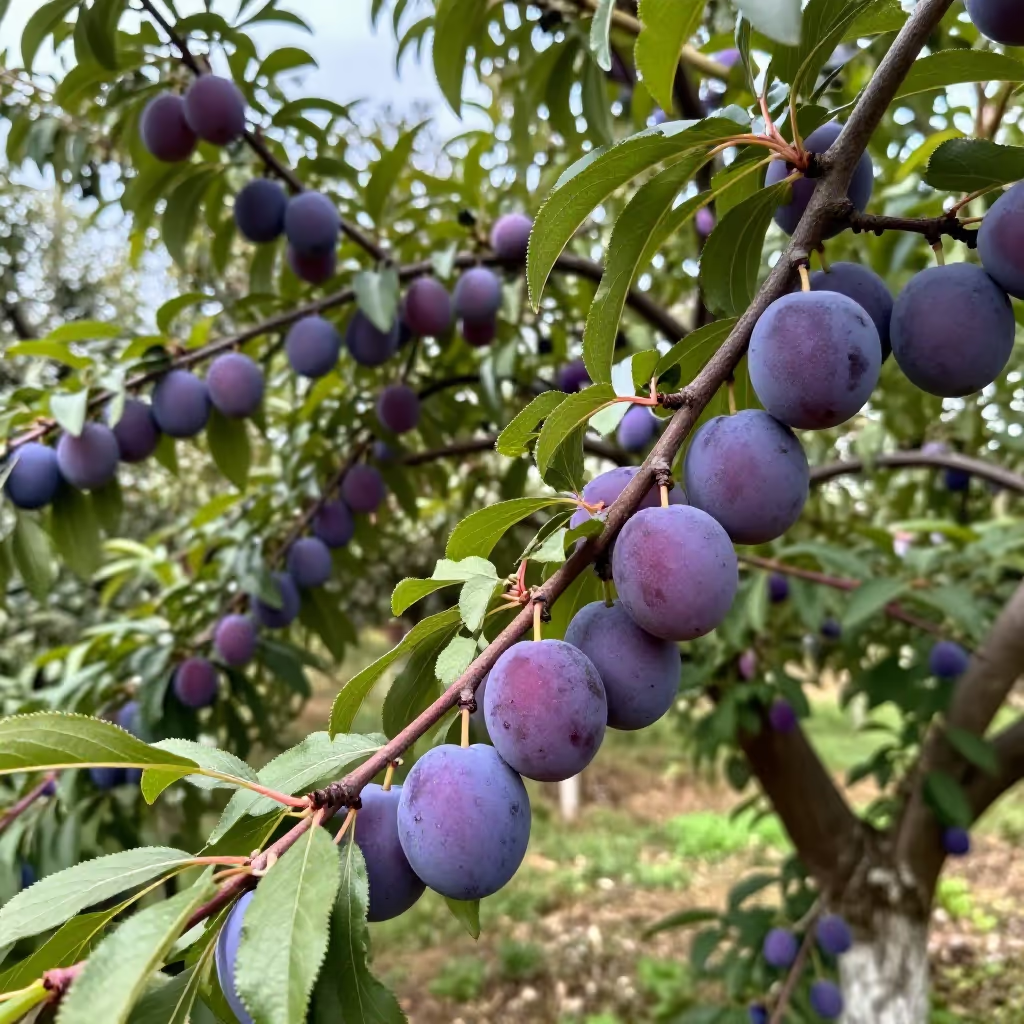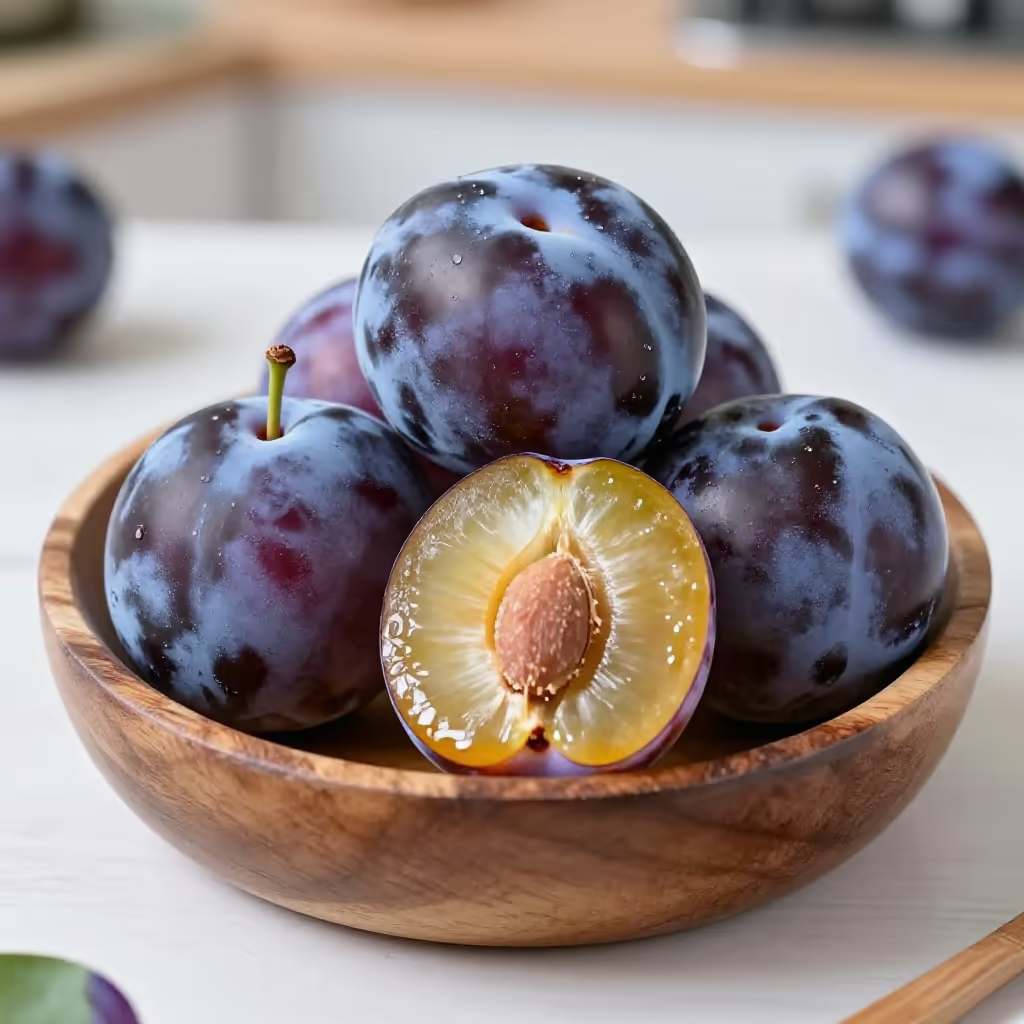
A sweet, juicy stone fruit with smooth, usually bluish or purple skin and an elongated pit.
example
Im Spätsommer backen wir immer einen Kuchen mit frischen Pflaumen aus dem Garten.
In late summer, we always bake a cake with fresh plums from the garden.

Usage tips
Context clue
You can recognize the meaning from the context. If it is about eating or baking, the fruit is meant. If a person is being addressed directly, it is an insult. If it is about the garden or trees, the tree is meant.
EXAMPLE
Ich esse gern Joghurt mit frischen Pflaumen.
I like eating yogurt with fresh plums.
Register
As an insult, 'Pflaume' (idiot/klutz) is very colloquial and is often perceived as not very strong, but still derogatory. It is usually used in informal situations among friends or in sports.
EXAMPLE
Er hat den einfachsten Pass nicht angenommen, was für eine Pflaume!
He didn't receive the easiest pass—what an idiot!
Typical collocations
When referring to the fruit, typical verbs are 'pflücken' (to pick), 'essen' (to eat), or 'backen' (to bake). Common combinations are also 'Pflaumenkuchen' (plum cake) or 'getrocknete Pflaumen' (dried plums/prunes).
EXAMPLE
Meine Oma macht den besten Pflaumenkuchen der Welt.
My grandma makes the best plum cake in the world.
Regional variant
In Austria and southern Germany, the word 'die Zwetschge' is used almost exclusively for a particular subspecies of plum that is more oval in shape.
EXAMPLE
Für diesen Schnaps verwenden wir nur reife Zwetschgen.
For this schnapps, we use only ripe damson plums.
Compare with
near_synonym
Pflaume vs Trottel
fool / idiot
'der Trottel' and 'die Pflaume' can both be used derogatorily for a clumsy or incompetent person. 'Trottel' is more direct and often means that someone is acting stupidly or simple-mindedly. 'Pflaume' is more colloquial and can sound somewhat mocking, especially when someone is not good at something. Important: 'die Pflaume' is normally first of all a fruit. As an insult, it is understood only from context.
Pflaume
Beim Fußball rief jemand: „Was für eine Pflaume!“, weil der Spieler den Ball nicht traf.
During the soccer game, someone shouted, "What an idiot!" because the player missed the ball.
Trottel
Sie fühlte sich wie ein Trottel, weil sie den Termin vergessen hatte.
She felt like an idiot because she had forgotten the appointment.