

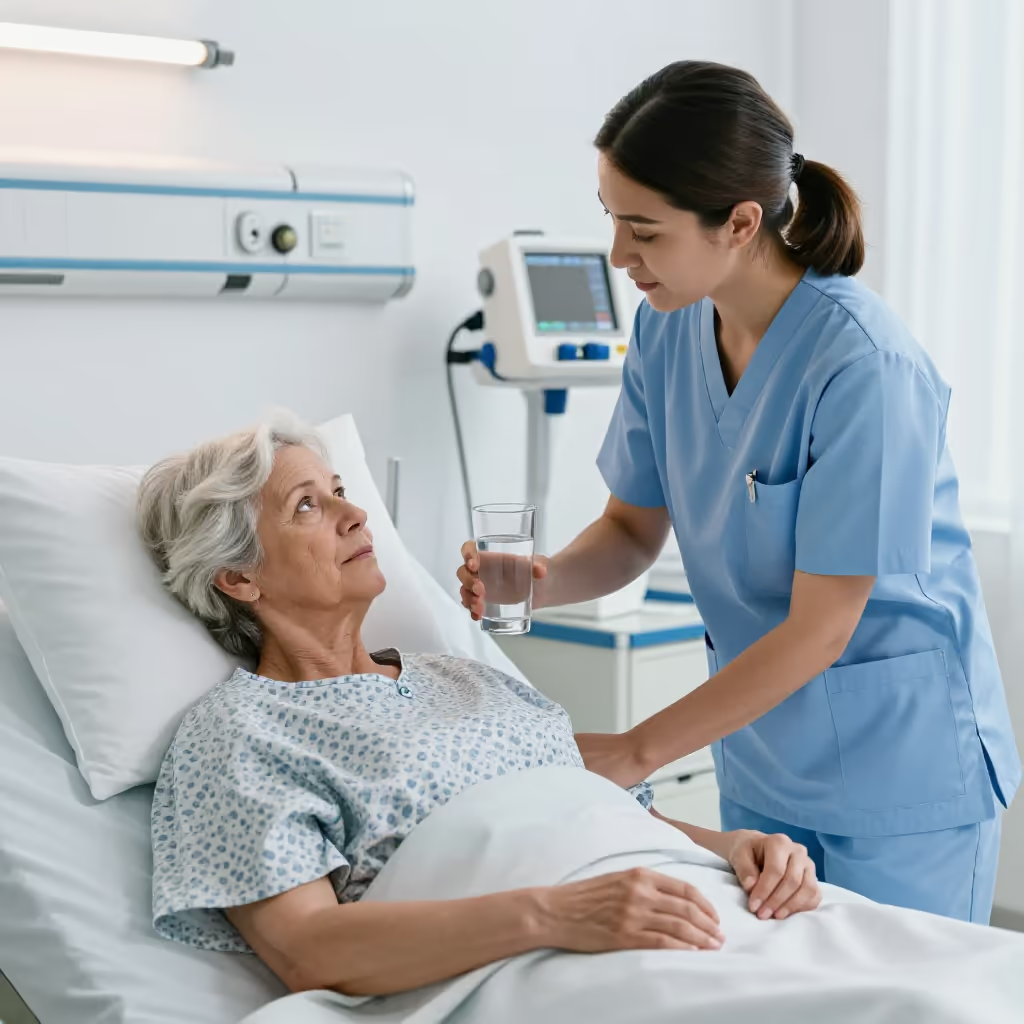
die Pflege
care
The care and support of people who need help, such as the sick, elderly people, or children.
EXAMPLE
Die Pflege seiner kranken Mutter nimmt viel Zeit in Anspruch.
Caring for his sick mother takes up a lot of time.
care
Loading your saved state.
care
The care and support of people who need help, such as the sick, elderly people, or children.
Die Pflege seiner kranken Mutter nimmt viel Zeit in Anspruch.
Caring for his sick mother takes up a lot of time.
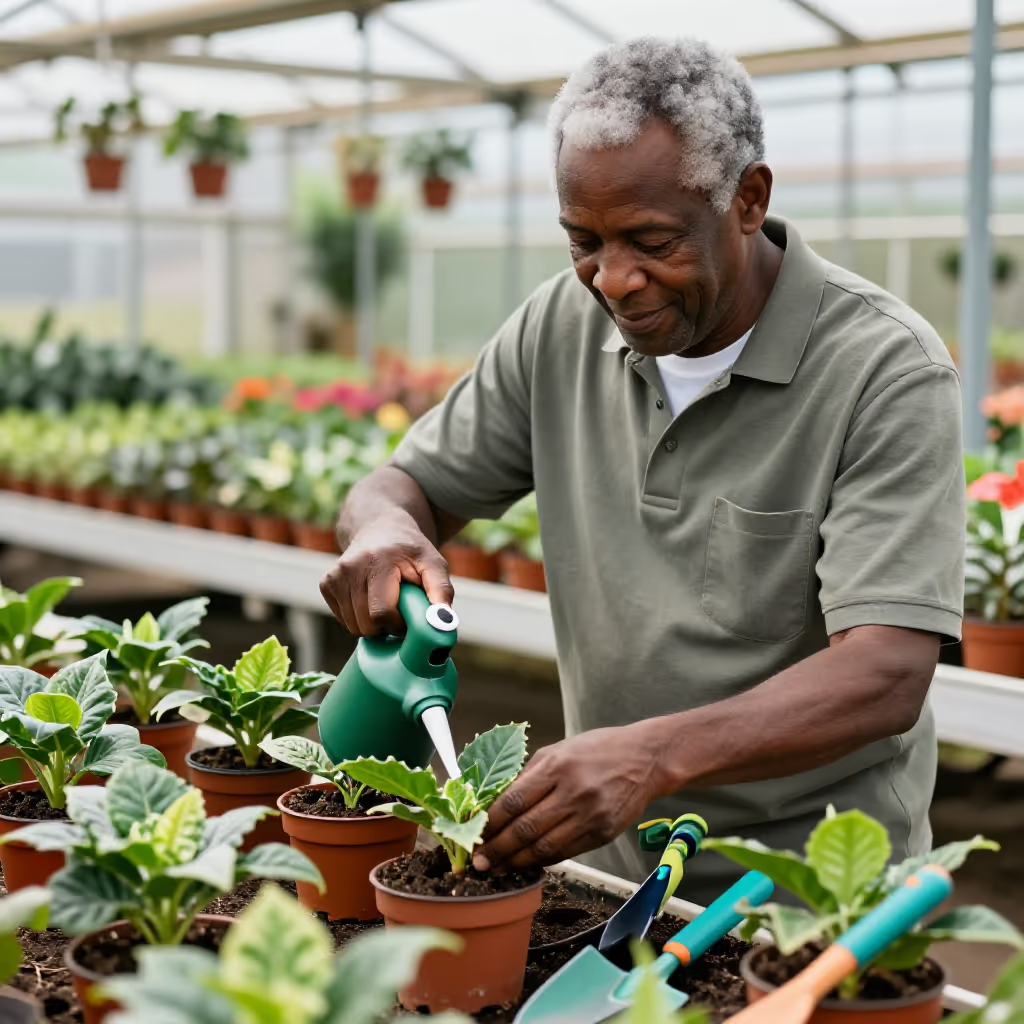
maintenance
The upkeep and maintenance of objects, plants, or places in order to keep them in good condition.
Die richtige Pflege von Lederschuhen verlängert deren Haltbarkeit.
Proper care of leather shoes extends their lifespan.
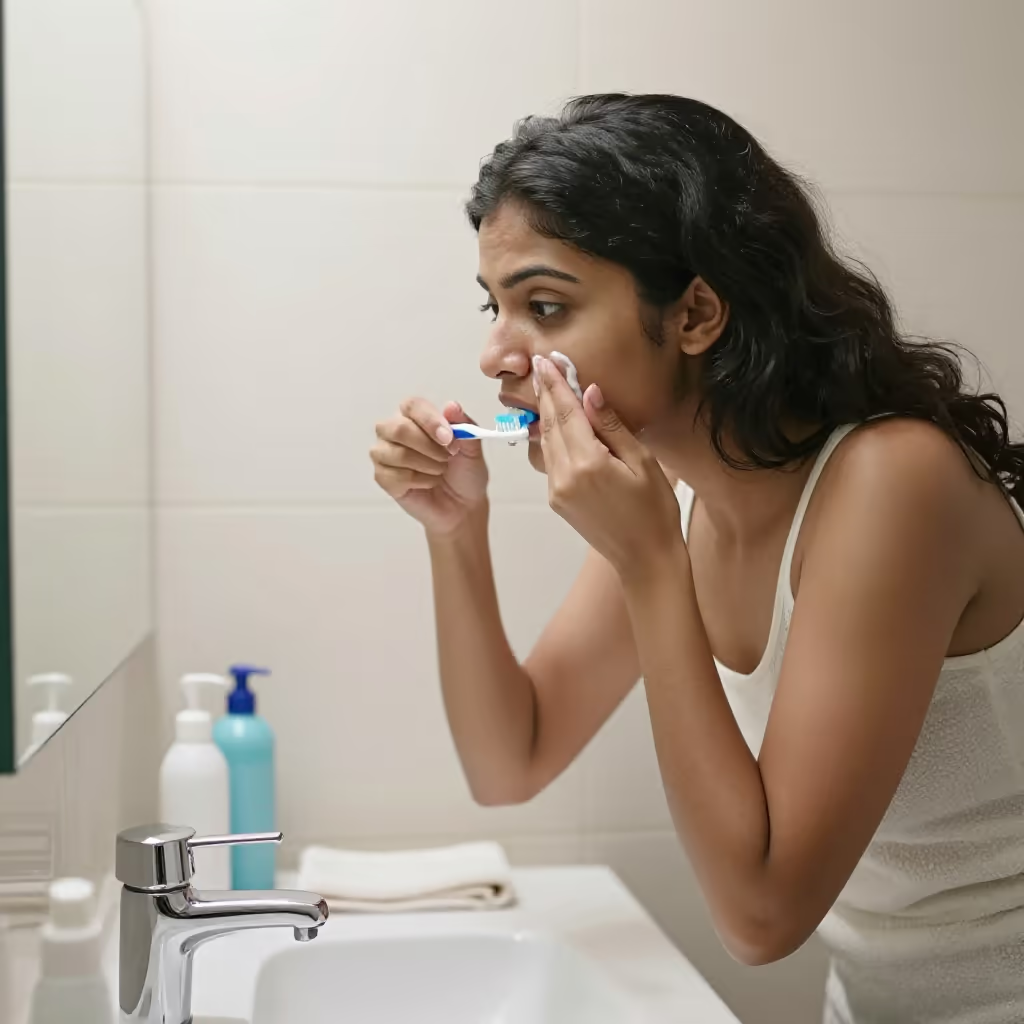
personal care
Measures for cleaning and keeping one's own body healthy, often also referred to as body care.
Zur täglichen Pflege gehören bei ihr Duschen und Eincremen.
For her, daily personal care includes showering and putting on lotion.
The noun 'die Pflege' (care) is derived directly from the verb 'pflegen' (to care for / to maintain). If you know the verb, you can easily infer the meaning of the noun: 'pflegen' means to look after someone or something, and 'die Pflege' is the action itself.
Er pflegt seine Eltern zu Hause.
He cares for his parents at home.
'Pflege' (care) is a very productive word and forms many new nouns. The first part of the word describes what is being cared for, e.g. 'Altenpflege' (care of elderly people) or 'Gartenpflege' (garden maintenance).
Sie arbeitet in der Krankenpflege.
She works in nursing care.
When it comes to caring for people, 'Pflege' (care) is often combined with certain verbs and adjectives. Common phrases are 'Pflege brauchen' (to need care), 'auf Pflege angewiesen sein' (to be dependent on care), or 'häusliche Pflege' (home care).
Nach dem Unfall war er mehrere Wochen auf Pflege angewiesen.
After the accident, he was dependent on care for several weeks.
When 'Pflege' (care) is used in connection with objects, places, or abstract things like data, it means 'Instandhaltung' (upkeep) or 'Wartung' (maintenance). Pay attention to the combination with 'von' (of), for example 'die Pflege von Denkmälern' (the upkeep of monuments).
Die Pflege des Parks kostet die Stadt jedes Jahr viel Geld.
The maintenance of the park costs the city a lot of money every year.
supply / care
Pflege and Versorgung can both refer to helping sick, elderly, or dependent people. Pflege emphasizes ongoing personal care and nursing work, while Versorgung focuses more on providing what is currently needed. Pflege is suitable for regular care, while Versorgung may be more appropriate for specific necessary assistance.

Die Pflege der alten Frau umfasst jeden Morgen das Waschen, Anziehen und gemeinsame Frühstücken.
The elderly woman's care includes washing, getting dressed, and having breakfast together every morning.
Die Versorgung der alten Frau umfasst heute vor allem ihre Medikamente und eine warme Mahlzeit.
Today, the elderly woman's care mainly consists of her medication and a hot meal.