

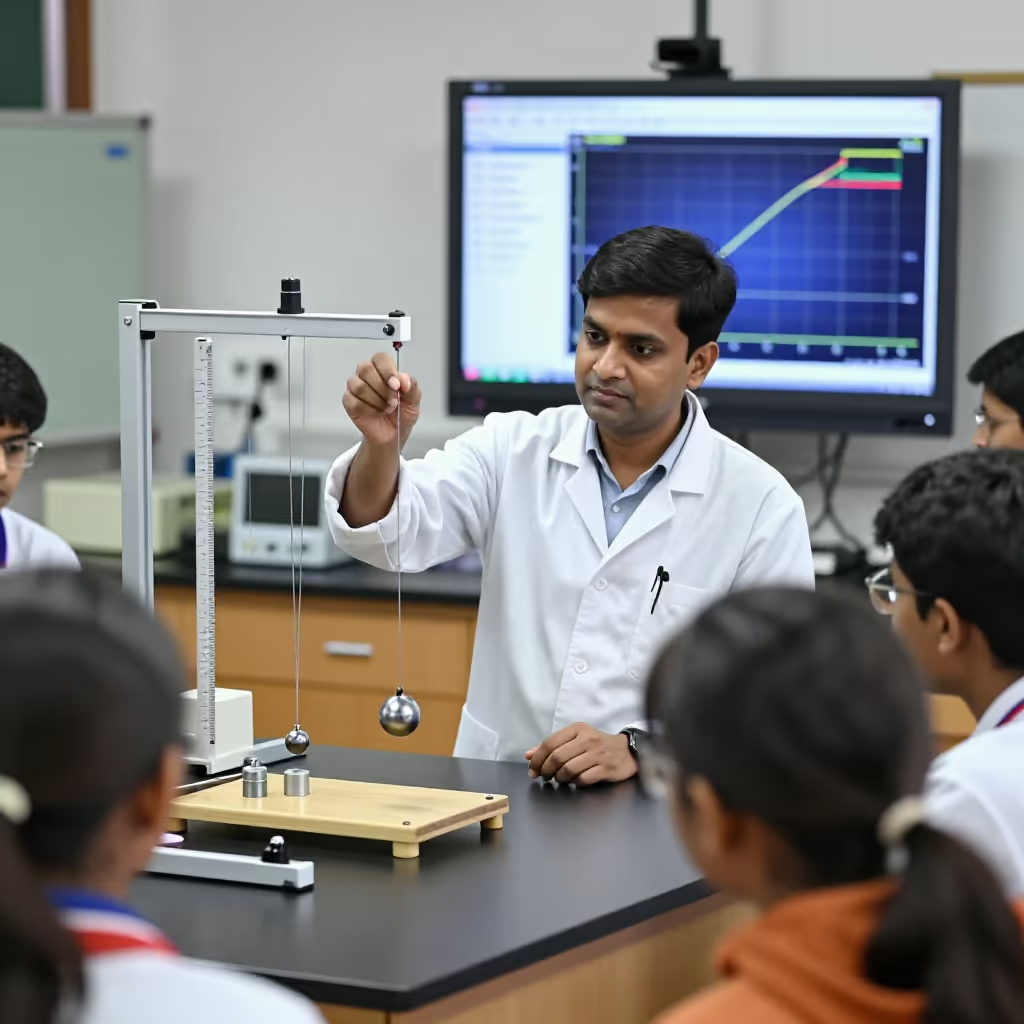
physikalisch
physical
Relating to physics as a science or based on its laws.
EXAMPLE
Ein Regenbogen ist ein interessantes physikalisches Phänomen.
A rainbow is an interesting physical phenomenon.
physical
Loading your saved state.
physical
Relating to physics as a science or based on its laws.
Ein Regenbogen ist ein interessantes physikalisches Phänomen.
A rainbow is an interesting physical phenomenon.
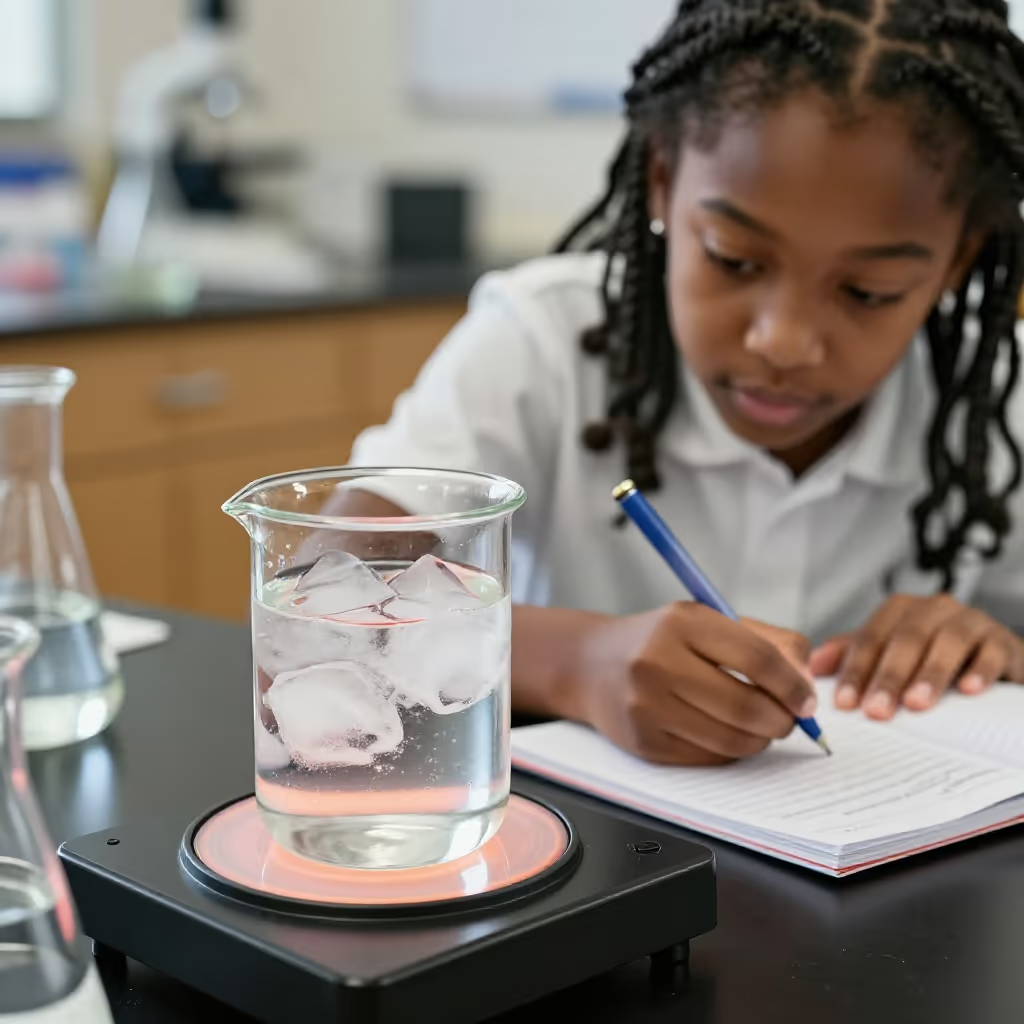
physical
Describing a process in which the state or form of a substance changes, but not its chemical composition.
Das Schmelzen von Eis ist ein rein physikalischer Prozess.
The melting of ice is a purely physical process.
'Physikalisch' (physical, relating to physics) refers only to the science of physics. It does not mean 'körperlich' (bodily/physical), as the English word 'physical' often does. So you cannot speak of 'physikalische Kraft' for physical strength or 'physikalische Arbeit' for physical labor.
Das Experiment demonstriert ein physikalisches Grundgesetz.
The experiment demonstrates a basic law of physics.
'Physikalisch' (physical, relating to physics) is the adjective related to the noun 'die Physik' (physics). The ending '-alisch' is often used to form adjectives from scientific terms.
Sie interessiert sich sehr für die Gesetze der Physik.
She is very interested in the laws of physics.
The adjective is frequently combined with scientific nouns. Typical examples are: 'physikalische Gesetze' (physical laws), 'ein physikalisches Phänomen' (a physical phenomenon), 'eine physikalische Eigenschaft' (a physical property), or 'eine physikalische Einheit' (a physical unit, e.g. meter, second).
Die Nordlichter sind ein beeindruckendes physikalisches Phänomen.
The northern lights are an impressive physical phenomenon.
In chemistry and physics, 'physikalisch' (physical) describes a process that changes the state of a substance but not its chemical structure. Examples are the melting of ice or the boiling of water.
Die Verdunstung von Wasser ist ein physikalischer Vorgang.
The evaporation of water is a physical process.
chemical
Chemisch is used for a reaction that produces other substances. Physikalisch, by contrast, describes a change in the form or state of a substance while its chemical composition remains the same. Therefore, burning is chemical, whereas melting the same substance is physical.

Das Schmelzen des Wachses ist eine physikalische Veränderung, bei der seine Zusammensetzung gleich bleibt.
Melting the wax is a physical change in which its composition remains the same.
Das Verbrennen des Wachses ist eine chemische Reaktion, bei der andere Stoffe entstehen.
Burning the wax is a chemical reaction that produces other substances.