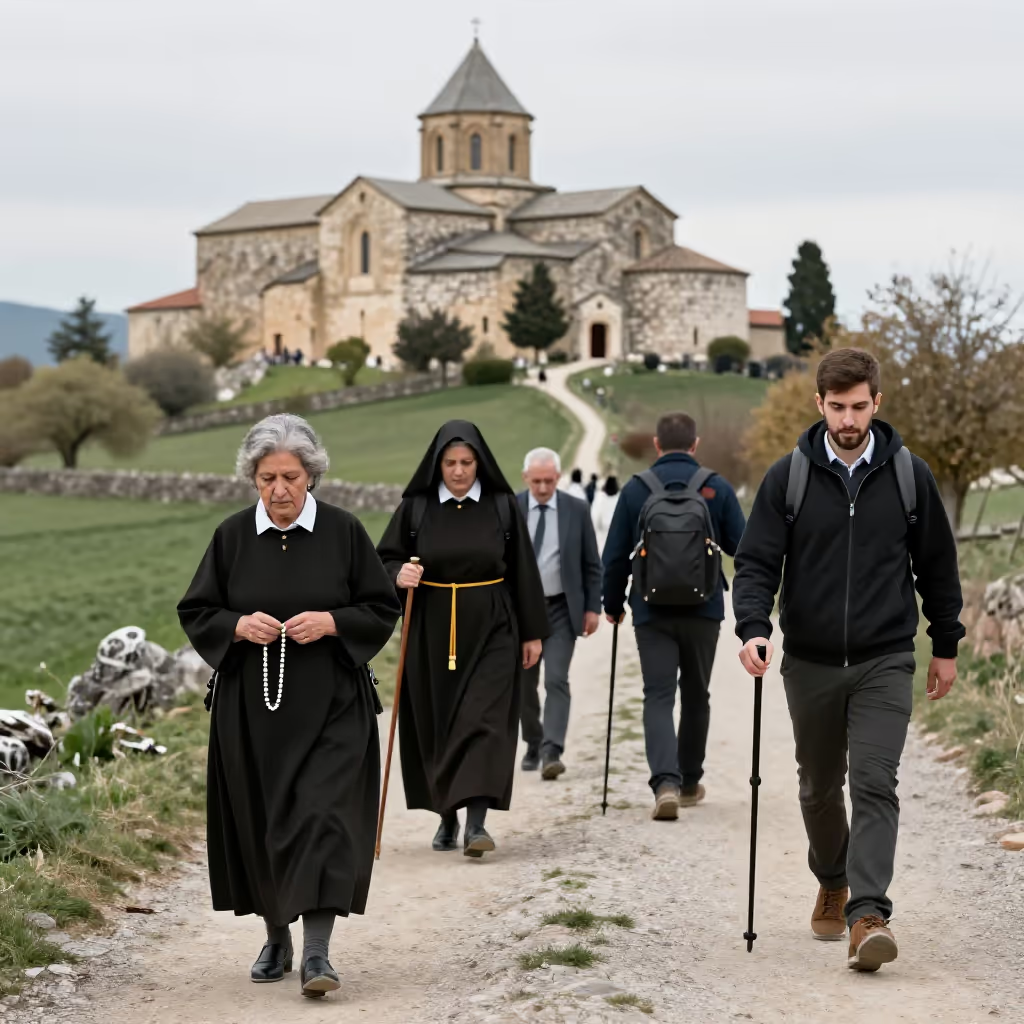
To undertake a journey to a holy place for religious reasons; to go on a pilgrimage.
example
Jedes Jahr pilgern tausende Gläubige auf dem Jakobsweg nach Santiago de Compostela.
Every year, thousands of believers make a pilgrimage along the Way of St. James to Santiago de Compostela.

Usage tips
Perfect tense with 'sein'
As a verb of movement, 'pilgern' (to make a pilgrimage / to flock) forms the perfect tense with the auxiliary verb 'sein' (to be). The destination of the movement is usually indicated with the prepositions 'nach' (to) or 'zu' (to).
EXAMPLE
Tausende von Gläubigen sind letztes Jahr nach Lourdes gepilgert.
Thousands of believers made a pilgrimage to Lourdes last year.
Word family
The verb 'pilgern' (to make a pilgrimage) is the activity performed by a person called 'der Pilger' (male pilgrim) or 'die Pilgerin' (female pilgrim). If you know the noun, you can easily work out the meaning of the verb.
EXAMPLE
Ein Pilger ist jemand, der aus religiösen Gründen eine weite Reise zu einem heiligen Ort macht.
A pilgrim is someone who makes a long journey to a holy place for religious reasons.
Context clue
You can tell whether the religious or the figurative meaning is intended from the destination. Holy places like 'Mekka' (Mecca) point to a pilgrimage. Secular places like 'Stadion' (stadium) or 'Messegelände' (fairgrounds) indicate the figurative meaning.
EXAMPLE
Viele Muslime pilgern einmal im Leben nach Mekka.
Many Muslims make a pilgrimage to Mecca once in their lives.
Figurative language
The use of 'pilgern' (to flock) for non-religious destinations is figurative. It emphasizes that a large crowd of people is moving slowly and with a shared, almost reverent purpose toward a place.
EXAMPLE
Zur Eröffnung der neuen Ausstellung pilgerten die Kunstliebhaber ins Museum.
Art lovers flocked to the museum for the opening of the new exhibition.
Compare with
near_synonym · confusable
pilgern vs ziehen
to pull / move
'ziehen' and 'pilgern' can both describe many people or groups moving toward a place. 'ziehen' is more neutral and general. It can also fit animals or groups that are moving in one direction. 'pilgern' is more specific: it means either making a religious journey to a holy place, or, figuratively, a large number of people deliberately going to a special place or event. The words can be confused when many people are on the move. If only the movement is important, 'ziehen' fits. If the destination has a special meaning, 'pilgern' sounds more precise.
pilgern
Heute pilgern Tausende Fans zum Stadion, weil das Finale stattfindet.
Today, thousands of fans are flocking to the stadium because the final is taking place.