

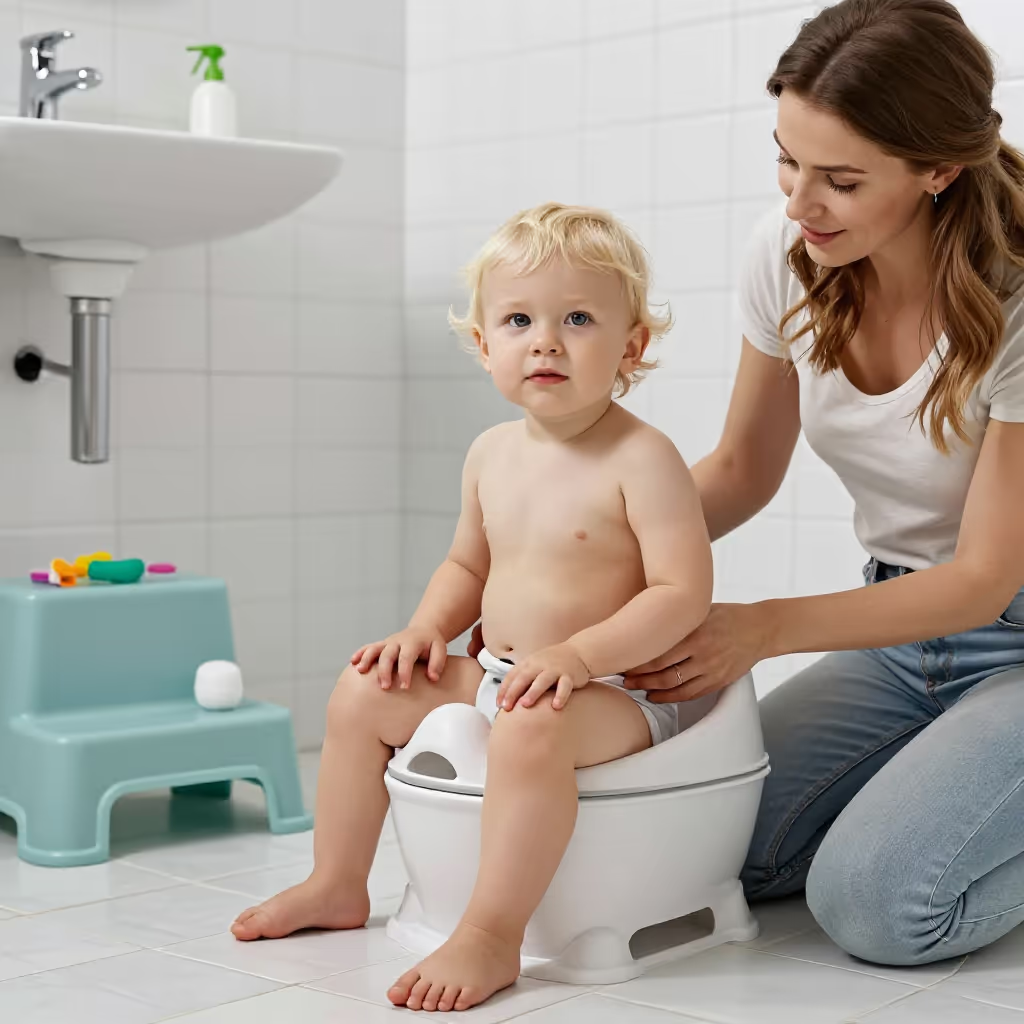
A children's-language and colloquial expression for urine. It is usually used in the phrase 'Pipi machen' (to pee), meaning 'to urinate.'
example
Der Hund hat aus Versehen Pipi auf den neuen Teppich gemacht.
The dog accidentally peed on the new carpet.

Usage tips
Word formation
'Pipi' (pee) is a reduplication. This form of word formation is typical of children's language because it is easy to pronounce.
EXAMPLE
Wörter wie „Pipi“ oder „Wauwau“ lernen Kinder oft sehr schnell.
Children often learn words like 'Pipi' (pee) or 'Wauwau' (woof-woof/doggie) very quickly.
Register: children's language
This word primarily belongs to children's language or is used when talking with children. Among adults, it is used only in very informal or joking situations.
EXAMPLE
Die Erzieherin fragt das Kind: „Musst du mal Pipi?“
The preschool teacher asks the child: 'Do you need to go pee?'
Fixed expression
The word is almost always used in the fixed expression 'Pipi machen' (to pee), which means 'to urinate.' The noun by itself is used less often.
EXAMPLE
Wir müssen an der nächsten Raststätte anhalten, damit die Kinder Pipi machen können.
We have to stop at the next rest area so the children can pee.
Compare with
near_synonym
Pipi vs Urin
urine
'der Urin' and 'das Pipi' refer to the same bodily fluid. The difference is mainly in style. 'Urin' is neutral and factual, and it fits well at the doctor’s office, in care settings, or in a report. 'Pipi' is childlike and colloquial. It is often used with children or in relaxed everyday situations, especially in the phrase 'Pipi machen' (to pee). In serious or medical conversations, 'Pipi' sounds too casual; there, 'Urin' is more natural.
Pipi
Das Kind muss vor der langen Fahrt noch Pipi machen.
The child still needs to pee before the long drive.
Urin
Die Ärztin untersucht den Urin, weil der Patient Schmerzen hat.
The doctor examines the urine because the patient is in pain.