

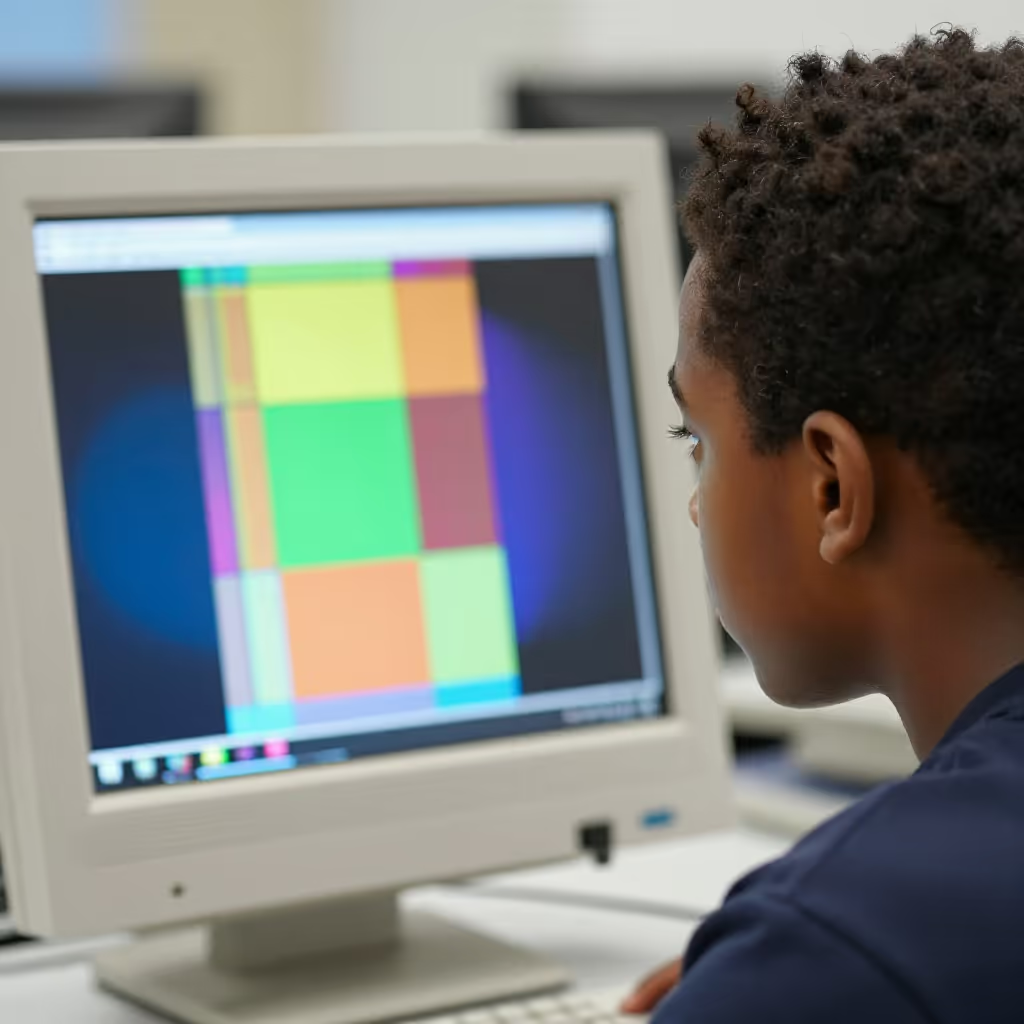
A very rare, colloquial, shortened form of 'pixelig' (pixelated). It describes a digital image in which the individual picture elements (pixels) are coarse and clearly visible.
example
Auf dem alten Monitor wirkt die Grafik total pixel.
On the old monitor, the graphics look totally pixelated.
Usage tips
Word family
The adjective 'pixel' comes directly from the noun 'das Pixel' (the pixel), the term for a single picture element. So it describes a state in which you can see the individual pixels.
EXAMPLE
Die Auflösung ist so niedrig, dass man jedes Pixel erkennt.
The resolution is so low that you can make out every pixel.
Colloquial style
The word 'pixel' as an adjective is very colloquial and is only rarely used. You sometimes hear it in informal conversations about old computer games or low-resolution graphics.
EXAMPLE
Die Grafik von diesem alten Spiel ist total pixel.
The graphics in this old game are totally pixelated.
Use in a sentence
This adjective is used almost exclusively predicatively, meaning after a noun with a verb like 'sein' (to be) or 'wirken' (to appear/seem). Using it before a noun, e.g. 'ein pixeles Bild', is extremely unusual.
EXAMPLE
Die Schrift auf dem alten Monitor wirkt ein bisschen pixel.
The writing on the old monitor looks a bit pixelated.
Compare with
antonym
Pixel vs scharf
sharp / spicy
'scharf' and 'pixel' are opposites when talking about digital images. A 'scharf' image is sharp / clear; you can see the details well. 'Pixel' here means roughly 'pixelig' in colloquial language: the individual picture elements are visible, and the image looks coarse or messy. 'Scharf' is the normal word for good image quality. 'Pixel' is rare and very colloquial; most of the time, 'pixelig' sounds more natural.
Pixel
Bei schlechter Verbindung wirkt das Video total pixel.
With a poor connection, the video looks totally pixelated.
scharf
Auf dem neuen Bildschirm ist das Foto sehr scharf.