

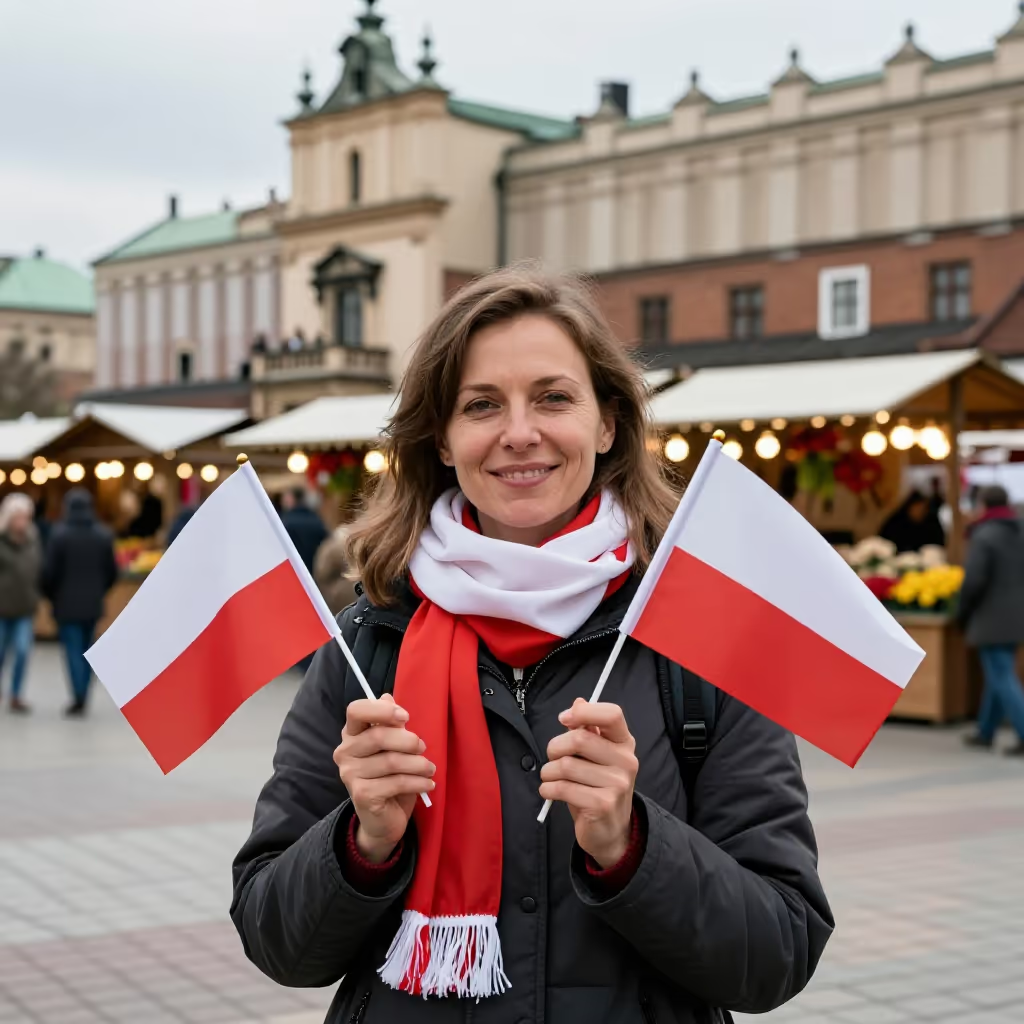
die Polin
Polish woman
A woman who has Polish citizenship or comes from Poland.
EXAMPLE
Die neue Ärztin in der Praxis ist eine Polin aus Krakau.
The new doctor at the practice is a Polish woman from Kraków.
Polish woman
Loading your saved state.
Polish woman
A woman who has Polish citizenship or comes from Poland.
Die neue Ärztin in der Praxis ist eine Polin aus Krakau.
The new doctor at the practice is a Polish woman from Kraków.
The noun 'die Polin' (Polish woman) is derived directly from the country name 'Polen' (Poland). The ending '-in' is the typical German form for feminine person nouns derived from countries or professions.
Meine Nachbarin ist Polin und kommt aus Warschau.
My neighbor is Polish and comes from Warsaw.
'Die Polin' (the Polish woman) is a noun that refers to a person and is therefore always capitalized. It is used to name the person directly.
Auf der Konferenz habe ich eine interessante Polin kennengelernt.
At the conference, I met an interesting Polish woman.
A person's exact origin is often added with the preposition 'aus' (from) and the name of the city or region.
Die Künstlerin ist eine Polin aus der Nähe von Danzig.
The artist is a Polish woman from near Gdańsk.