

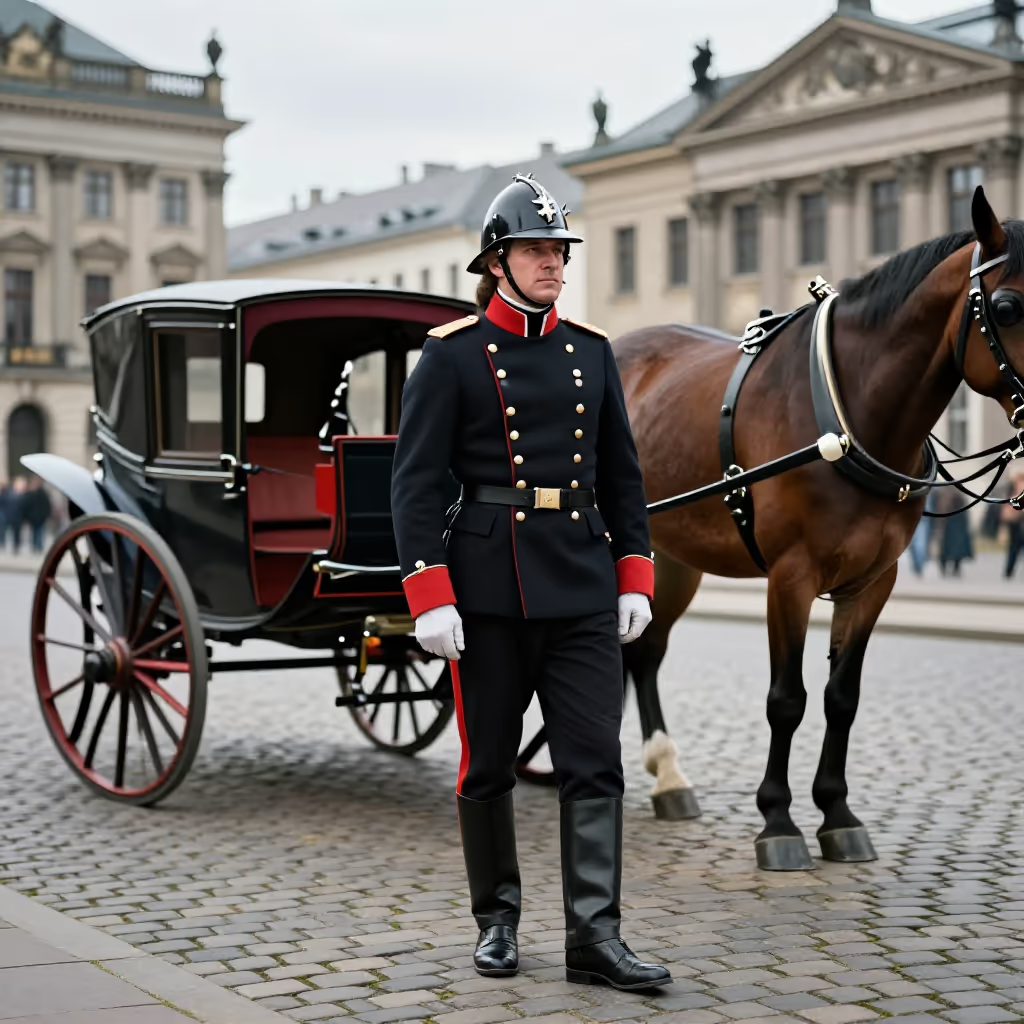
der Preuße
Prussian
A person who came from or lived in the former state of Prussia. Today, the term is mainly used in a historical context.
Der Kanzler Otto von Bismarck war ein berühmter Preuße.
Chancellor Otto von Bismarck was a famous Prussian.

Prussian
Loading your saved state.
Prussian
A person who came from or lived in the former state of Prussia. Today, the term is mainly used in a historical context.
Der Kanzler Otto von Bismarck war ein berühmter Preuße.
Chancellor Otto von Bismarck was a famous Prussian.

'Der Preuße' (the Prussian) is a noun of the N-declension. This means that it takes the ending '-n' in all cases except the nominative singular.
Die Ausstellung handelt von dem Leben eines Preußen im 19. Jahrhundert.
The exhibition is about the life of a Prussian in the 19th century.
The word is derived from the historical state 'Preußen' (Prussia). The corresponding adjective is 'preußisch' (Prussian) and is often used to describe the typical qualities.
Die preußische Armee war für ihre Disziplin bekannt.
The Prussian army was known for its discipline.
This meaning is used almost exclusively when talking about German history before 1947. In everyday life today, people no longer speak of Prussia as someone's place of origin.
Im Geschichtsunterricht haben wir über die Reformen der Preußen gelernt.
In history class, we learned about the reforms of the Prussians.
In this meaning, the word is often used jokingly or slightly critically to describe someone as overly correct, disciplined, or strict. This use is typical in regional contrast, for example from a southern German perspective.
Er räumt sogar sein Büro nach Farben auf – ein echter Preuße!
He even organizes his office by color—a real Prussian!
Prussian
'preußisch' and 'der Preuße' belong to the same topic area, but they have different grammatical roles. 'preußisch' is an adjective and describes things, people, behavior, or qualities. 'der Preuße' is a noun and means a person who comes from Prussia or to whom typical Prussian qualities are attributed. Learners may confuse the words because both are connected with Prussia. In practical terms: for a person, you say 'ein Preuße'; for a quality or an object, you say 'preußisch'.

Mein Großvater sprach oft von seinem Urgroßvater, der ein Preuße war.
My grandfather often spoke of his great-grandfather, who was a Prussian.
Sein preußischer Stil wirkt sehr ordentlich und streng.
His Prussian style seems very orderly and strict.