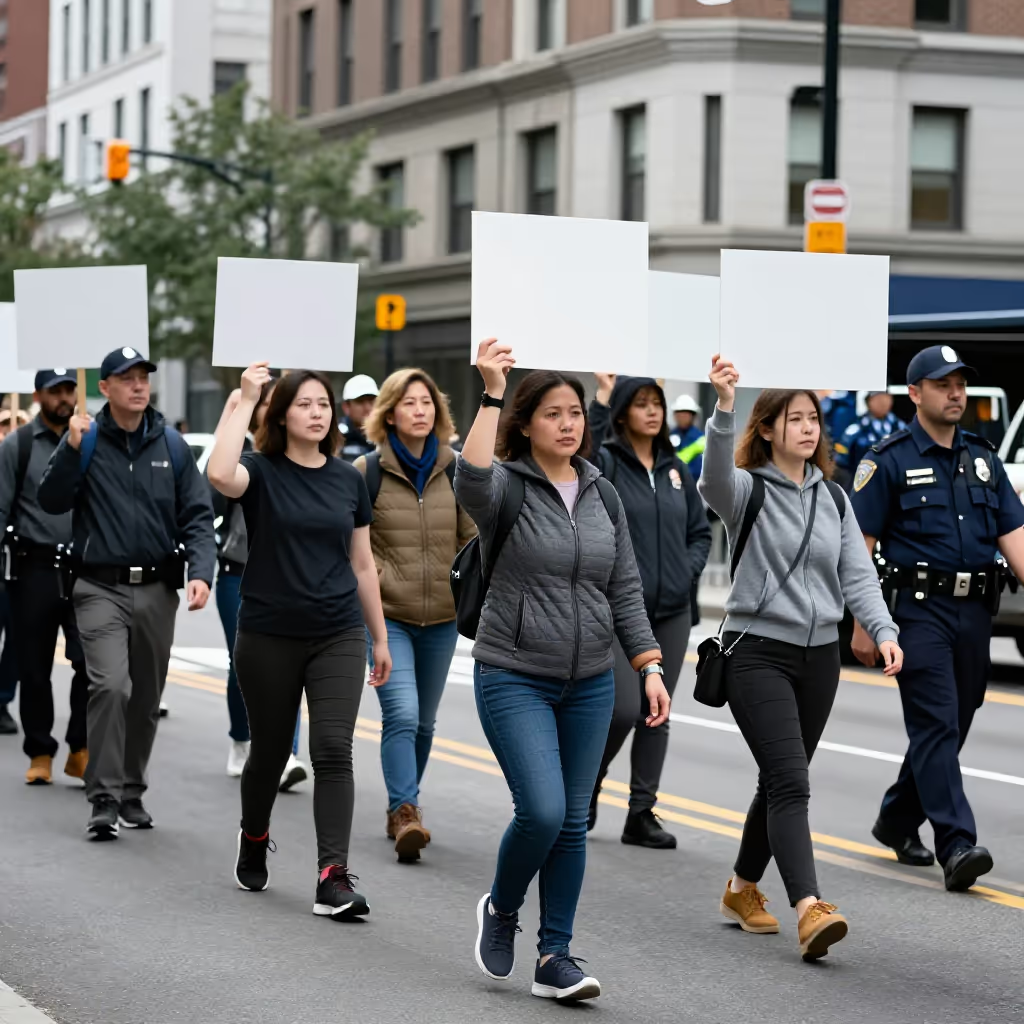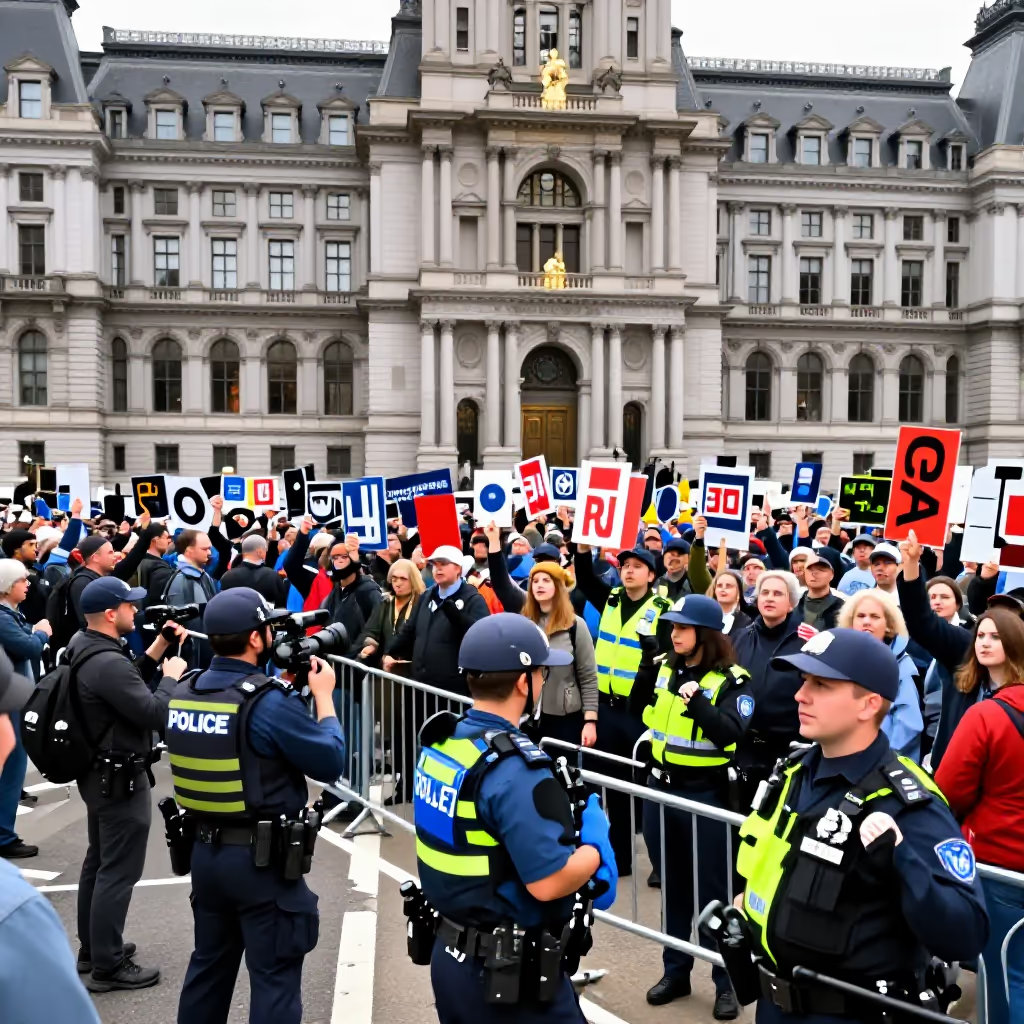
To publicly and emphatically express one's opposition or objection to something, often as part of a demonstration or rally.
example
Die Bürger protestieren gegen den Bau der neuen Autobahn.
The citizens are protesting against the construction of the new highway.

Usage tips
Correct preposition
The verb 'protestieren' (to protest) is almost always used with the preposition 'gegen' and the accusative. You protest 'gegen' (against) a thing or a decision.
EXAMPLE
Die Mitarbeiter protestieren gegen die geplanten Kürzungen.
The employees are protesting against the planned cuts.
Verbs ending in '-ieren'
'Protestieren' belongs to a large group of verbs that end in '-ieren' and often come from other languages. These verbs are always regular and form the past participle with '-t' ('protestiert') and the perfect tense with 'haben'.
EXAMPLE
Gestern haben Tausende von Menschen in der Innenstadt protestiert.
Yesterday, thousands of people protested in the city center.
Context clue
The meaning of public protest is often recognizable from words like 'Demonstration' (demonstration), 'auf der Straße' (in the street), or when a group is being discussed. A personal objection, by contrast, is often described with adverbs like 'lautstark' (loudly) or 'heftig' (strongly/vehemently).
EXAMPLE
Die Studenten gingen auf die Straße, um zu protestieren.
The students took to the streets to protest.
Typical collocations
In the context of demonstrations, 'protestieren' (to protest) is often combined with adverbs like 'friedlich' (peacefully), 'lautstark' (loudly), or 'gemeinsam' (together).
EXAMPLE
Sie versammelten sich, um friedlich gegen die Politik zu protestieren.
They gathered to protest peacefully against the policy.
Compare with
near_synonym
protestieren vs aufstehen
to get up / be open
'aufstehen' and 'protestieren' can both mean that people do not stay silent when they think something is wrong. 'protestieren' says more directly that someone is showing their opposition, for example at a demonstration or in a conversation. 'aufstehen' is more figurative in this sense: you stand up for a cause or against injustice. It often sounds more strongly connected to courage, conviction, or a shared movement. When you mean a concrete action or a clear objection, 'protestieren' fits better. When you want to emphasize that people are taking a stand for something, 'aufstehen' works well.
protestieren
Sarah protestiert gegen die neuen Regeln im Wohnheim.
Sarah is protesting against the new rules in the dormitory.