

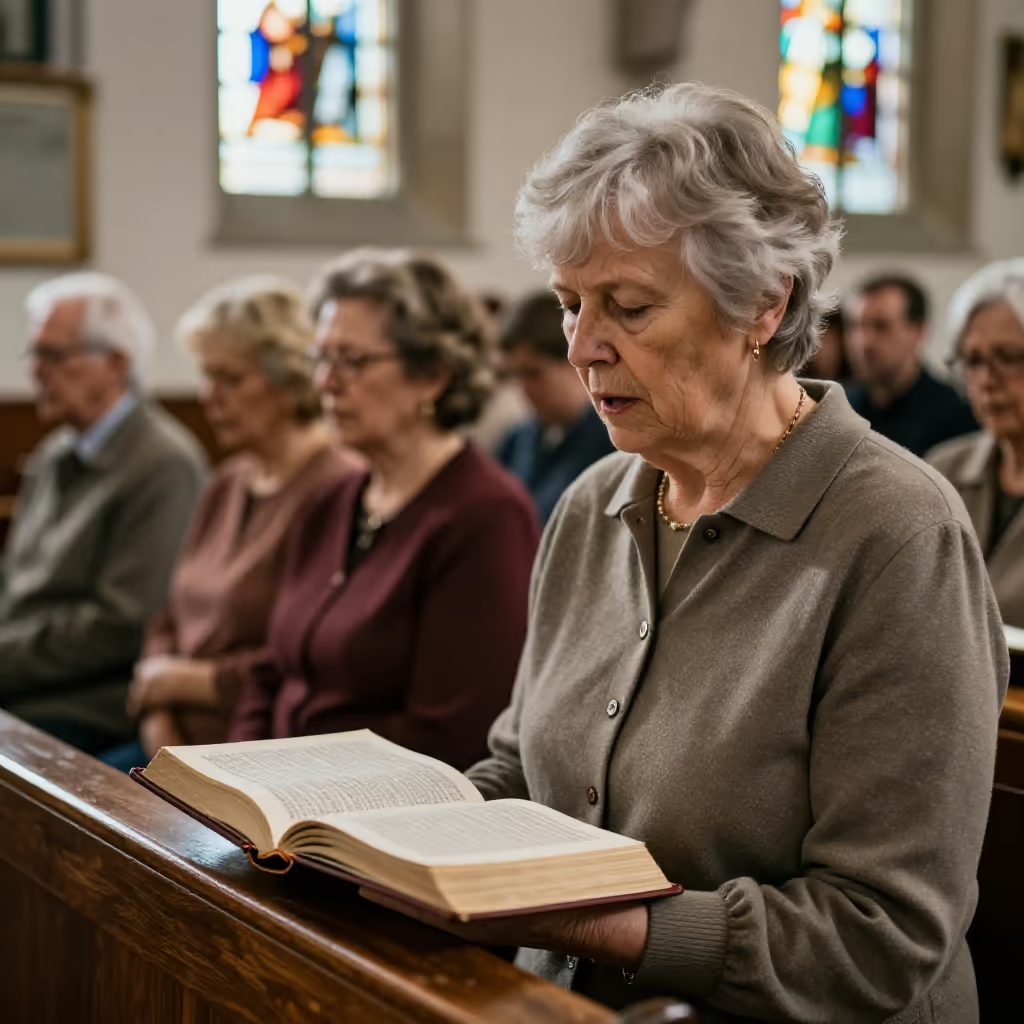
der Psalm
psalm
A religious song, prayer, or poem, especially one from the Book of Psalms in the Old Testament of the Bible.
EXAMPLE
Im Gottesdienst wurde heute der Psalm 23 gebetet.
Psalm 23 was prayed in the church service today.
psalm
Loading your saved state.
psalm
A religious song, prayer, or poem, especially one from the Book of Psalms in the Old Testament of the Bible.
Im Gottesdienst wurde heute der Psalm 23 gebetet.
Psalm 23 was prayed in the church service today.
The word 'Psalm' (psalm) is used almost exclusively in a religious context, especially in a Judeo-Christian context. It refers to the texts from the Book of Psalms in the Bible.
Der Priester las einen Psalm vor der Predigt.
The priest read a psalm before the sermon.
Psalms are typically identified by their number. For example, you say 'Psalm 23' or 'der 91. Psalm' (the 91st psalm).
Mein Lieblingspsalm ist Psalm 121.
My favorite psalm is Psalm 121.
Depending on the context, a psalm is 'gebetet' (prayed), 'gelesen' (read), 'gesungen' (sung), or 'rezitiert' (recited).
Die Gemeinde sang gemeinsam einen bekannten Psalm.
The congregation sang a well-known psalm together.
The collection of all psalms in the Bible is called 'das Buch der Psalmen' (the Book of Psalms). This expression is very common.
Das Buch der Psalmen enthält 150 religiöse Lieder und Gebete.
The Book of Psalms contains 150 religious songs and prayers.
prayer
Gebet can refer to a text or to the act of praying. Psalm, by contrast, is a specific religious type of text, although it can be used as a prayer. Use „Gebet“ for the function or content and „Psalm“ for this particular type of text.

Der Psalm im Gottesdienst war ein religiöses Gedicht aus der Bibel.
The psalm during the service was a religious poem from the Bible.
Das Gebet im Gottesdienst drückte den Dank der Gemeinde aus.
The prayer during the service expressed the congregation's gratitude.