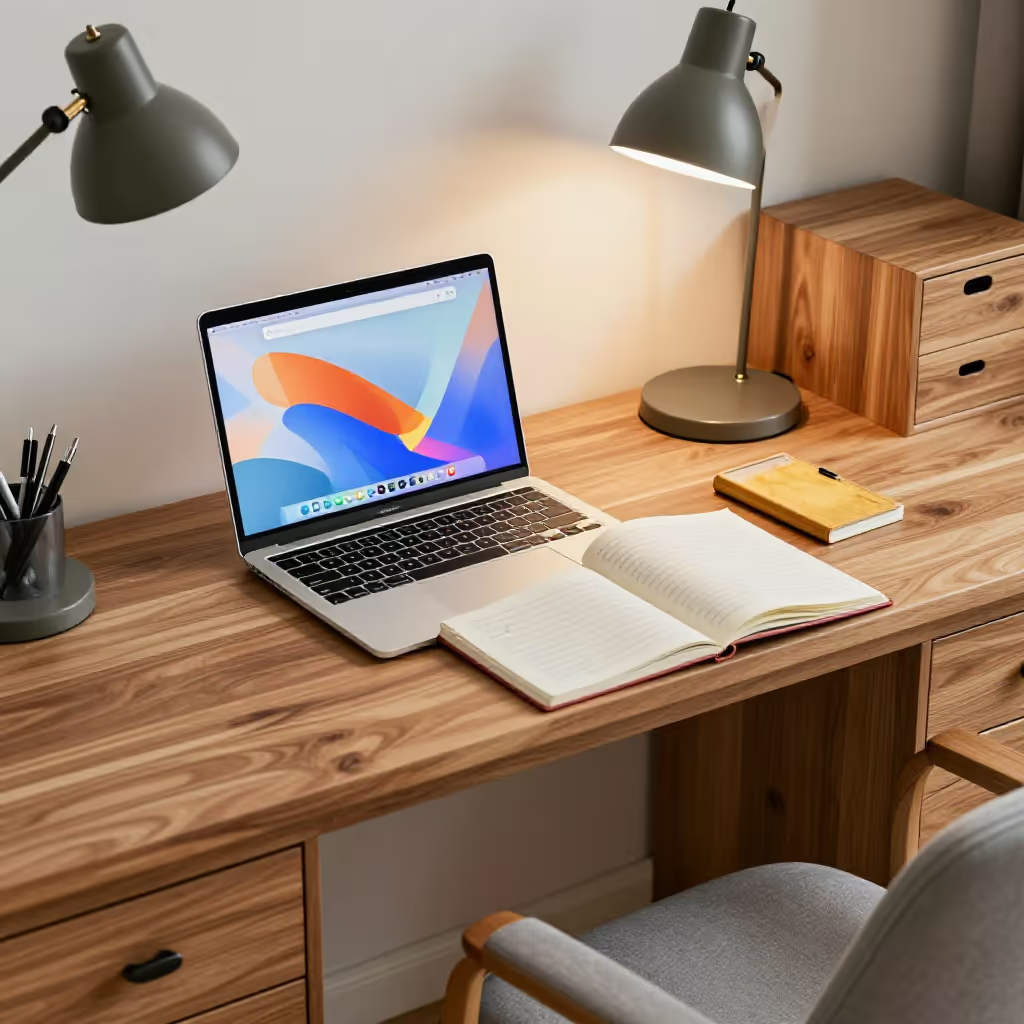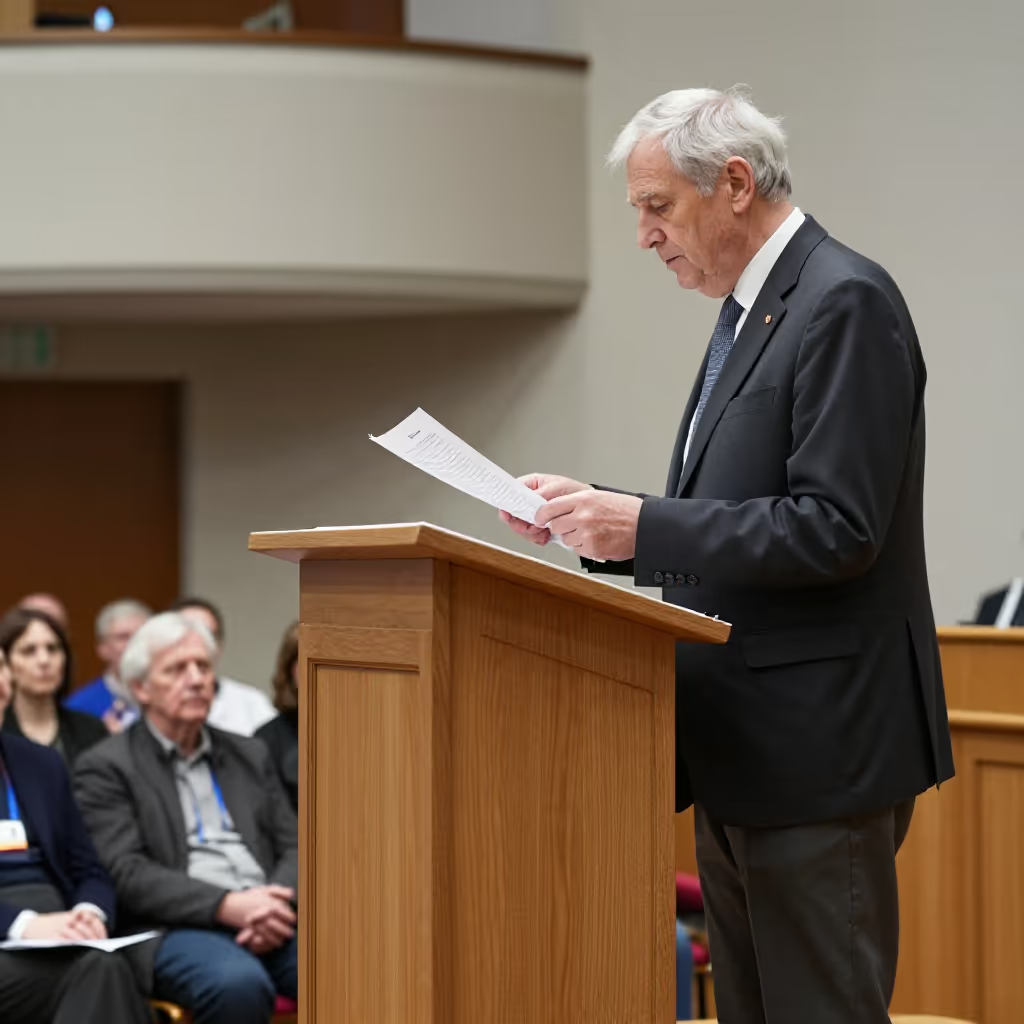
A piece of furniture with a slanted surface at which one can read, write, or give a speech while standing.
example
Der Redner legte seine Notizen auf das Pult und blickte ins Publikum.
The speaker placed his notes on the lectern and looked out at the audience.
Usage tips
Context clue
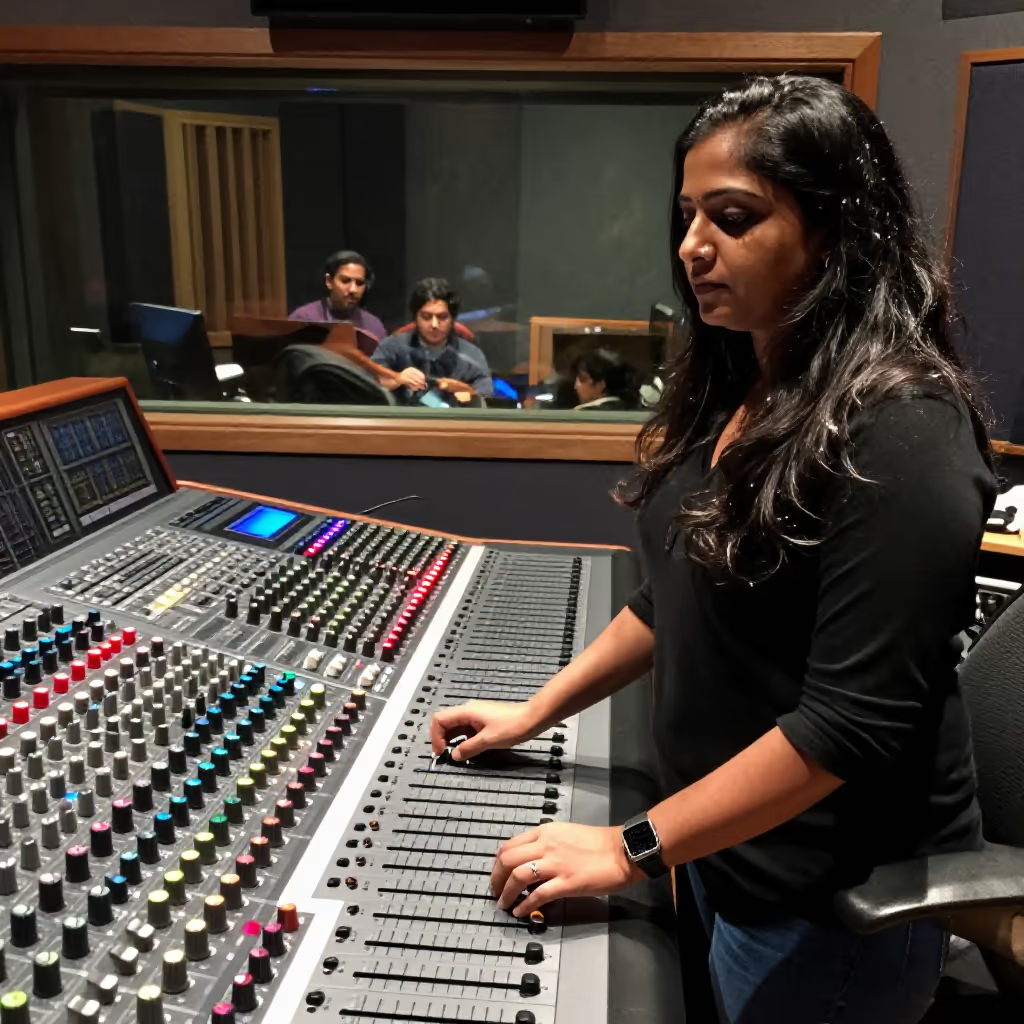
The meaning of 'Pult' (lectern/console/teacher's desk) becomes clear from the context. In the classroom, it is the teacher's desk; during a speech, it is the lectern; and in a recording studio or power plant, it is the technical control console.
EXAMPLE
Der Lehrer legte den Schlüssel auf sein Pult.
The teacher put the key on his desk.
Correct preposition
The position of a person is expressed with 'am Pult' (at the lectern/desk/console). If you put something onto the surface, you use 'auf das Pult' (onto the lectern/desk/console; accusative), while something that is lying there is 'auf dem Pult' (on the lectern/desk/console; dative).
EXAMPLE
Der Professor stand am Pult und erklärte die Grafik.
The professor stood at the lectern and explained the graphic.
Typical compounds
In the technical meaning, 'Pult' (console) is often part of a compound word that describes the function more precisely. Examples are 'das Mischpult' (mixing console, for sound), 'das Schaltpult' (control panel, for switches), or 'das Lichtpult' (lighting console, for lighting).
EXAMPLE
Im Tonstudio steht ein großes Mischpult mit vielen Reglern.
There is a large mixing console with many controls in the recording studio.
Typical collocations
When a lectern is meant, typical phrases are 'ans Pult treten' (to step up to the lectern), 'am Pult stehen' (to stand at the lectern), or 'eine Rede halten' (to give a speech).
EXAMPLE
Der Gastredner trat ans Pult und begrüßte das Publikum.
The guest speaker stepped up to the lectern and greeted the audience.
Compare with
near_synonym · confusable
Pult vs Tisch
table
'der Tisch' and 'das Pult' are both pieces of furniture where you can write, read, or put something down. 'Tisch' is the general term and fits eating, work, and many everyday situations. 'Pult' is more specific: it often has a slanted surface or is found in a particular room, for example at the front of a classroom as a teacher's desk. The words can be confused because a 'Pult' can be a kind of table. In everyday life, people usually say 'Tisch'. 'Pult' sounds more precise when it is about teaching, giving speeches, or a special work surface.
Pult
Nach dem Unterricht liegen noch drei Hefte auf dem Pult der Lehrerin.
After class, there are still three notebooks on the teacher's desk.
Tisch
Ben legt die Zeitung auf den Tisch und macht das Fenster auf.
Ben puts the newspaper on the table and opens the window.