

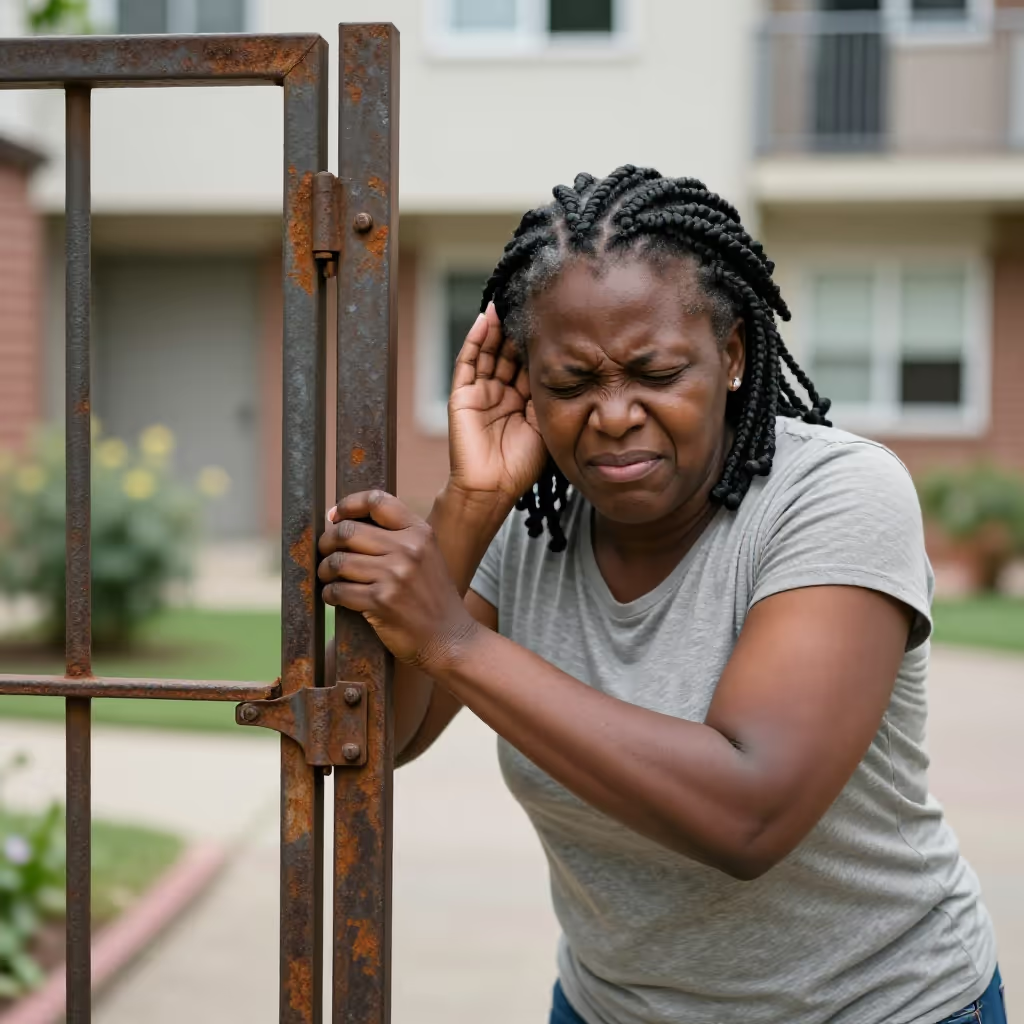
quietschen
to squeak
To produce a high-pitched, shrill, and often unpleasant sound, usually caused by friction.
EXAMPLE
Die Bremsen des alten Fahrrads quietschen bei jeder Bremsung.
The brakes on the old bicycle squeak every time he brakes.
to squeak / squeal
Loading your saved state.
to squeak
To produce a high-pitched, shrill, and often unpleasant sound, usually caused by friction.
Die Bremsen des alten Fahrrads quietschen bei jeder Bremsung.
The brakes on the old bicycle squeak every time he brakes.

to squeal
To let out a high-pitched sound of joy, excitement, or pleasure.
Die Kinder quietschten vor Vergnügen, als sie die Schaukel sahen.
The children squealed with delight when they saw the swing.
'Quietschen' (to squeak/squeal) is an onomatopoeic word. This means the word itself imitates the sound it describes—a high-pitched, shrill sound.
Hörst du, wie die alte Schaukel quietscht?
Do you hear how the old swing squeaks?
You can tell whether a noise or a feeling is meant from the subject. When things 'quietschen' (squeak), such as brakes or doors, it is about a sound caused by friction. When people or animals 'quietschen' (squeal), they usually express joy or excitement.
Die Reifen quietschten, als das Auto scharf bremste.
The tires squealed when the car braked sharply.
This meaning is often connected with things that make noises through friction. Typical subjects are: the brakes, the tires, the door, the bed, or the shoes.
Die nassen Schuhe quietschen auf dem glatten Boden.
The wet shoes squeak on the smooth floor.
When 'quietschen' (to squeal) describes an emotion, the reason is often given with the preposition 'vor' + dative. Typical phrases are 'vor Freude quietschen' (to squeal with joy) or 'vor Vergnügen quietschen' (to squeal with delight).
Als sie das Geschenk sah, quietschte sie vor Freude.
When she saw the present, she squealed with joy.
to screech / scream
Kreischen and quietschen can both describe a high-pitched, unpleasant sound made by brakes or doors. Kreischen emphasizes a particularly loud, piercing, or scraping sound. Quietschen refers more specifically to the high-pitched sound produced by friction.

Vor der Kurve quietschten die Bremsen durch die starke Reibung.
Just before the bend, the brakes squeaked because of the intense friction.
Vor der Kurve kreischten die Bremsen laut und durchdringend.
Just before the bend, the brakes screeched loudly and piercingly.