

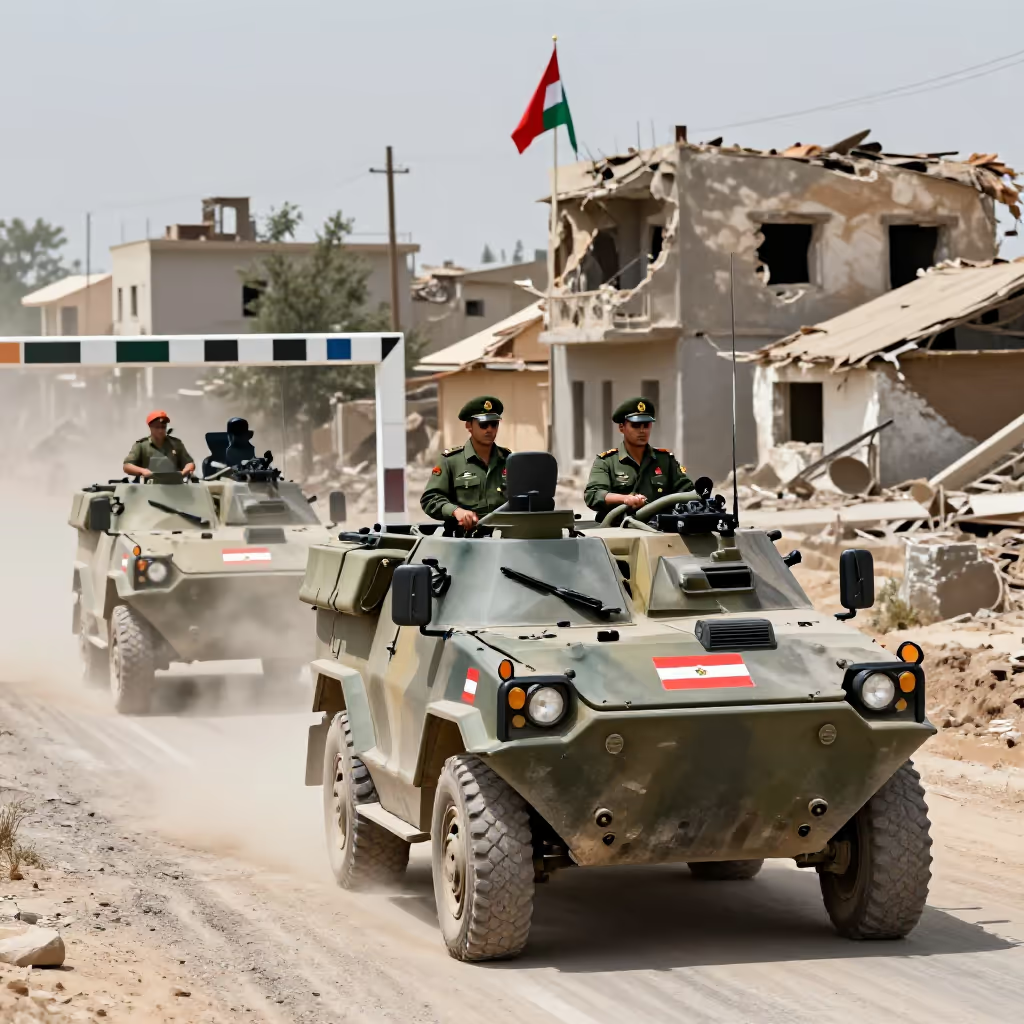
A military unit that is under the authority of a country's official government and fights for it, especially in a civil war or internal conflict. It is usually used in the plural.
example
Die Regierungstruppen haben die Kontrolle über die Hauptstadt zurückgewonnen.
The government troops have regained control of the capital.
Usage tips
Word composition
The word is made up of three parts: 'Regierung' (government), the linking -s, and 'Truppe' (troop/unit). So it literally describes a troop that belongs to a government.
EXAMPLE
Die Regierungstruppen sicherten die Grenzen des Landes.
The government troops secured the country's borders.
Use in the plural
Although there is a singular form, the word is used almost exclusively in the plural 'Regierungstruppen' (government troops). This refers to the entirety of the government's military forces.
EXAMPLE
Berichten zufolge rücken die Regierungstruppen weiter vor.
According to reports, the government troops are continuing to advance.
Typical context
This term is used mainly in reporting on political conflicts, civil wars, or uprisings. It describes one of the parties to the conflict.
EXAMPLE
Die Kämpfe zwischen den Rebellen und den Regierungstruppen dauern an.
The fighting between the rebels and the government troops continues.
Compare with
near_synonym · confusable
Regierungstruppe vs Armee
army
'die Armee' and 'die Regierungstruppe' can both refer to armed forces that fight for a state. 'Armee' is the more general word for a country's armed forces. 'Regierungstruppen' is usually used when talking about a civil war or an internal conflict. It then refers to units that are on the side of the official government. The words can be confused because government troops are often part of the army. However, 'Regierungstruppen' emphasizes the contrast with rebels or other armed groups.
Regierungstruppe
In der Stadt kam es zu Kämpfen zwischen Rebellen und Regierungstruppen.
Fighting broke out in the city between rebels and government troops.