

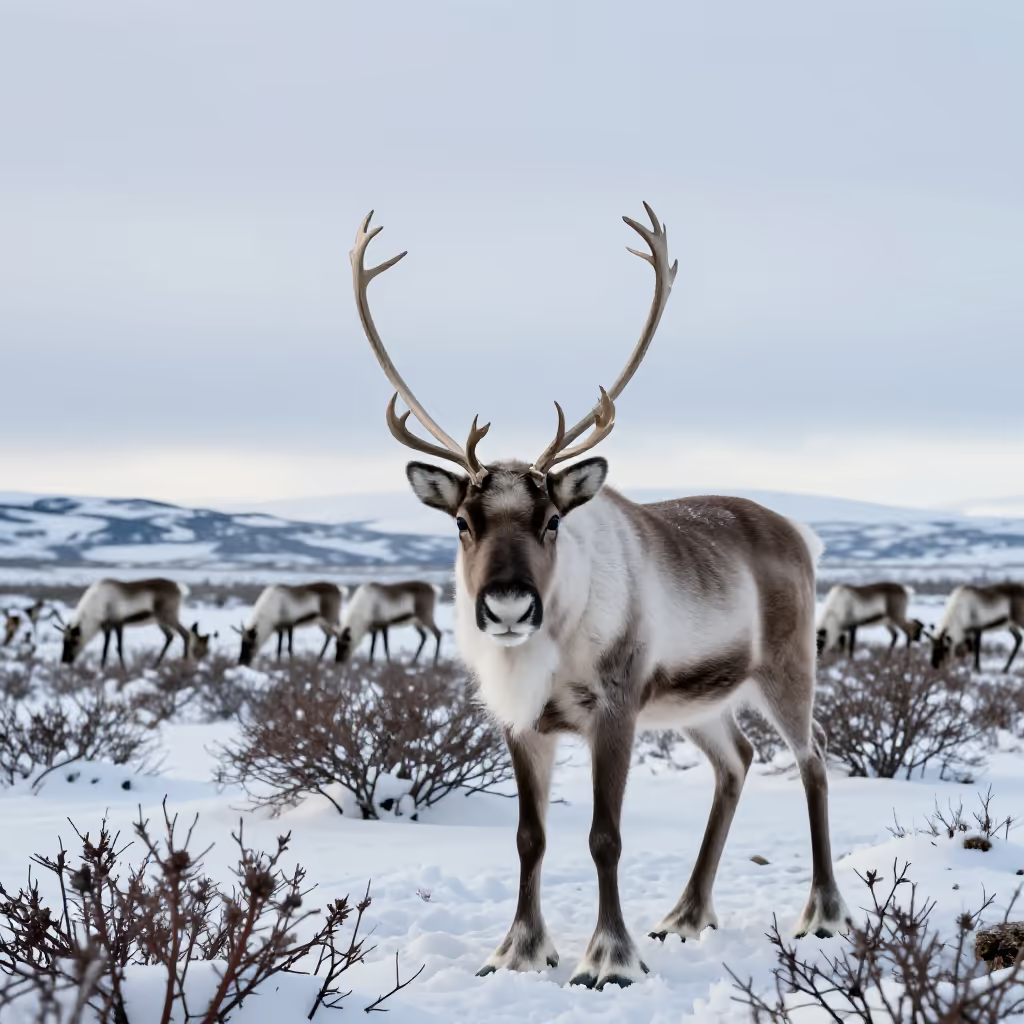
A species of deer that lives in the Arctic and subarctic regions of the Northern Hemisphere. Reindeer are known for their ability to survive in cold climates and are culturally often associated with Santa Claus.
example
Eine Herde Rentiere zog durch die verschneite Landschaft Lapplands.
A herd of reindeer moved through the snowy landscape of Lapland.
Usage tips
Word structure
The word ends in '-tier', which means 'Tier' (animal). The first part 'Ren-' specifies the type of animal. This structure helps you recognize the word as the name of an animal.
EXAMPLE
Das Murmeltier lebt in den Alpen.
The marmot lives in the Alps.
Cultural context
In Germany, the reindeer is inseparably connected with Christmas. It is known as the animal that pulls Santa Claus's sleigh.
EXAMPLE
Kinder malen oft den Weihnachtsmann mit seinen Rentieren.
Children often draw Santa Claus with his reindeer.
Typical collocations
Common word combinations refer to the animals' way of life, such as 'eine Herde Rentiere' (a herd of reindeer), 'Rentier-Geweih' (reindeer antlers), or 'Rentiere in der Tundra' (reindeer in the tundra).
EXAMPLE
Im hohen Norden kann man Rentierfleisch essen.
In the far north, you can eat reindeer meat.
Compare with
confusable
Rentier vs Hirsch
stag / idiot
'der Hirsch' and 'das Rentier' can be confused because reindeer also belong to the deer family. In everyday language, however, 'Hirsch' usually means a large male deer, for example a red deer stag with antlers. 'Rentier' refers to a specific species of deer from very cold regions. Reindeer are also known from stories about Santa Claus. For a normal large forest animal in Central Europe, you would be more likely to say 'Hirsch'; for the animal from the north, you say 'Rentier'.
Rentier
Im Winter ziehen Rentiere durch den Schnee und suchen nach Futter.
In winter, reindeer move through the snow and look for food.
Hirsch
Als es dunkel wurde, hörten wir im Wald einen Hirsch rufen.
When it got dark, we heard a stag calling in the forest.