

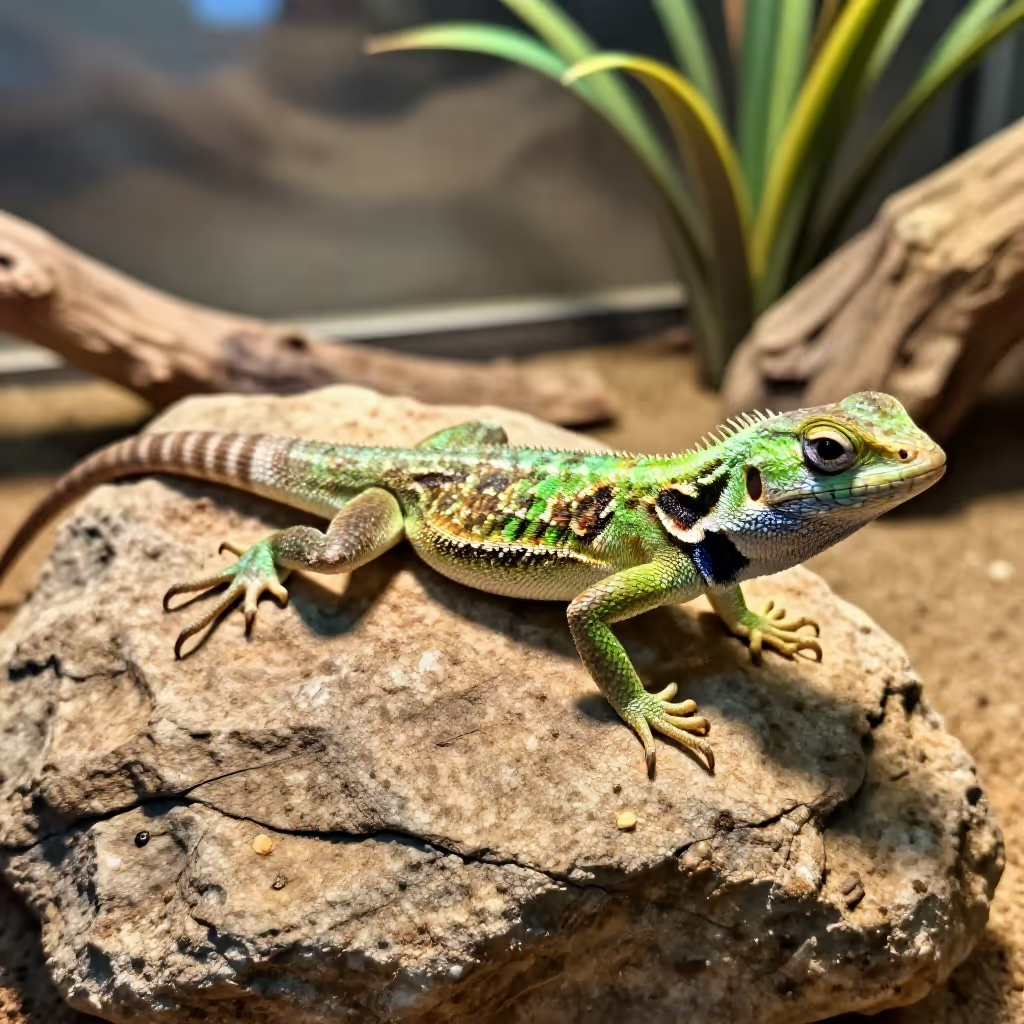
An animal from the class of reptiles, characterized by scaly skin, lung breathing, and usually by laying eggs. Reptiles include snakes, lizards, turtles, and crocodiles, for example.
example
Die Schlange ist ein faszinierendes, aber oft gefürchtetes Reptil.
The snake is a fascinating, but often feared, reptile.
Usage tips
Biological technical term
'Reptil' (reptile) is a biological technical term. You use it when referring to the animal class in general. In normal conversation, people usually name the specific animal directly.
EXAMPLE
Im Biologieunterricht lernen wir heute über Reptilien.
In biology class today, we're learning about reptiles.
Classifying animals
To express that an animal belongs to this group, people often use the phrase 'gehört zu den Reptilien' (belongs to the reptiles) or 'ist ein Reptil' (is a reptile).
EXAMPLE
Das Krokodil gehört zu den Reptilien.
The crocodile belongs to the reptiles.
Use in the plural
The word is very often used in the plural, 'die Reptilien' (the reptiles), to describe the entire animal class. In this case, examples are often given.
EXAMPLE
Zu den Reptilien zählen Schlangen, Krokodile und Schildkröten.
Reptiles include snakes, crocodiles, and turtles.
Compare with
confusable
Reptil vs Dinosaurier
dinosaur
'Dinosaurier' and 'Reptil' belong to the same topic area of animals, but they are not the same. A 'Dinosaurier' is an extinct animal from prehistoric times. A 'Reptil' is a larger animal group; it includes snakes, lizards, turtles, and crocodiles, for example. Learners may confuse the words because dinosaurs are described as reptile-like animals. The important point is: not every reptile is a dinosaur. 'Reptil' is the more general term, while 'Dinosaurier' is more specific and refers to extinct animals.
Reptil
Im Terrarium liegt ein Reptil ruhig unter der warmen Lampe.
A reptile lies quietly under the warm lamp in the terrarium.
Dinosaurier
Das Kind malt einen Dinosaurier mit langen Zähnen und großem Schwanz.
The child draws a dinosaur with long teeth and a big tail.