

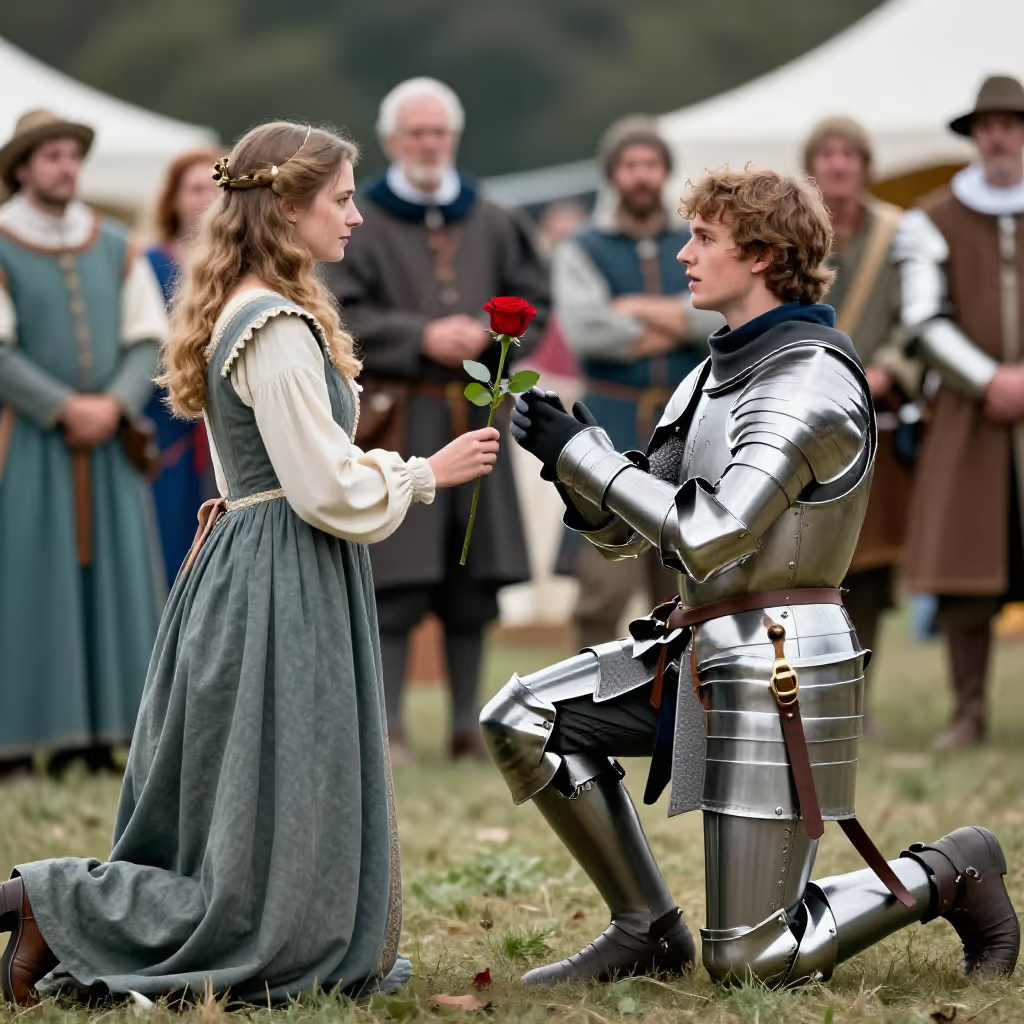
To behave like a knight, especially to court a person’s favor or fight for a cause. The word is outdated and today is mostly used only in a historicizing or ironic way.
example
In den alten Geschichten musste der Held um die Prinzessin rittern.
In the old stories, the hero had to vie for the princess.
Usage tips
Word family
The verb 'rittern' is derived directly from the noun 'der Ritter' (the knight). Literally, it means to behave or act like a knight.
EXAMPLE
Er ritterte um ihre Aufmerksamkeit.
He vied for her attention.
Outdated style
This word is very old-fashioned and is not used in normal everyday speech. You find it in historical stories, fairy tales, or when someone deliberately wants to sound ironic and overly formal.
EXAMPLE
Er versuchte, mit altertümlichen Gedichten um sie zu rittern.
He tried to court her with old-fashioned poems.
Sentence structure with preposition
'rittern' is often used with the preposition 'um' and the accusative when it is about fighting for someone’s favor or for something. The preposition 'für' expresses that one is standing up for an idea or a goal.
EXAMPLE
Die beiden Prinzen ritterten um die Hand der Königstochter.
The two princes vied for the hand of the king’s daughter.
Compare with
near_synonym
rittern vs kämpfen
to fight
'kämpfen' and 'rittern' can both mean that someone strongly commits themselves to something or vies for something. 'kämpfen' is the normal and neutral word for modern situations. You can 'kämpfen' for rights, for a job, or against a problem. 'rittern' is outdated and today usually sounds historical or ironic. It recalls knights and is more suitable when you deliberately want an old-fashioned or joking tone. In normal conversations, 'kämpfen' is almost always more natural.
rittern
Im Theaterstück rittern zwei junge Männer um die Gunst der Prinzessin.
In the play, two young men vie for the princess's favor.
kämpfen
Viele Eltern kämpfen für einen sicheren Schulweg ihrer Kinder.
Many parents are fighting for a safe route to school for their children.