

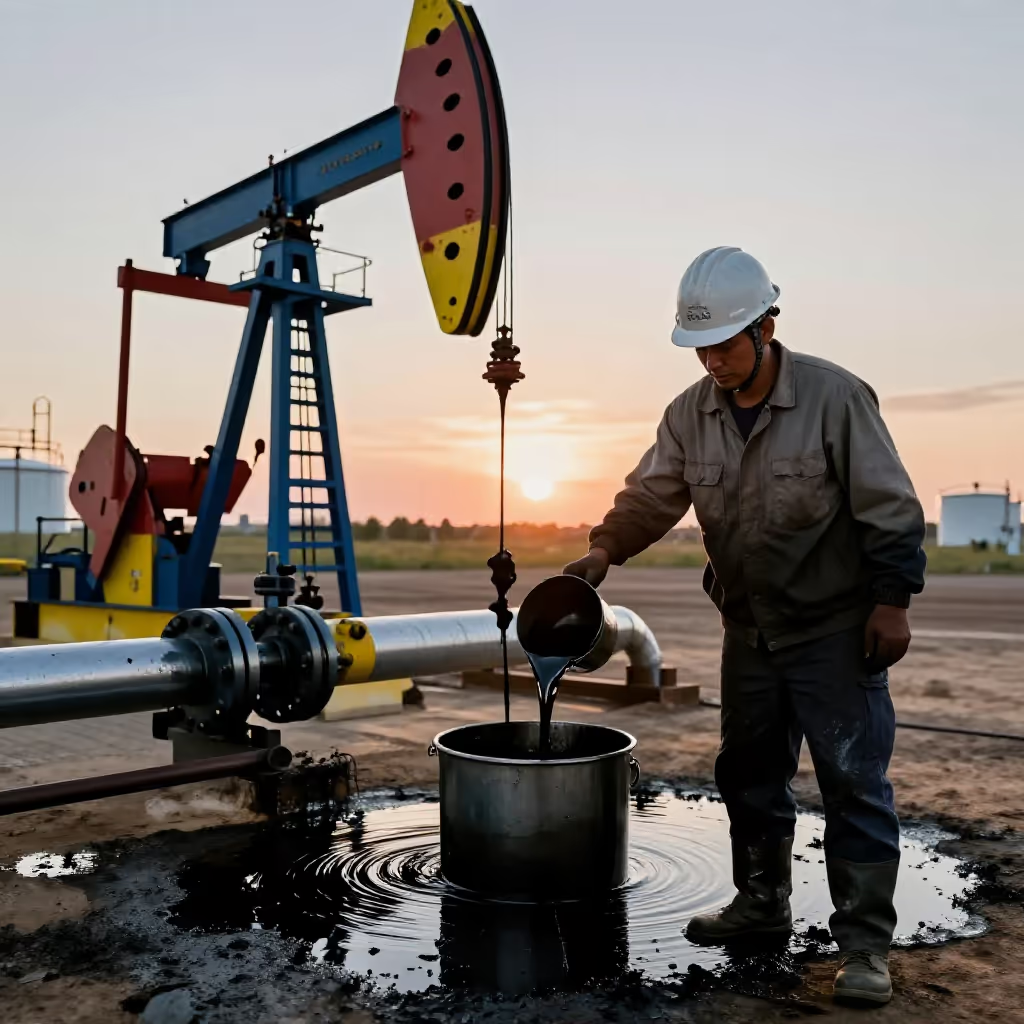
Unprocessed petroleum extracted from underground deposits, which serves as the basis for producing gasoline, diesel, heating oil, and many other chemical products.
example
Der Weltmarktpreis für Rohöl wird von Angebot und Nachfrage bestimmt.
The world market price for crude oil is determined by supply and demand.
Usage tips
Word composition
The word is made up of 'roh' (raw) and 'Öl' (oil). Here, 'roh' means 'unprocessed' or 'in its natural state'. So the meaning is literally 'unprocessed oil'.
EXAMPLE
Rohöl muss in einer Raffinerie verarbeitet werden, bevor man es nutzen kann.
Crude oil has to be processed in a refinery before it can be used.
Register: technical language
'Rohöl' (crude oil) is a term used mainly in the fields of economics, politics, and industry, especially in news reports and technical reports.
EXAMPLE
Die Nachrichten berichten über die steigenden Preise für Rohöl.
The news reports on the rising prices of crude oil.
Typical verbs
Common verbs in connection with crude oil are 'fördern' (to extract from the earth), 'verarbeiten' (to process), or 'raffinieren' (to refine; to convert into other products).
EXAMPLE
Mehrere Länder haben beschlossen, weniger Rohöl zu fördern.
Several countries have decided to extract less crude oil.
Compare with
near_synonym · confusable
Rohöl vs Öl
oil
'das Öl' and 'das Rohöl' can both have to do with the fossil raw material. But 'Öl' is more general and can also mean cooking oil or another liquid oil. 'Rohöl' is more precise: it means crude oil that has not yet been processed. Products such as gasoline, diesel, or heating oil are later made from crude oil. Learners may confuse the words because news reports often just say 'Öl' for short. If the unprocessed raw material is meant, 'Rohöl' is the more precise choice.
Rohöl
Das Rohöl wird in der Raffinerie weiterverarbeitet.
The crude oil is processed further in the refinery.
Öl
Beim Kochen ist zu viel Öl in die Pfanne gekommen.