

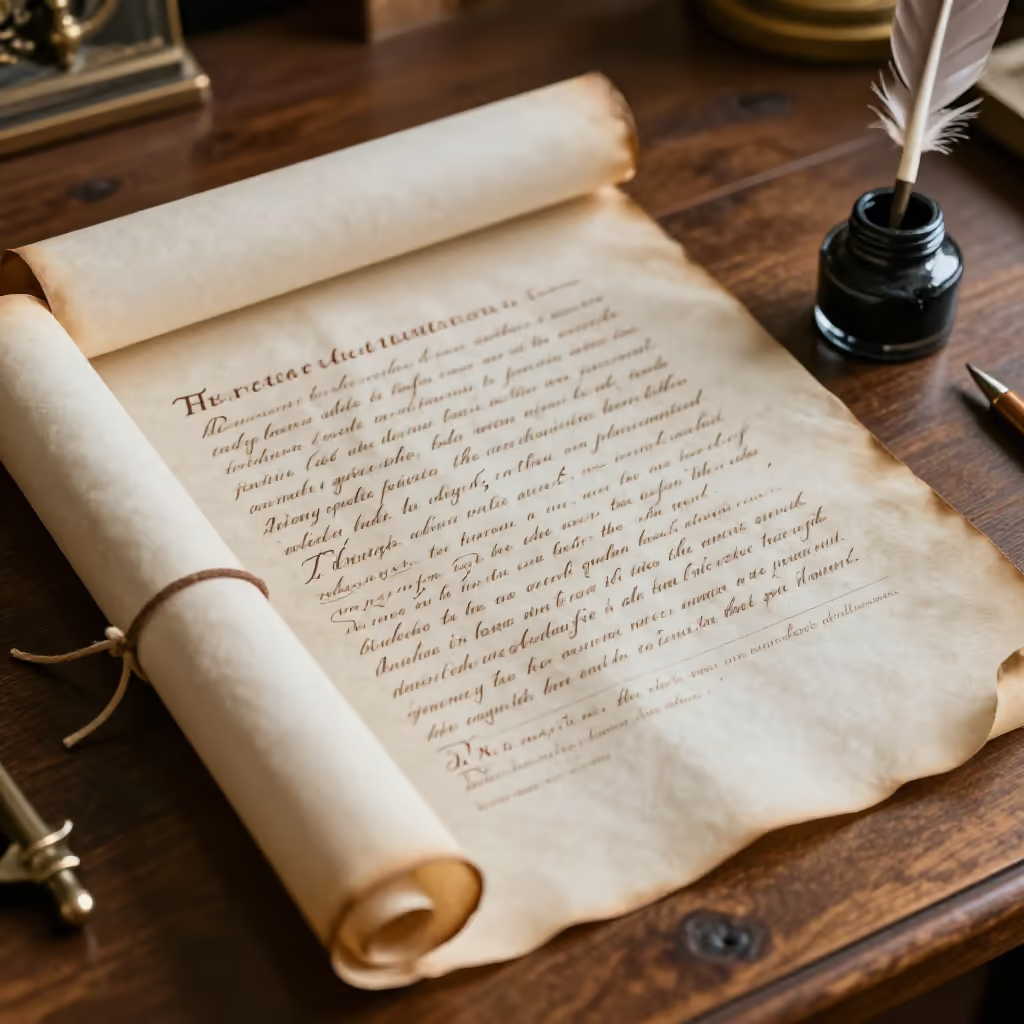
An outdated term for a roll of paper or parchment that served as a written document. The word is hardly used anymore today.
example
Der Archivar entzifferte die Schrift auf der alten Role.
The archivist deciphered the writing on the old scroll.
Usage tips
False friend
Although 'Role' looks like the English word 'role' (a function or task), it has a completely different meaning. It refers to an old written scroll and is not a synonym for 'Aufgabe' (task).
EXAMPLE
Er dachte, das Wort bedeutet Aufgabe, aber es ist ein altes Dokument.
He thought the word meant task, but it is an old document.
Register and style
This word is outdated and is no longer actively used in modern German. It is found almost exclusively in historical texts or in descriptions of archive material.
EXAMPLE
Im Museum wurde eine mittelalterliche Role ausgestellt.
A medieval scroll was displayed in the museum.
Typical context
You would most likely encounter this word in an archive, a library with old manuscripts, or in a historical novel. It belongs to the technical language of historians and archivists.
EXAMPLE
Der Historiker untersuchte die Siegel auf der königlichen Role.
The historian examined the seals on the royal scroll.
Compare with
near_synonym · confusable
Role vs Rolle
role / roll
'die Rolle' and 'die Role' look very similar and can both have to do with something rolled up. 'die Rolle' is the normal word used today, for example for a roll of paper, film, or thread. 'die Role' is an old term for a scroll made of paper or parchment and is hardly used anymore today. That is why the spelling can be confusing. In modern everyday language, you should almost always write 'Rolle'. 'Role' is at most appropriate in historical or very specialized texts.
Role
Im Museum liegt eine alte Role aus Pergament in einer Glasvitrine.
In the museum, an old scroll made of parchment lies in a glass display case.
Rolle
Für das Paket braucht Tom noch eine Rolle Klebeband.