

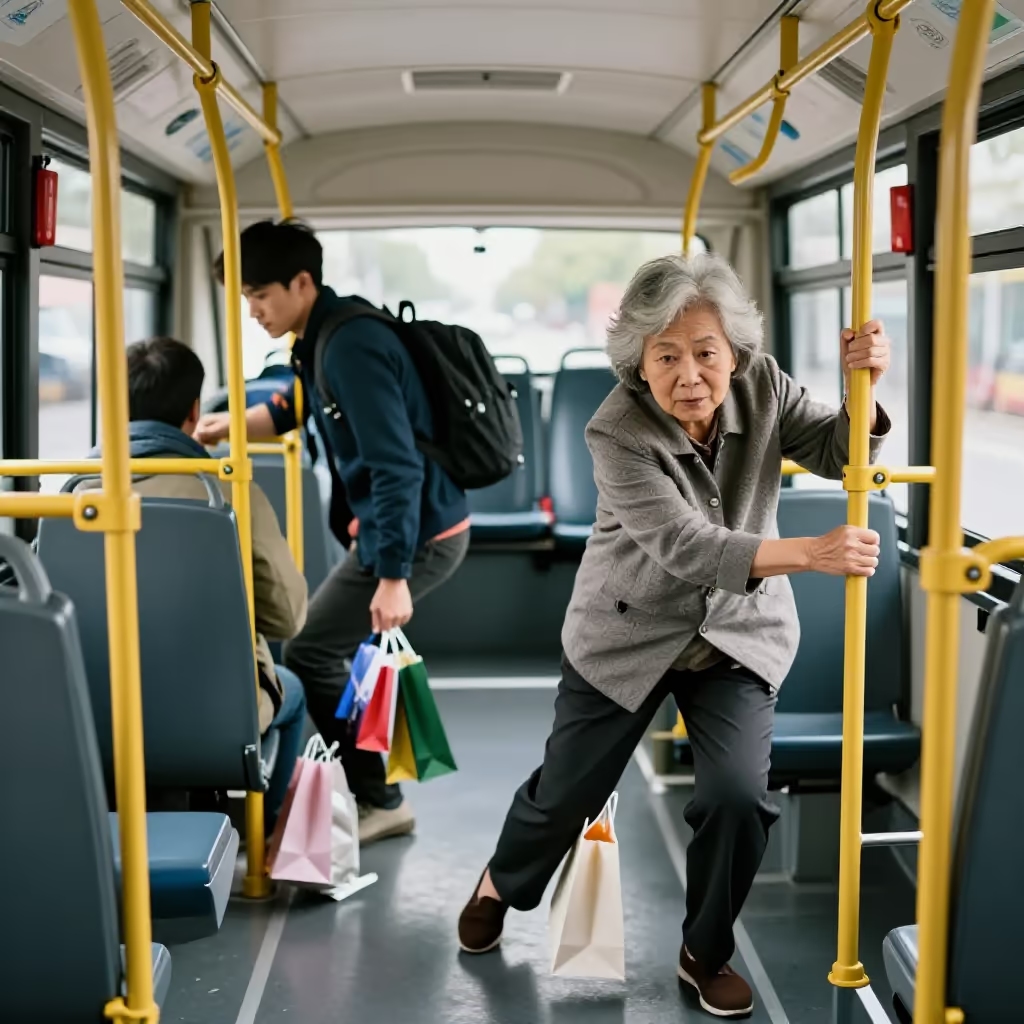
der Ruck
jerk / jolt
A short, sudden, and often forceful movement.
EXAMPLE
Mit einem Ruck öffnete er die klemmende Tür.
With a jerk, he opened the stuck door.
jerk / jolt
Loading your saved state.
jerk / jolt
A short, sudden, and often forceful movement.
Mit einem Ruck öffnete er die klemmende Tür.
With a jerk, he opened the stuck door.
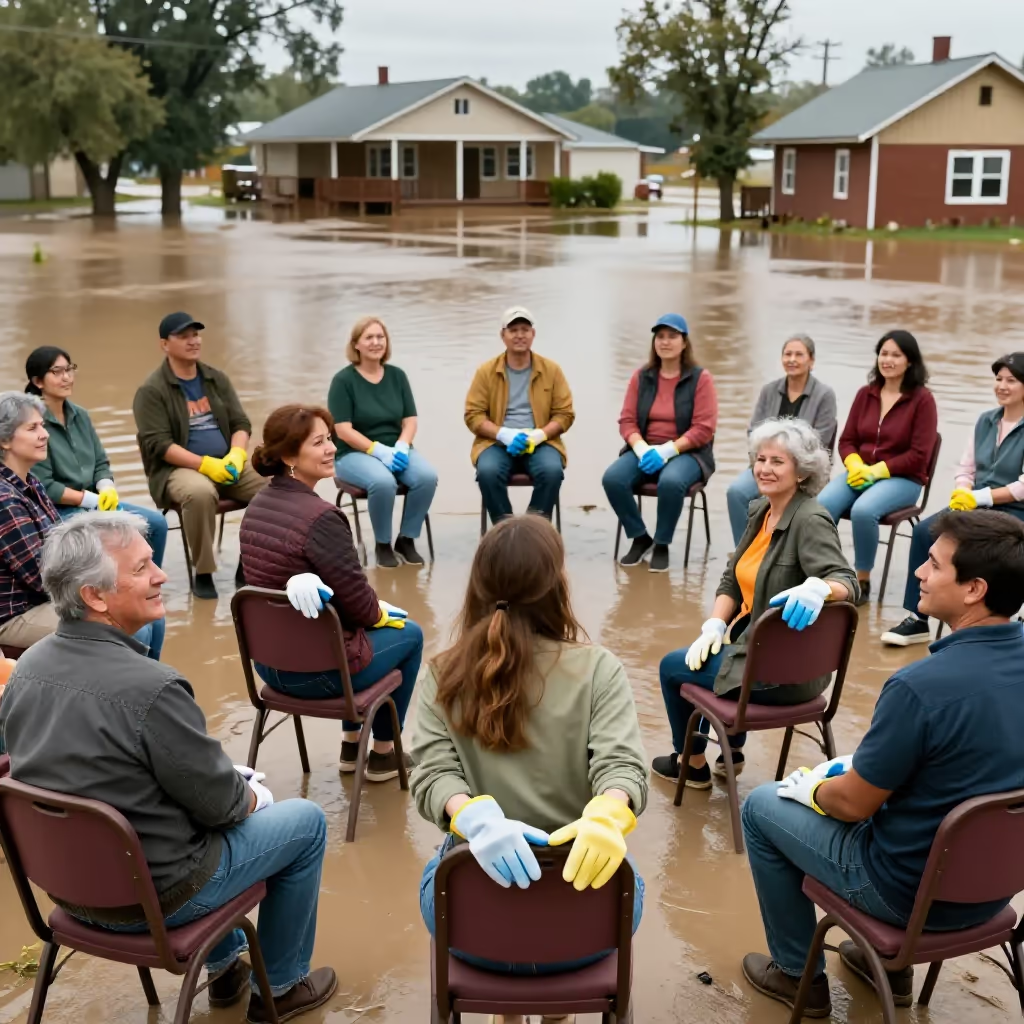
a jolt runs through
A sudden, collective change in the attitude or behavior of a group, often as an impulse toward renewal or a shared effort.
Nach der Rede des Präsidenten ging ein Ruck durch das ganze Land.
After the president's speech, a jolt ran through the whole country.
The noun 'der Ruck' is closely related to the verb 'rücken', which means 'to move something' or 'to shift'. A 'Ruck' is therefore the sudden, short action that results from 'rücken' (moving/shifting).
Er rückte den schweren Schrank mit einem lauten Ruck an die Wand.
He moved the heavy cabinet against the wall with a loud jolt.
For a single, sudden movement, the expression 'mit einem Ruck' (with a jerk) is very commonly used. It describes how an action is carried out: quickly and forcefully.
Die alte Holzkiste ließ sich nur mit einem Ruck öffnen.
The old wooden box could only be opened with a jerk.
The figurative meaning is used almost only in the fixed expression 'ein Ruck geht durch...' (a jolt runs through...). Here, 'ein Ruck' is the subject of the sentence, and the affected group is attached with 'durch' + accusative.
Nach der Ankündigung ging ein Ruck durch die Mannschaft.
After the announcement, a jolt ran through the team.
push / stack / collision
Ruck and Stoß can both refer to a short, forceful movement. Ruck usually emphasizes a sudden change in movement, whereas Stoß more often refers to an external force, an impact, or a jolt. Use Ruck for a jerky movement and Stoß for pressure or a collision from outside.

Beim plötzlichen Anfahren machte der Bus einen kräftigen Ruck.
The bus gave a powerful jolt when it suddenly pulled away.
Beim Zusammenstoß bekam das parkende Auto einen kräftigen Stoß.
The parked car took a hard impact in the collision.