

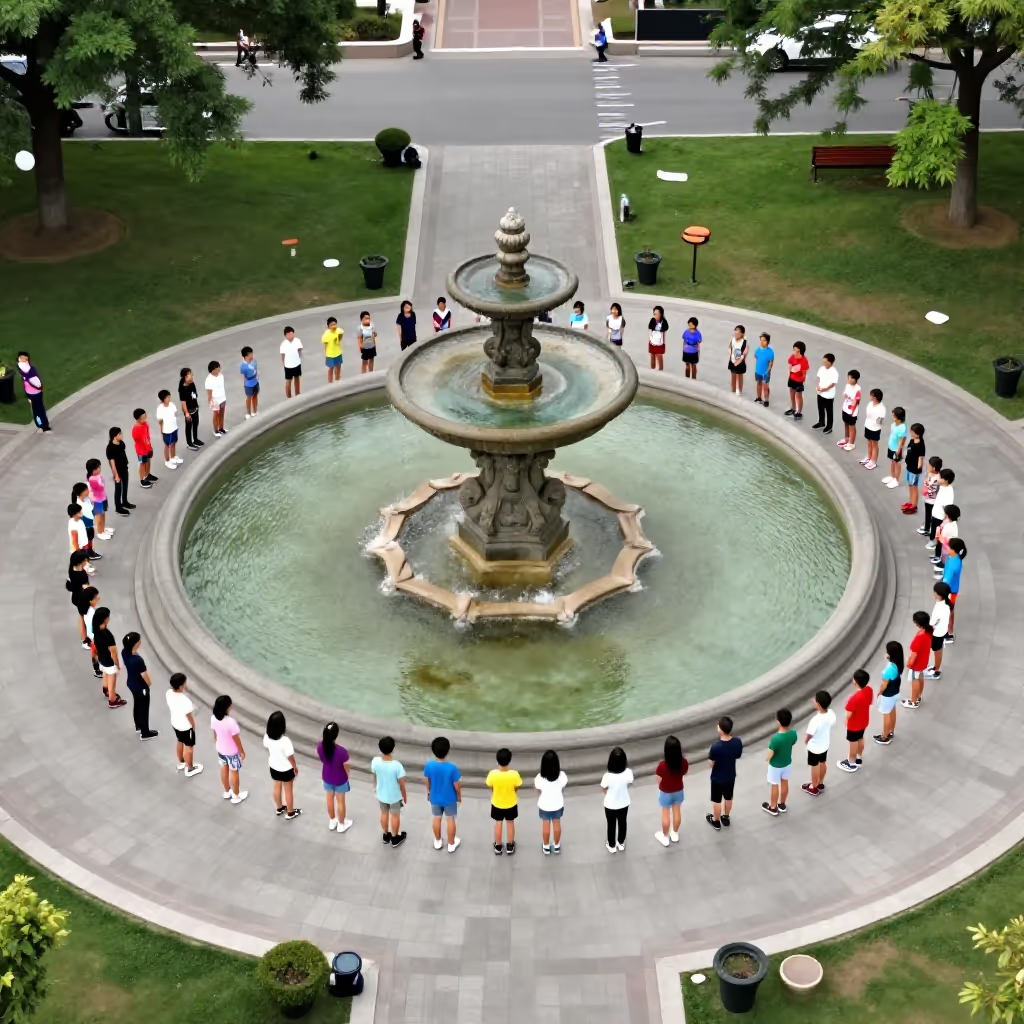
rundherum
around
In a circle around something; on all sides.
EXAMPLE
Um den See führt ein Weg rundherum.
There is a path all the way around the lake.
around / completely
Loading your saved state.
around
In a circle around something; on all sides.
Um den See führt ein Weg rundherum.
There is a path all the way around the lake.

completely
Completely, in every respect; without exception.
Es war ein rundherum gelungener Abend.
It was a completely successful evening.
'Rundherum' is made up of 'rund' (round) and 'herum' (around). It reinforces the idea that something forms a complete circle or is considered from all sides.
Wir sind einmal rundherum um das Schloss gelaufen.
We walked once all the way around the castle.
The spatial meaning ('in a circle') is often recognized by verbs of movement or position, such as 'gehen' (to go/walk), 'fahren' (to drive/go), or 'stehen' (to stand). The figurative meaning ('completely') usually appears with adjectives, such as 'zufrieden' (satisfied) or 'glücklich' (happy), or nouns that describe an event.
Rundherum standen hohe Bäume.
Tall trees stood all around.
In the meaning 'völlig' (completely), 'rundherum' is often combined with positive adjectives: 'rundherum zufrieden' (completely satisfied), 'rundherum glücklich' (completely happy), or in the phrase 'ein rundherum gelungener Tag' (a completely successful day).
Nach dem Urlaub fühlte sie sich rundherum erholt.
After the vacation, she felt completely rested.
completely / all around
Rundum and rundherum can both express that something is located on all sides around something else. Rundherum is the more vivid spatial description of the surrounding area, while rundum is also used more generally and in fixed expressions. Rundherum often sounds especially natural for a specific surrounding area; rundum is also possible.
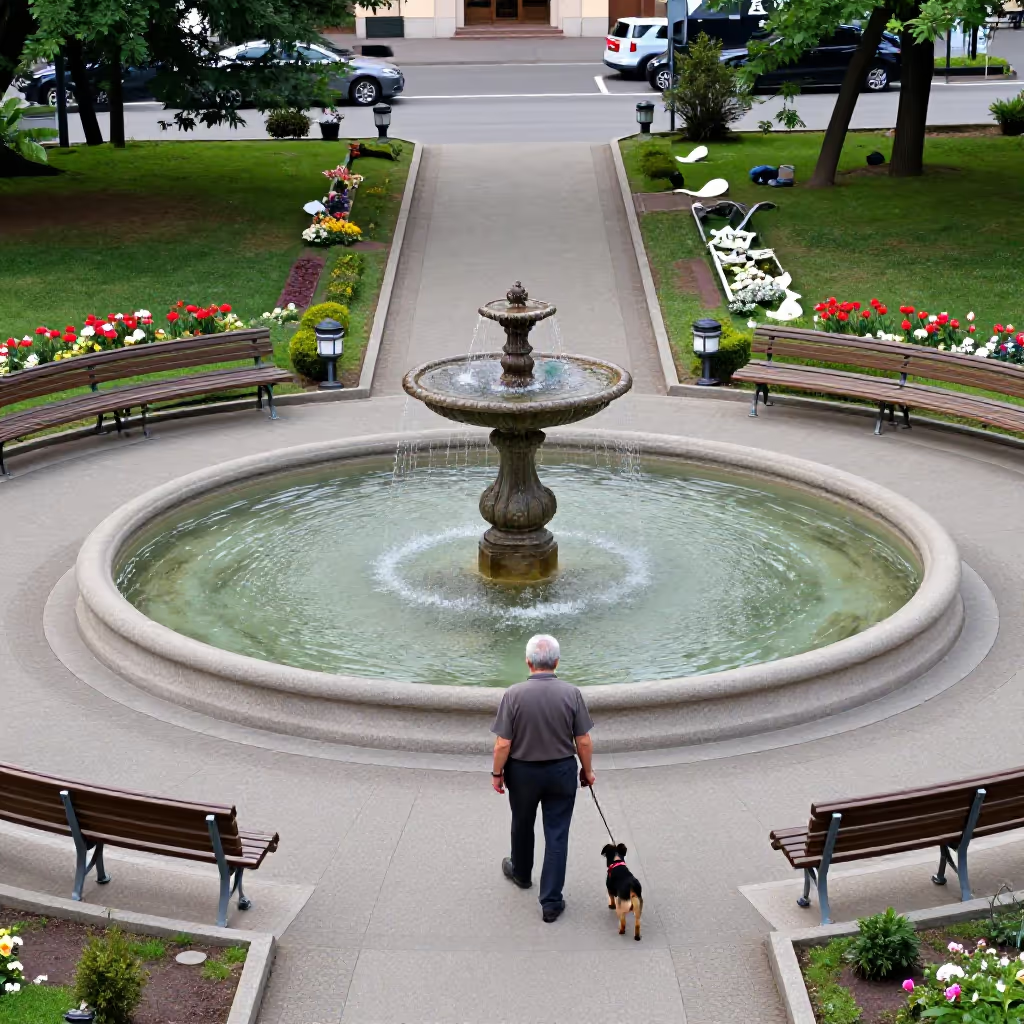
Rundherum um den See stehen hohe Bäume.
Tall trees stand all around the lake.
Rundum den See stehen hohe Bäume.
Tall trees stand all around the lake.