

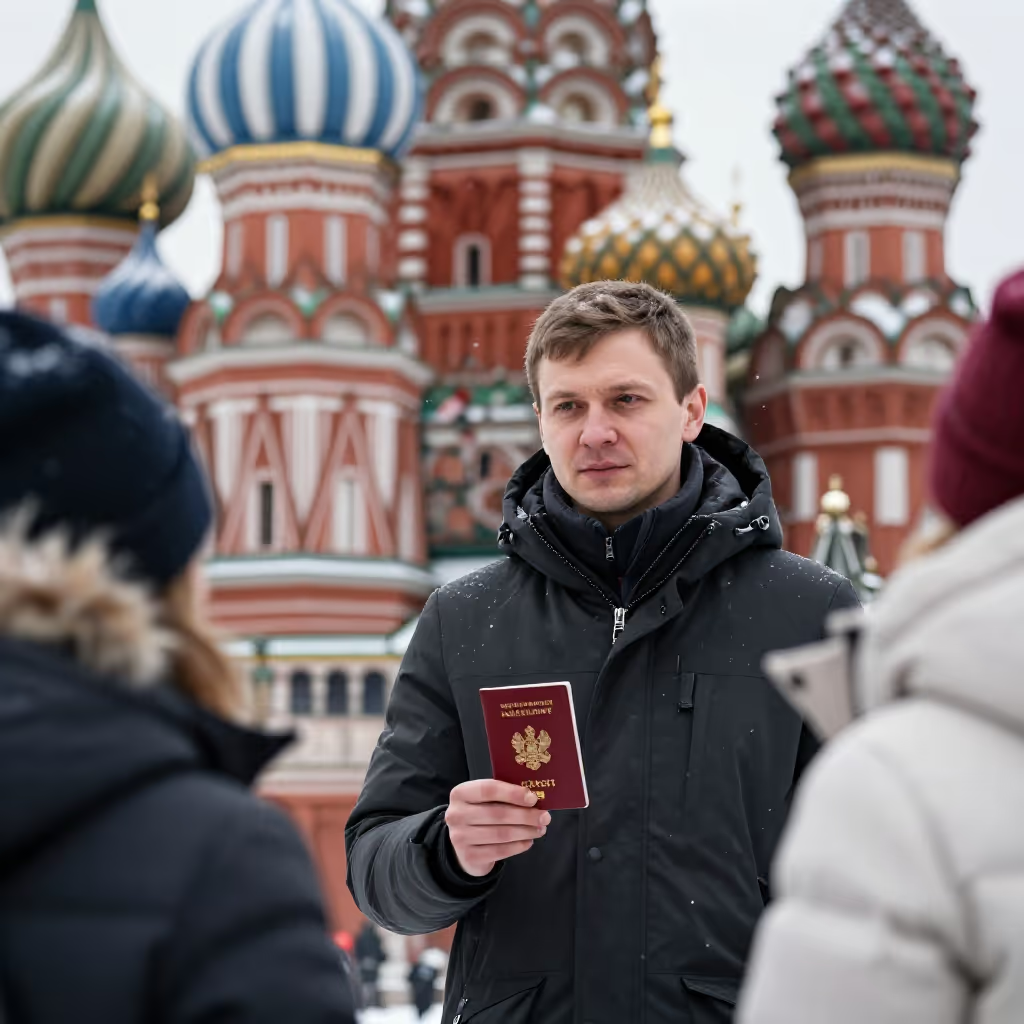
A male person who comes from Russia, has Russian citizenship, or belongs to the Russian ethnic group.
example
Mein neuer Kollege ist Russe und kommt ursprünglich aus Sankt Petersburg.
My new colleague is Russian and originally comes from Saint Petersburg.
Usage tips
N-declension
'Der Russe' (the Russian man) belongs to the N-declension. This means that the word takes the ending '-n' in all cases except the nominative singular. This is a common mistake among learners.
EXAMPLE
Ich habe gestern mit einem Russen gesprochen.
I spoke with a Russian yesterday.
Word family
The word belongs to the word family of 'Russland' (Russia, the country) and 'russisch' (Russian, the adjective). This makes the origin easy to recognize.
EXAMPLE
Er ist Russe und spricht fließend Russisch.
He is Russian and speaks Russian fluently.
Citizenship vs. origin
The word 'Russe' (Russian man) can refer both to citizenship (someone with a Russian passport) and to ethnic or cultural origin. The exact context makes clear what is meant.
EXAMPLE
Obwohl er in Deutschland geboren wurde, fühlt er sich als Russe.
Although he was born in Germany, he feels Russian.
Compare with
confusable
Russe vs Ukrainer
Ukrainian
'der Russe' and 'der Ukrainer' both refer to a male person by origin or citizenship. But the difference is clear: a Russe comes from Russia, has Russian citizenship, or belongs to the Russian ethnic group. A Ukrainer comes from Ukraine or has Ukrainian citizenship. The words can be confused because both countries are in Eastern Europe and some people have multiple languages or cultural connections. Still, you should not simply swap the terms. Use the word that fits the person themselves.
Russe
Der Russe aus unserer Sprachgruppe erzählt gern von seiner Heimatstadt.
The Russian man from our language group likes talking about his hometown.
Ukrainer
Meine Schwester hat im Zug einen Ukrainer kennengelernt.