

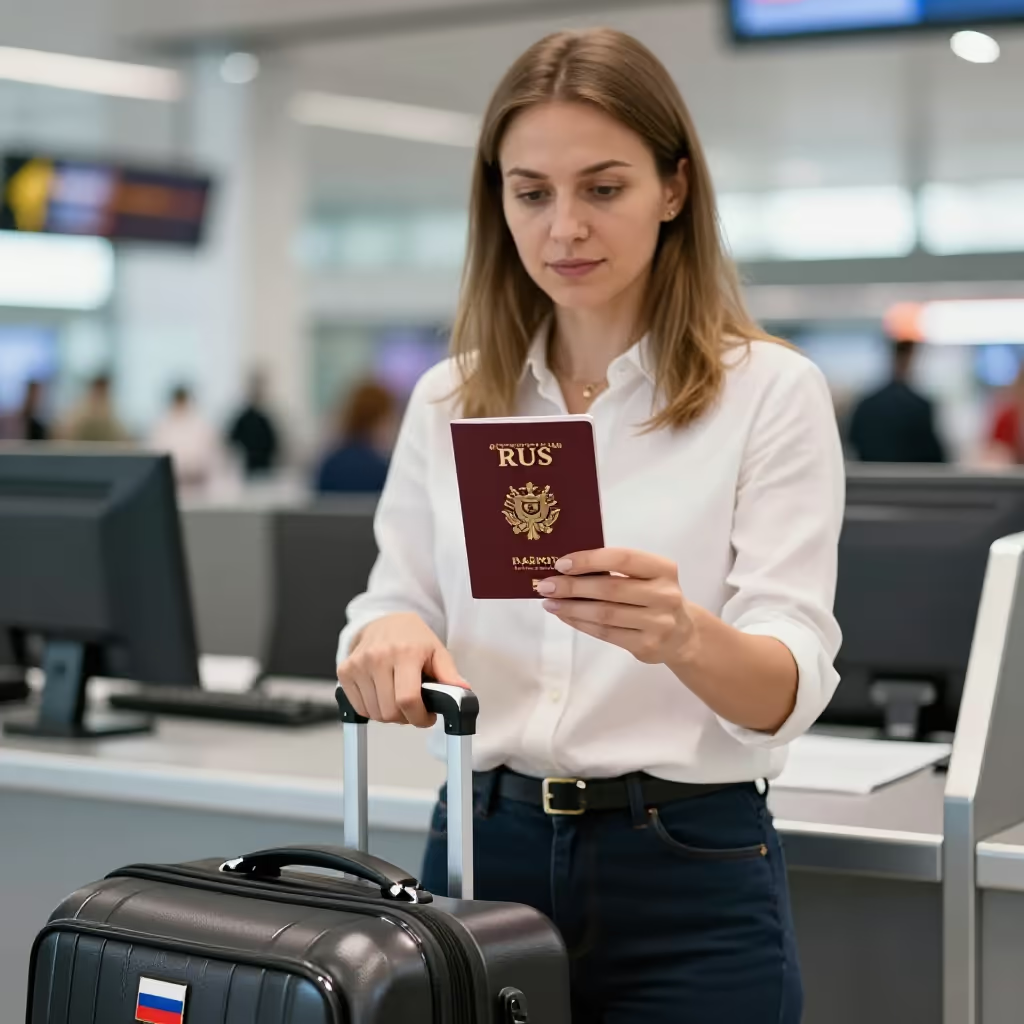
die Russin
Russian woman
A female person who has Russian citizenship or comes from Russia.
EXAMPLE
Die neue Tennismeisterin ist eine junge Russin aus Sankt Petersburg.
The new tennis champion is a young Russian woman from Saint Petersburg.
Russian woman
Loading your saved state.
Russian woman
A female person who has Russian citizenship or comes from Russia.
Die neue Tennismeisterin ist eine junge Russin aus Sankt Petersburg.
The new tennis champion is a young Russian woman from Saint Petersburg.
'Die Russin' (the Russian woman) belongs to a word family. The country is called 'Russland' (Russia), the quality or language is 'russisch' (Russian), and the male person is 'der Russe' (the Russian man).
Sie ist Russin und spricht fließend russisch.
She is Russian and speaks Russian fluently.
The ending '-in' is the typical way to form female personal nouns in German, especially for professions and nationalities. The male counterpart here is 'der Russe' (the Russian man).
Meine Nachbarin ist eine Polin aus Warschau.
My neighbor is a Polish woman from Warsaw.
It is important to distinguish the noun 'die Russin' (the Russian woman/person) from the adjective 'russisch' (Russian). You say 'Sie ist eine Russin' (She is a Russian woman) or 'Sie ist Russin' (She is Russian), but 'Ihre Familie ist russisch' (Her family is Russian).
Anna ist Russin und lebt seit fünf Jahren in Deutschland.
Anna is Russian and has lived in Germany for five years.