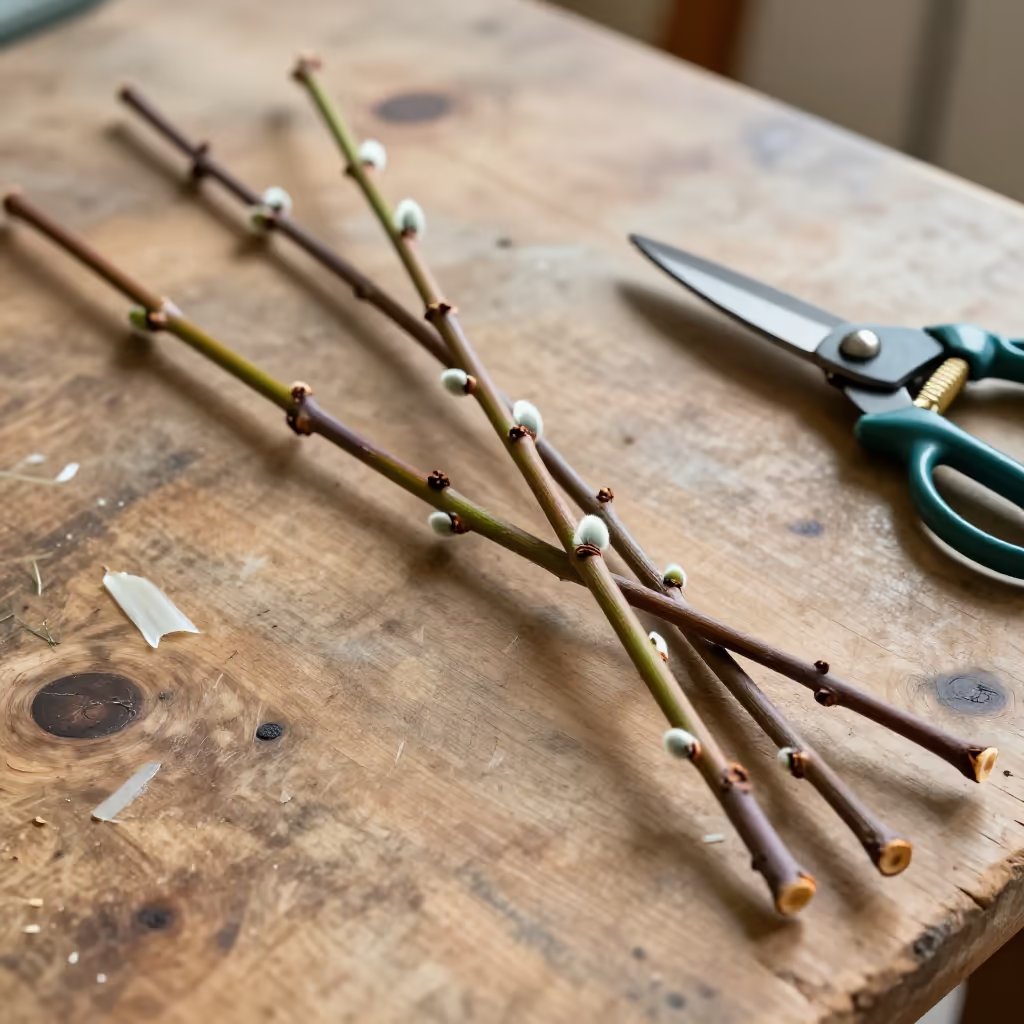
A thin, flexible twig or stick cut from a tree or shrub. Historically, it was used for corporal punishment.
example
Der Gärtner schnitt sich eine Rute, um die jungen Bäume abzustützen.
The gardener cut himself a rod to support the young trees.

Usage tips
Context clue
Because 'Rute' has many meanings, context is crucial. Pay attention to signal words: 'Hund' (dog) or 'wedeln' (to wag) point to an animal's tail, while 'angeln' (to fish) or 'Fisch' (fish) refer to a fishing rod.
EXAMPLE
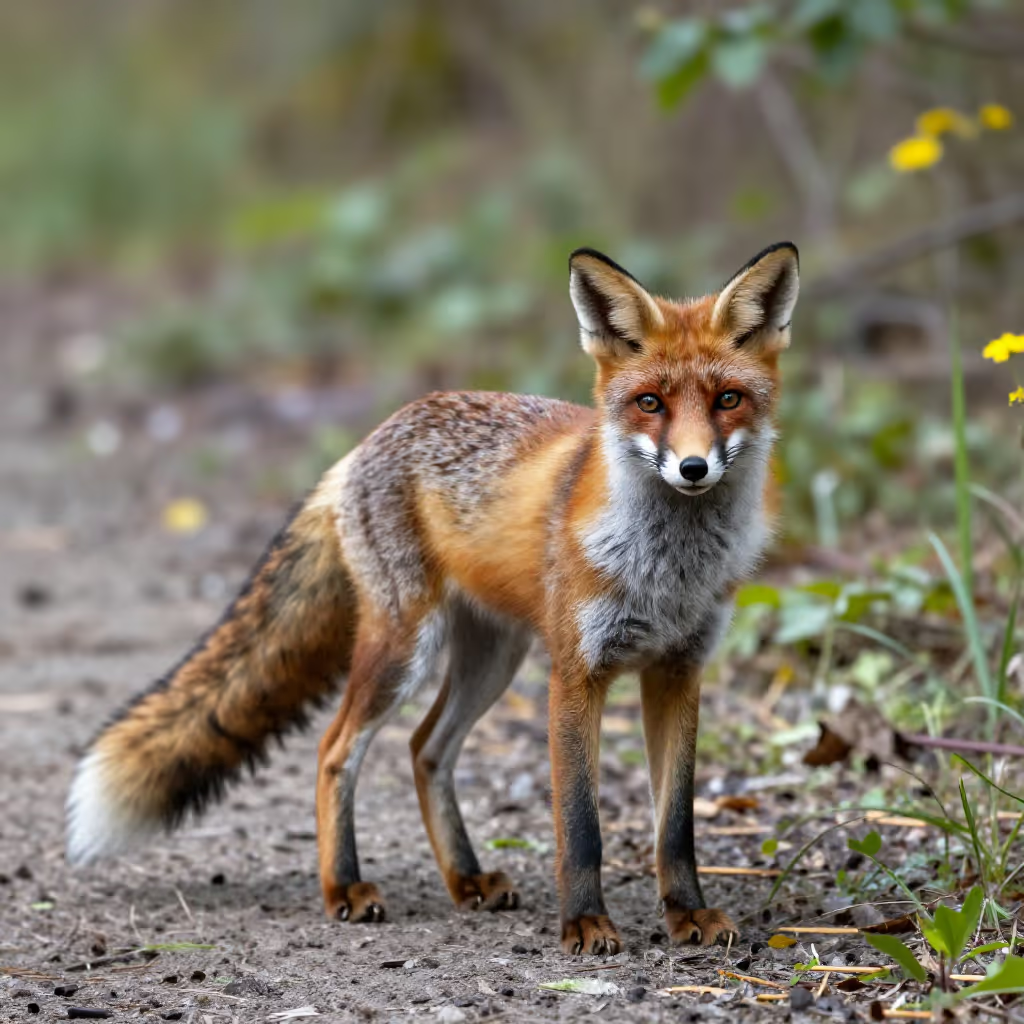
Der Fuchs verschwand mit buschiger Rute im Wald.
The fox disappeared into the forest with its bushy tail.
Typical collocation
In the meaning 'Tierschwanz' (animal tail), the most common and important collocation is 'mit der Rute wedeln' (to wag one's tail). This phrase is used almost exclusively for dogs to express joy or excitement.
EXAMPLE
Sobald ich die Leine nehme, fängt mein Hund an, mit der Rute zu wedeln.
As soon as I pick up the leash, my dog starts wagging its tail.
Typical action
When 'Rute' means a fishing rod, a typical action is 'die Rute auswerfen' (to cast the fishing rod). This describes the movement used to get the bait into the water.
EXAMPLE
Der Angler warf seine Rute immer wieder an derselben Stelle aus.
The angler cast his fishing rod again and again in the same spot.
Register: vulgar language
The use of 'Rute' for the male sexual organ belongs to vulgar or colloquial language. In most situations, this expression is inappropriate and should be avoided.
EXAMPLE
Der Comedian machte einen derben Witz über die Rute eines Mannes.
The comedian made a crude joke about a man's penis.
Historical context
The meaning 'dünner Stock' (thin stick) is rather rare today and is often found in historical stories, fairy tales, or in connection with old methods of child-rearing. Here, the 'Rute' was a symbol of punishment.
EXAMPLE
In alten Geschichten wurden unartige Kinder mit der Rute bestraft.
In old stories, naughty children were punished with the rod.
Compare with
near_synonym · confusable
Rute vs Schwanz
tail / dick
'der Schwanz' and 'die Rute' can both mean the rear body part of an animal. 'Schwanz' is the general word and fits many animals, for example cats, mice, or birds. 'Rute' is used mainly for certain mammals, especially dogs and foxes; it sounds somewhat more specific. Both words can also vulgarly mean the male sex organ, but this meaning is crude and not suitable for neutral conversations. The confusion arises because 'Rute' is in fact a specific word for 'Schwanz' for some animals.
Rute
Der Hund wedelte freundlich mit der Rute, als sein Besitzer kam.
The dog wagged its tail in a friendly way when its owner arrived.
Schwanz
Die Katze bewegte ihren Schwanz langsam hin und her.