

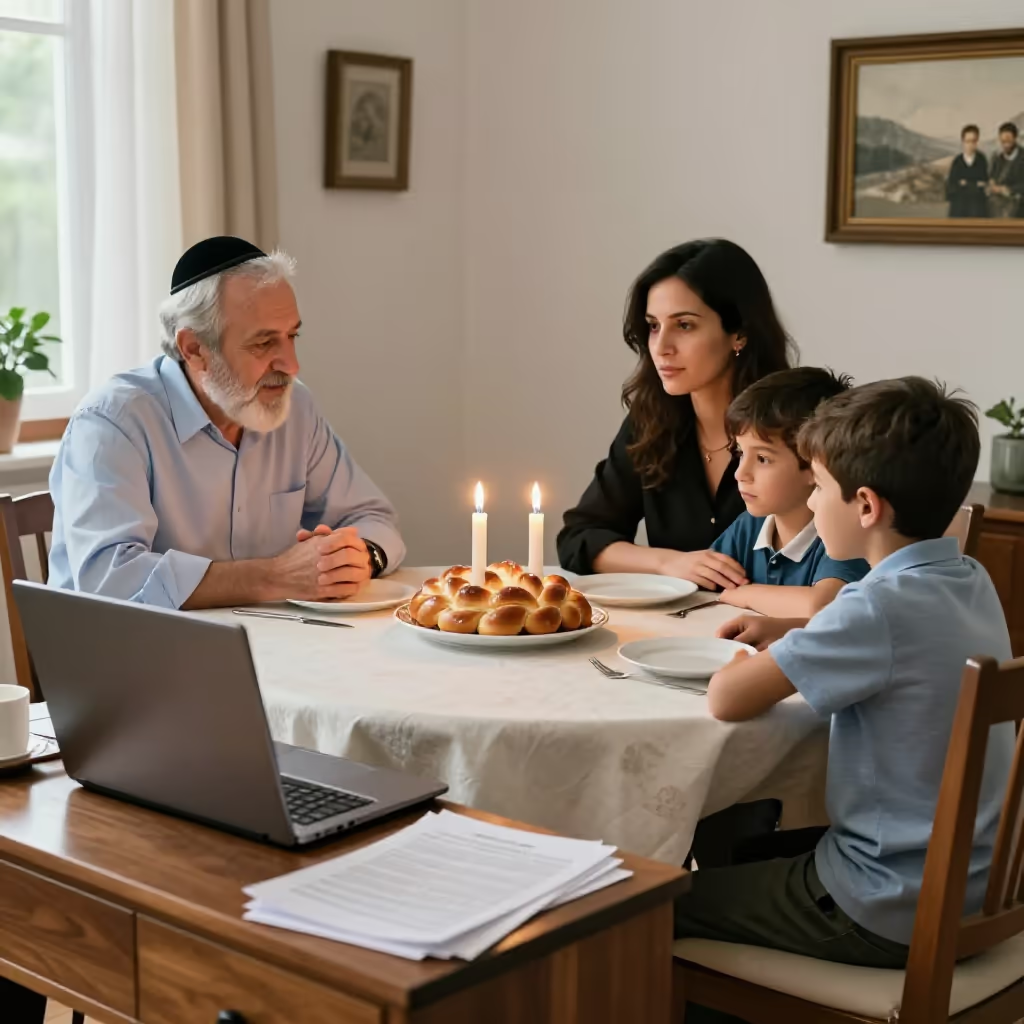
In Judaism and in some Christian communities, the seventh day of the week (Saturday), which is considered a holy day of rest and on which certain kinds of work are forbidden.
example
Die Familie versammelt sich jeden Freitagabend, um gemeinsam den Sabbat zu beginnen.
The family gathers every Friday evening to begin the Sabbath together.

Usage tips
Cultural context
The Sabbath is the most important holy day in Judaism. It begins on Friday evening at sunset and ends on Saturday evening. During this time, work rests.
EXAMPLE
Am Freitagabend zündet die Familie die Sabbatkerzen an.
On Friday evening, the family lights the Sabbath candles.
Typical collocations
In connection with the Sabbath, the verbs 'halten' (to observe, in the sense of 'to follow') or 'feiern' (to celebrate) are often used. A typical greeting is 'Schabbat Schalom' (Peaceful Sabbath).
EXAMPLE
Orthodoxe Juden halten den Sabbat sehr streng ein.
Orthodox Jews observe the Sabbath very strictly.
Correct preposition
If you want to express that something happens on this day, you use the preposition 'am'. The noun then stands in the dative.
EXAMPLE
Am Sabbat ist die Synagoge immer gut besucht.
On the Sabbath, the synagogue is always well attended.
Compare with
confusable
Sabbat vs Sonntag
Sunday
'der Sonntag' and 'der Sabbat' can both be connected with a day of rest, but they do not mean the same day. 'Sonntag' is the day of the week after Saturday and is the usual day of rest in many Christian-influenced countries. 'Sabbat' refers, in Judaism and in some Christian communities, to the holy day of rest that falls on Saturday. The words can be confusing because both can be religiously or culturally connected with rest. For the normal weekday, you say 'Sonntag'. 'Sabbat' is used when referring to the religious significance of Saturday.
Sabbat
Am Sabbat ruht die Familie und erledigt keine Arbeit.
On the Sabbath, the family rests and does no work.
Sonntag
Am Sonntag bleiben viele Geschäfte in der Stadt geschlossen.