

sachte
gently
In a gentle, slow, and careful way; without much force or noise.
EXAMPLE
Sie schloss sachte die Tür, um das schlafende Kind nicht zu wecken.
She gently closed the door so as not to wake the sleeping child.
gentle
Loading your saved state.
gently
In a gentle, slow, and careful way; without much force or noise.
Sie schloss sachte die Tür, um das schlafende Kind nicht zu wecken.
She gently closed the door so as not to wake the sleeping child.
'Sachte' (gently) is very often used as an adverb to describe how an action is carried out. It usually stands directly next to the verb.
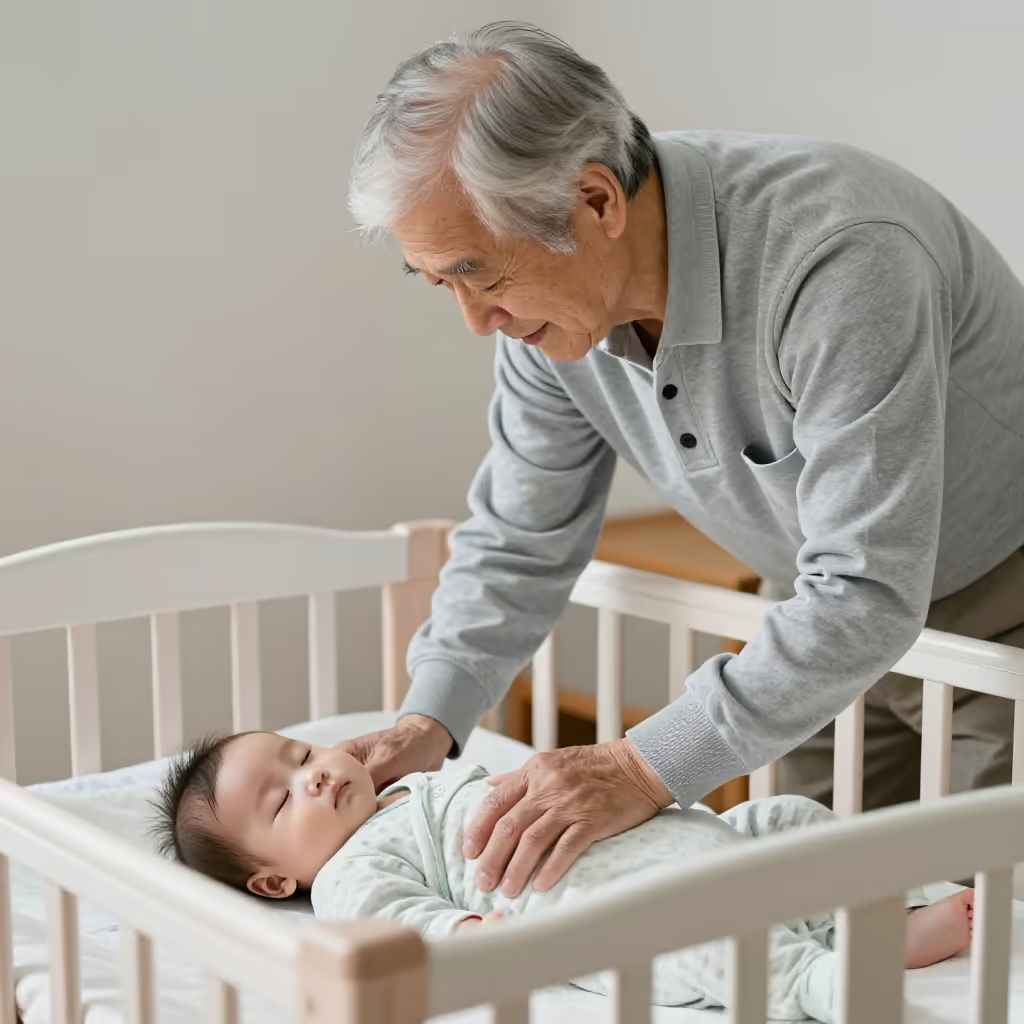
Er legte dem Baby sachte die Decke über die Schultern.
He gently laid the blanket over the baby's shoulders.
The word 'sachte' (gently) often sounds somewhat poetic, literary, or tender. It is used less often in neutral everyday language.
Der Wind strich sachte über die Felder.
The wind gently swept across the fields.
'Sachte' (gently) often describes careful movements. Typical verbs are 'sachte berühren' (to touch gently), 'sachte aufstehen' (to get up gently/carefully), 'sachte landen' (to land gently), or 'sachte klopfen' (to knock gently).
Er klopfte sachte an die Holztür.
He knocked gently on the wooden door.
gentle / soft
Sanft and sachte can both describe a movement made with little force or noise. Sachte often sounds more colloquial and emphasizes proceeding carefully and slowly, whereas sanft describes the general mildness of the movement. For a neutral description, sanft is appropriate; in a direct request, sachte is often used.

Er schloss die Tür sachte, damit das Baby nicht aufwachte.
He closed the door gently so that the baby would not wake up.
Er schloss die Tür mit einer sanften Bewegung.
He closed the door with a gentle movement.