


sächsisch
Saxon
Relating to the German federal state of Saxony, its inhabitants, its culture, or its dialect.
EXAMPLE
Er spricht mit einem unverkennbar sächsischen Akzent.
He speaks with an unmistakably Saxon accent.
Saxon
Loading your saved state.
Saxon
Relating to the German federal state of Saxony, its inhabitants, its culture, or its dialect.
Er spricht mit einem unverkennbar sächsischen Akzent.
He speaks with an unmistakably Saxon accent.
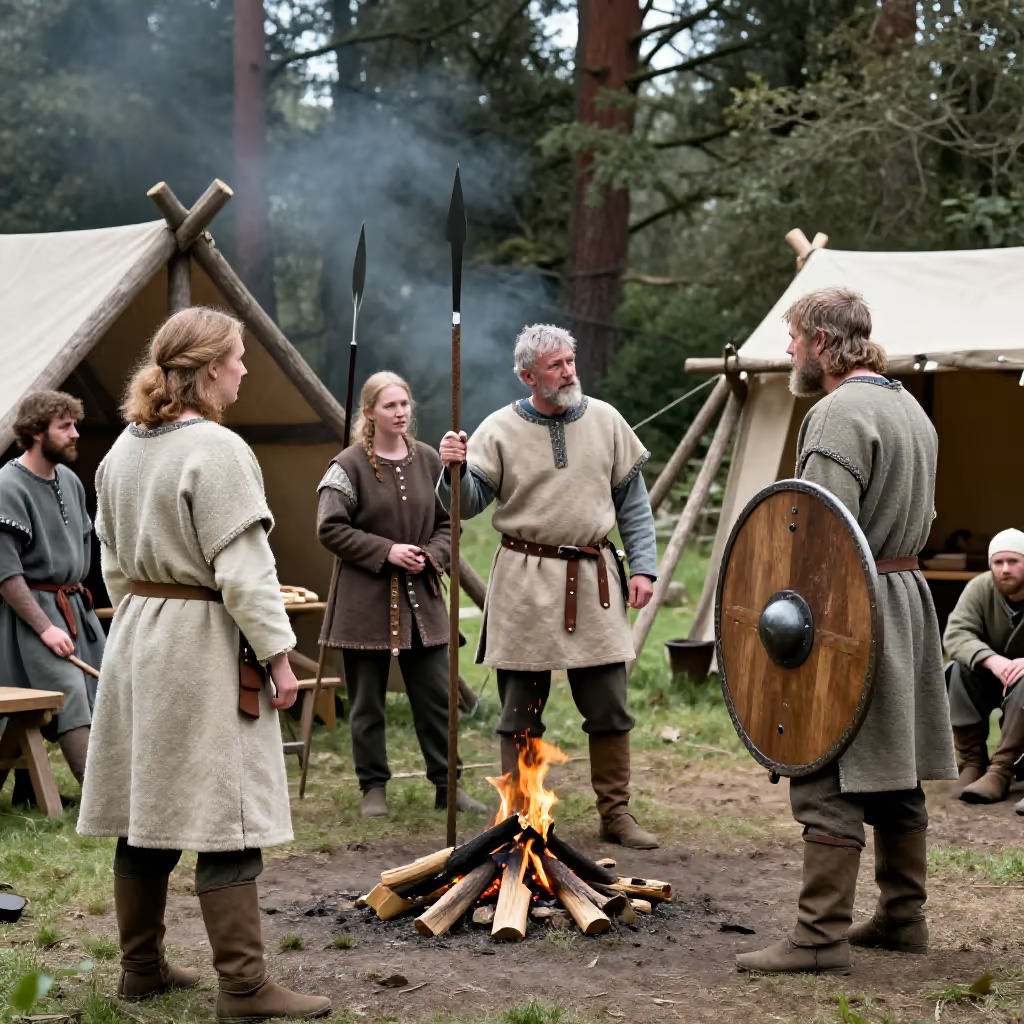
Saxon
Relating to the historical Germanic people of the Saxons.
Die sächsischen Stämme siedelten ursprünglich im Nordwesten des heutigen Deutschlands.
The Saxon tribes originally settled in the northwest of what is now Germany.
The adjective 'sächsisch' (Saxon) is formed from the name of the federal state 'Sachsen' (Saxony) with the ending '-isch'. This ending is often used to form adjectives from geographical names.
Der berühmte Komponist stammte aus einer sächsischen Stadt.
The famous composer came from a Saxon town.
Adjectives derived from geographical names with the ending '-isch' are written in lowercase when they are used as normal adjectives.
Ich mag sächsischen Kuchen sehr gern.
I really like Saxon cake.
In reference to the modern federal state, 'sächsisch' (Saxon) is often connected with culture, places, and language: der sächsische Dialekt (the Saxon dialect), die Sächsische Schweiz (Saxon Switzerland, a region), or die sächsische Küche (Saxon cuisine).
Wir machen Urlaub in der Sächsischen Schweiz.
We're going on vacation in Saxon Switzerland.
The historical meaning can be recognized from the context. When Germanic tribes, the Middle Ages, or Anglo-Saxon history are being discussed, it refers to the ancient Saxons, not the modern federal state.
In diesem Museum lernen wir viel über die sächsischen Könige des Mittelalters.
In this museum, we learn a lot about the Saxon kings of the Middle Ages.