


die Sättigung
satiety
The feeling of being full after eating and no longer being hungry.
Nach dem reichhaltigen Weihnachtsessen stellte sich ein Gefühl der wohligen Sättigung ein.
After the rich Christmas meal, a feeling of pleasant satiety set in.
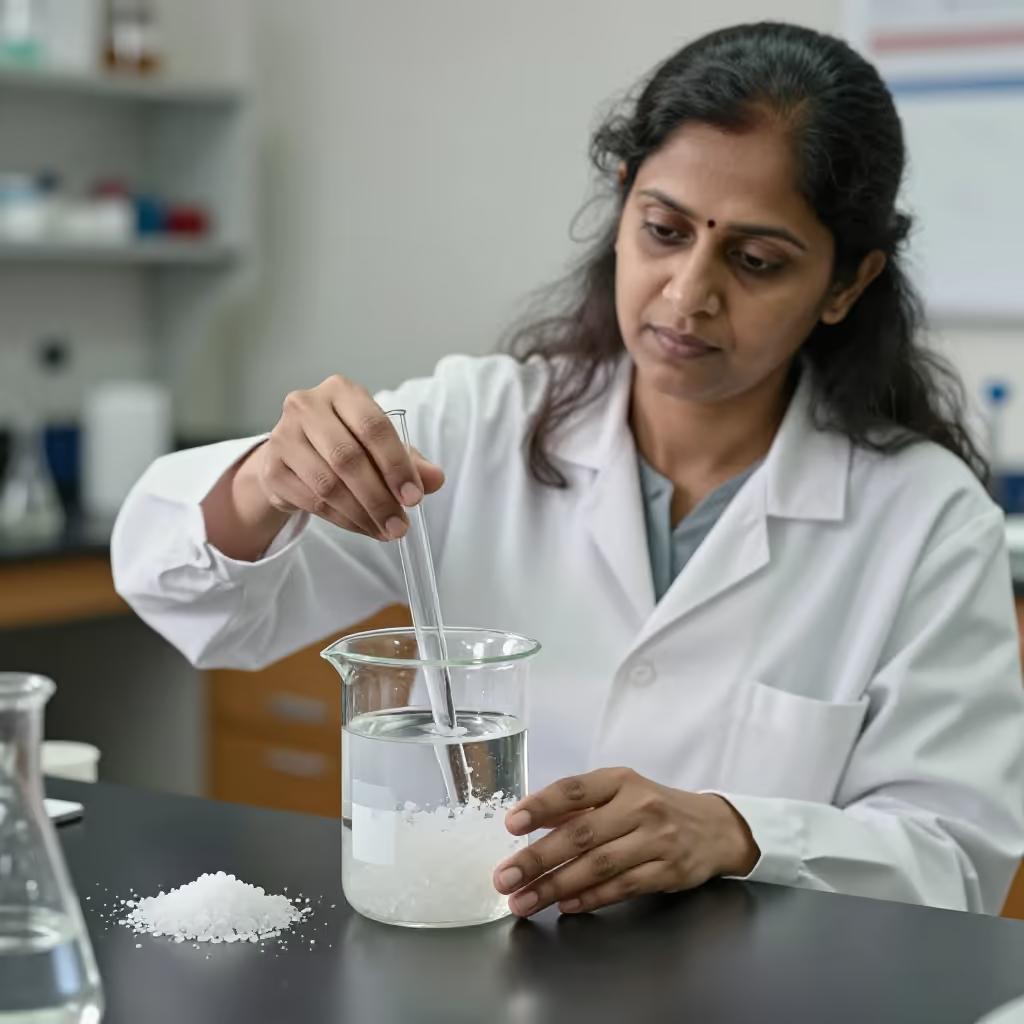

saturation
Loading your saved state.
satiety
The feeling of being full after eating and no longer being hungry.
Nach dem reichhaltigen Weihnachtsessen stellte sich ein Gefühl der wohligen Sättigung ein.
After the rich Christmas meal, a feeling of pleasant satiety set in.

The noun 'Sättigung' (saturation/satiety) belongs to the word family of 'satt' (adjective meaning 'no longer hungry') and 'sättigen' (verb meaning 'to make full' or 'to satiate'). The ending '-ung' turns the verb into a feminine noun, a very common pattern in German.
Ein Apfel allein sättigt mich nicht für lange Zeit.
One apple alone does not fill me up for long.
Because the word has several technical meanings, the context makes clear what is meant. If it is about food, it refers to the feeling of fullness. In chemistry, it is about solutions; in photography, about colors; and in economics, about markets.
Die Sättigung der Farben in diesem Foto ist zu hoch.
The saturation of the colors in this photo is too high.
In connection with food, 'Sättigung' (satiety) is often used with verbs such as 'eintreten' (to set in) or 'erreichen' (to achieve/reach). A very common phrase is also 'ein Gefühl der Sättigung' (a feeling of satiety).
Nach einer großen Portion Nudeln tritt schnell ein Sättigungsgefühl ein.
After a large portion of pasta, a feeling of fullness quickly sets in.
In image editing, saturation is often actively changed. Typical verbs for this are 'erhöhen' (to increase), 'reduzieren' (to reduce), 'anpassen' (to adjust), or 'verringern' (to decrease).
Du solltest die Sättigung in diesem Bild etwas reduzieren, die Farben sind zu grell.
You should reduce the saturation in this image a little; the colors are too garish.
hunger
'der Hunger' and 'die Sättigung' describe two opposite physical feelings related to eating. You have 'Hunger' when your body needs food. You feel 'Sättigung' after eating, when you have eaten enough and do not want to keep eating. So the contrast is simple: before eating you have hunger; after a sufficient meal, satiety sets in. In everyday language, people more often say 'Ich habe Hunger' (I’m hungry) or 'Ich bin satt' (I’m full); 'Sättigung' sounds a bit more factual, for example in discussions about nutrition.

Vollkornbrot sorgt bei mir für eine längere Sättigung.
Whole-grain bread keeps me feeling full for longer.
Nach der Arbeit ist der Hunger so groß, dass wir sofort kochen.
After work, we are so hungry that we start cooking right away.