

der Säugling
infant
A child in the first year of life who is still mainly fed breast milk or formula.
EXAMPLE
Der Säugling schlief friedlich in seinem Bettchen.
The infant slept peacefully in his little bed.
infant
Loading your saved state.
infant
A child in the first year of life who is still mainly fed breast milk or formula.
Der Säugling schlief friedlich in seinem Bettchen.
The infant slept peacefully in his little bed.
The word 'Säugling' (infant) comes directly from the verb 'saugen' (to suck). It literally describes a living being that is still being nursed, that is, sucking milk. This origin makes the meaning of the word very clear.
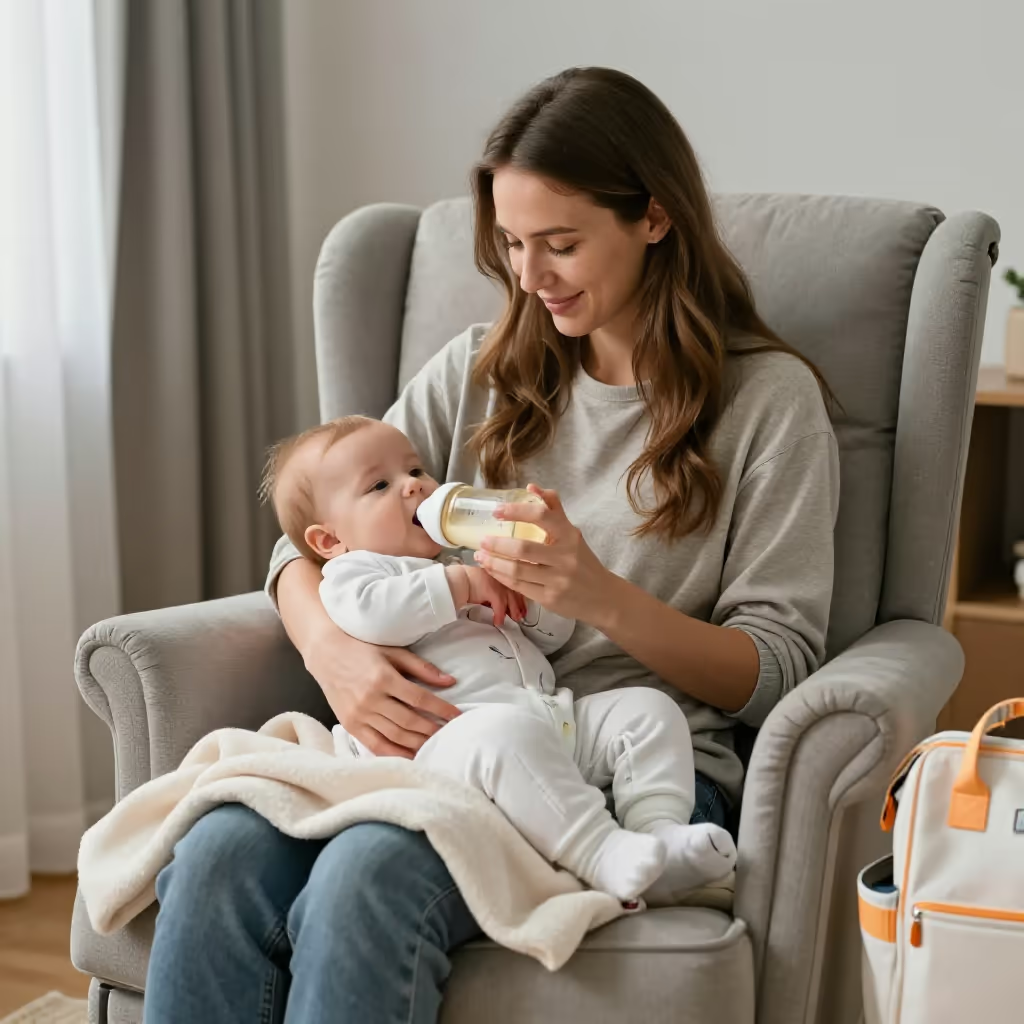
Die Mutter gibt ihrem Säugling die Flasche.
The mother gives her infant the bottle.
'Der Säugling' (infant) belongs to a word family with 'säugen' (to nurse/feed a young animal with milk) and 'das Säugetier' (mammal, an animal that nurses its young). All these words share the stem connected with nourishment through milk.
Menschen, Wale und Hunde sind alles Säugetiere.
Humans, whales, and dogs are all mammals.
'Säugling' (infant) is a rather formal, medical, or administrative term. It is often found in doctors' offices, on official documents, or in scientific texts about child development.
Im ersten Lebensjahr wird die Entwicklung des Säuglings genau beobachtet.
In the first year of life, the infant's development is closely monitored.
baby
Both Baby and Säugling can refer to a child in the first year of life. Baby is common in everyday language and somewhat broader, while Säugling refers to this age group in a more factual and precise way. In an ordinary everyday situation, Baby is usually the better choice; in a factual context, Säugling may fit better.

Der Säugling im Kinderwagen schläft während der Untersuchung ruhig weiter.
The infant in the stroller continues sleeping peacefully during the examination.
Das Baby im Kinderwagen schläft während des Spaziergangs.
The baby in the stroller is sleeping during the walk.