

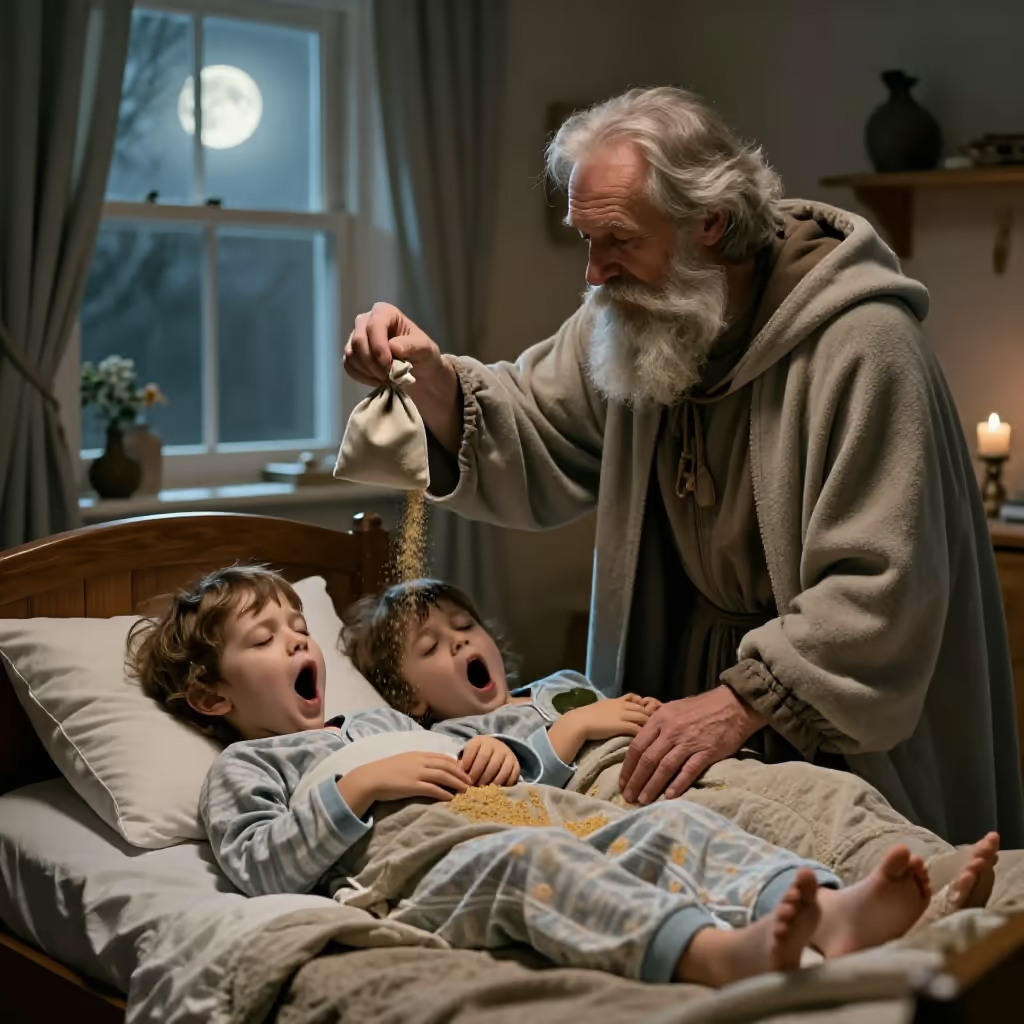
A legendary figure from European folklore who sprinkles sand into children's eyes in the evening so that they become tired and fall asleep.
example
Wenn du nicht bald schläfst, kommt der Sandmann.
If you don't go to sleep soon, the Sandman will come.
Usage tips
Word composition
The word is made up of 'Sand' (sand) and 'Mann' (man). It describes the legendary figure who proverbially sprinkles sand into children's eyes to make them tired.
EXAMPLE
Sei leise, sonst weckst du die Kleinen wieder auf, bei denen war gerade der Sandmann da.
Be quiet, otherwise you'll wake the little ones again; the Sandman had just visited them.
Cultural context
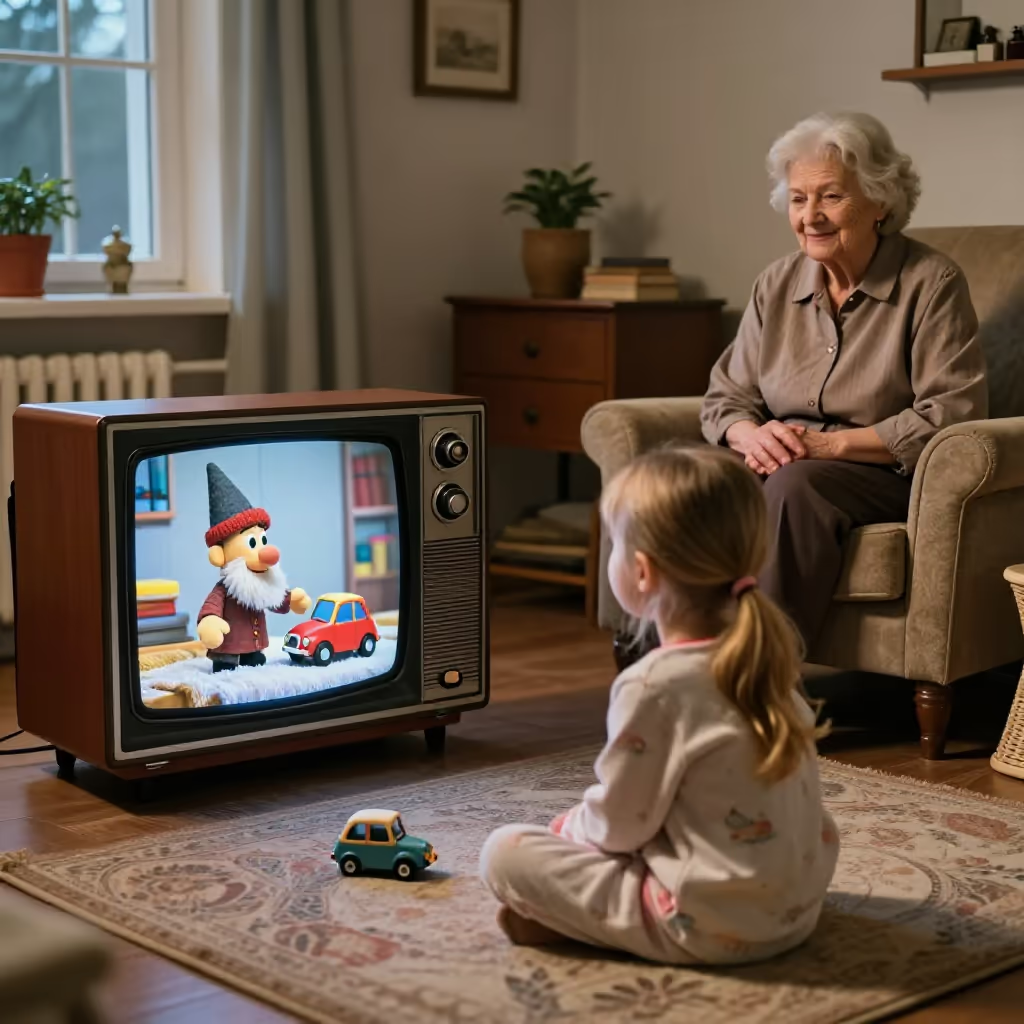
'Der Sandmann' (or 'Unser Sandmännchen') is a famous German television program for children that has been broadcast for decades as a bedtime ritual. The character is a well-established cultural reference in Germany.
EXAMPLE
Meine Tochter darf vor dem Schlafen immer den Sandmann gucken.
My daughter is always allowed to watch the Sandman before going to sleep.
Fixed expression
The phrase 'Der Sandmann kommt' (the Sandman is coming) or 'Der Sandmann war da' (the Sandman was here) is often said affectionately to children to express that it is time to sleep or that they look tired.
EXAMPLE
Deine Augen sind schon ganz klein, der Sandmann war wohl schon da.
Your eyes are already getting so small; the Sandman must have already been here.
Context clue
When words like 'anschauen' (to watch), 'gucken' (to watch), or 'im Fernsehen' (on television) are used, it almost always refers to the TV character. In general expressions about tiredness or sleep, it refers to the legendary figure.
EXAMPLE
Schaltest du bitte den Fernseher an? Der Sandmann fängt gleich an.
Could you please turn on the TV? The Sandman is about to start.