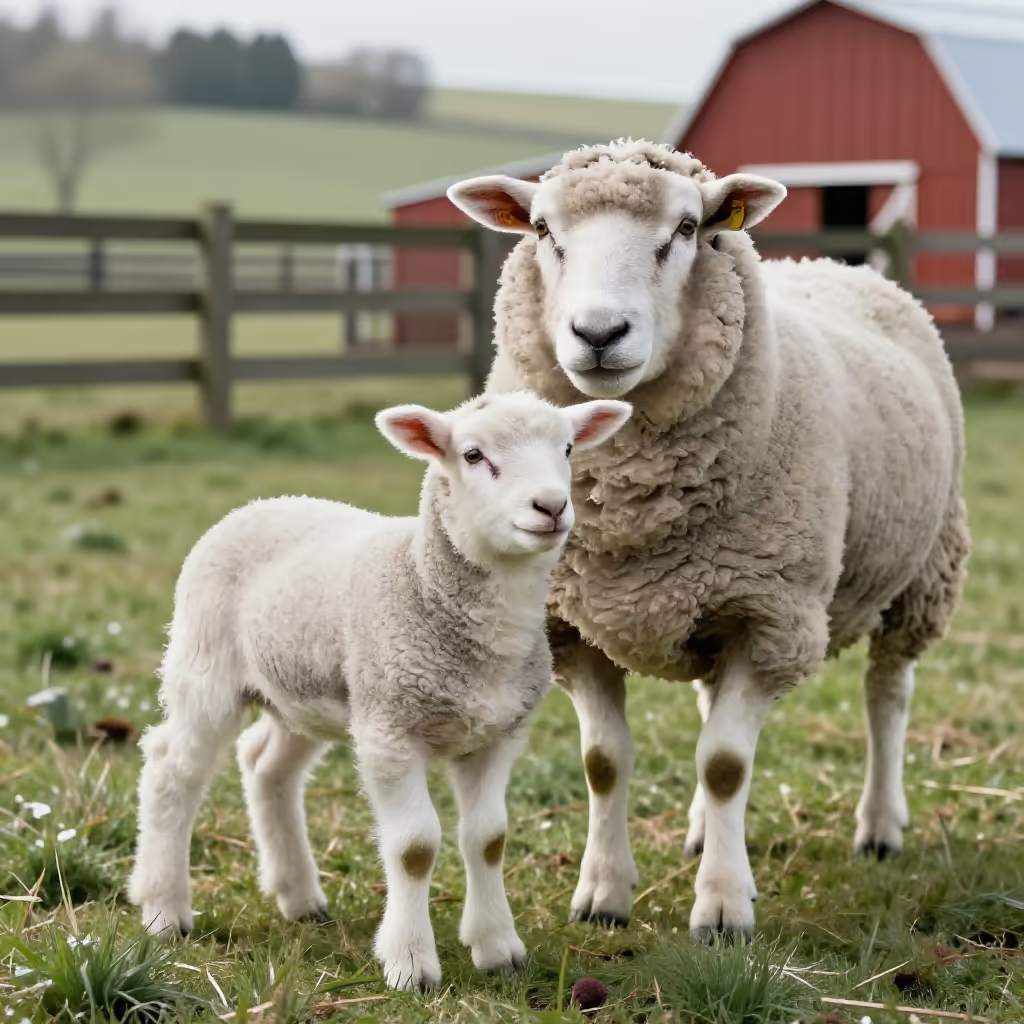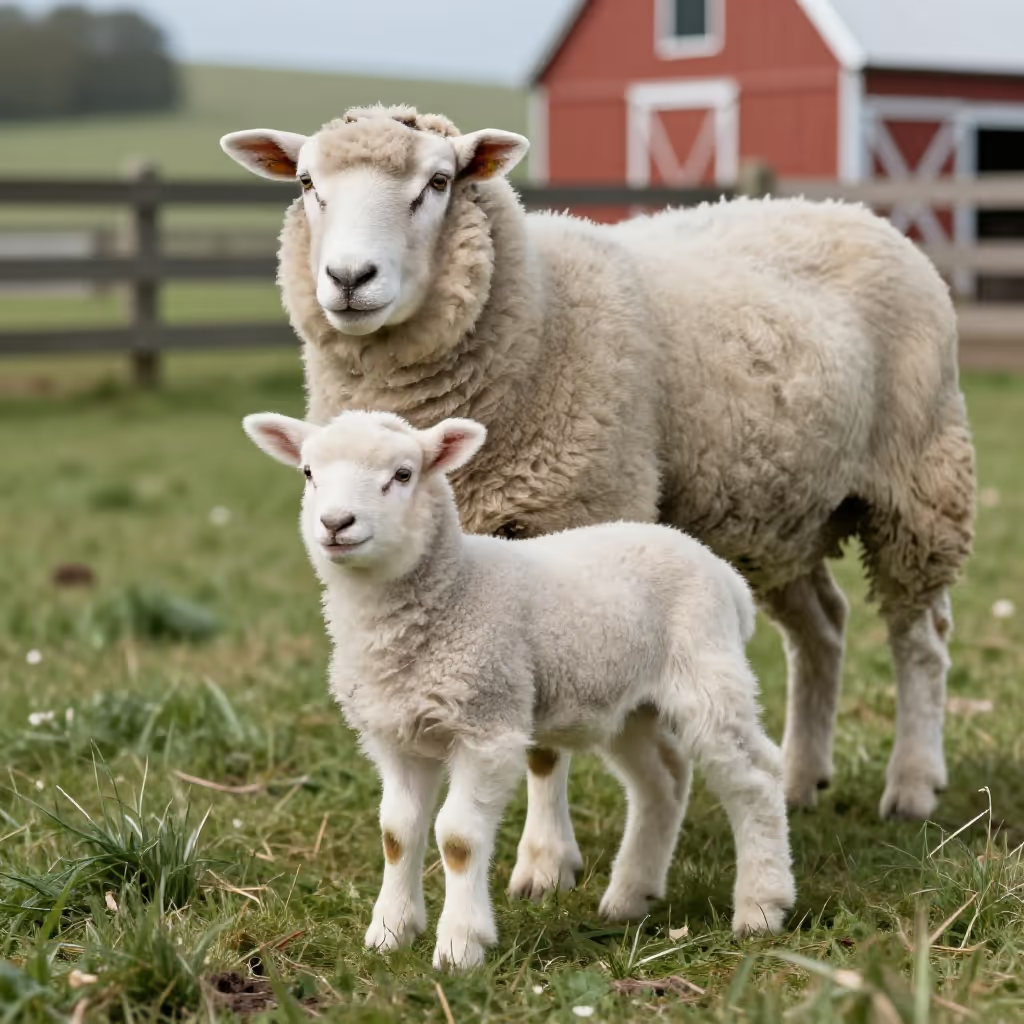
das Schäfchen
lamb / little sheep
The diminutive form of Schaf (sheep). It refers to a young or small sheep, that is, a lamb.
Auf der Weide graste eine Herde mit vielen kleinen Schäfchen.
A flock with many little lambs was grazing in the pasture.


lamb / little sheep
Loading your saved state.
lamb / little sheep
The diminutive form of Schaf (sheep). It refers to a young or small sheep, that is, a lamb.
Auf der Weide graste eine Herde mit vielen kleinen Schäfchen.
A flock with many little lambs was grazing in the pasture.
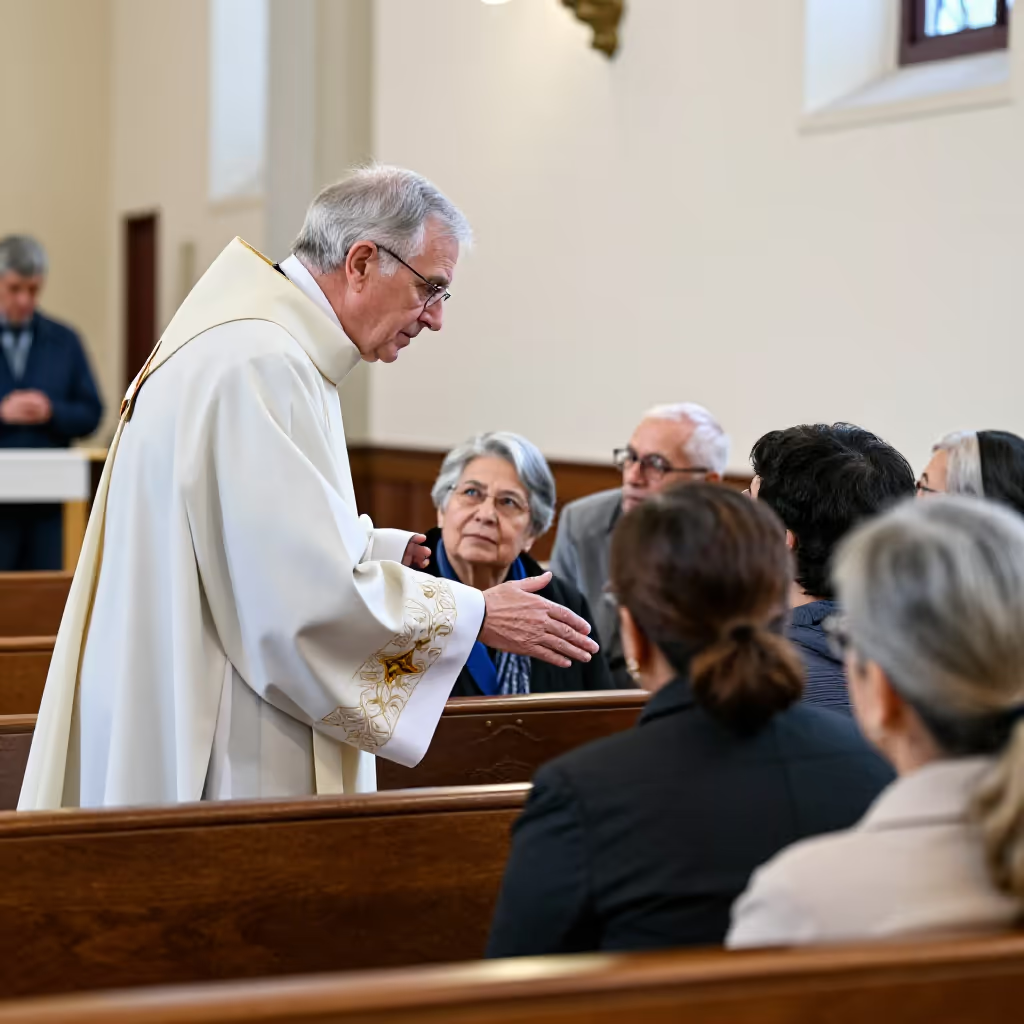
'Schäfchen' (little sheep/lamb) is the diminutive form of 'das Schaf' (the sheep). The ending '-chen' makes the noun neuter and adds the meaning 'small' or 'cute'. This process is very common in German.
Das kleine Schäfchen hat sich von seiner Mutter entfernt.
The little lamb has wandered away from its mother.
The meaning is almost always clear from context. If the topic is animals or farms, it means a lamb. If people are talking about the sky and weather, it means clouds. In a religious context, it refers to members of a congregation.
Der Himmel ist blau mit nur wenigen weißen Schäfchen.
The sky is blue with only a few white little sheep clouds.
The idiom 'sein Schäfchen ins Trockene bringen' (to feather one's nest / secure one's own advantage) is a fixed unit. However, the possessive pronoun ('sein') must be adapted to the person who is securing the advantage.
Durch den schnellen Verkauf hat sie ihr Schäfchen ins Trockene gebracht.
By selling quickly, she feathered her own nest.
The term 'Schäfchen' (little sheep) for clouds is a figurative description. The small, white clouds look like a flock of sheep in the sky. These 'Schäfchenwolken' (little sheep clouds) often indicate stable, good weather.
Morgen soll es sonnig werden, am Himmel sind nur ein paar Schäfchen zu sehen.
Tomorrow is supposed to be sunny; only a few little sheep clouds can be seen in the sky.
believer
'der Gläubige' and 'das Schäfchen' can both refer to a person in a religious context. 'Gläubiger' is neutral and means a person who believes in a religion. 'Schäfchen', on the other hand, is figurative and sounds more personal or even a little old-fashioned. It presents the members of a congregation as a flock that is cared for by a pastor or another religious leader. In normal conversation, 'Gläubige' is usually clearer and respectfully neutral. 'Schäfchen' is more suitable in religious, figurative, or slightly affectionate language.

Der Pfarrer kennt seine Schäfchen und fragt oft nach ihren Familien.
The pastor knows his flock and often asks about their families.
Nach dem Gottesdienst bleiben viele Gläubige noch vor der Kirche stehen.
After the church service, many believers stay standing outside the church.