

scheren
to shear
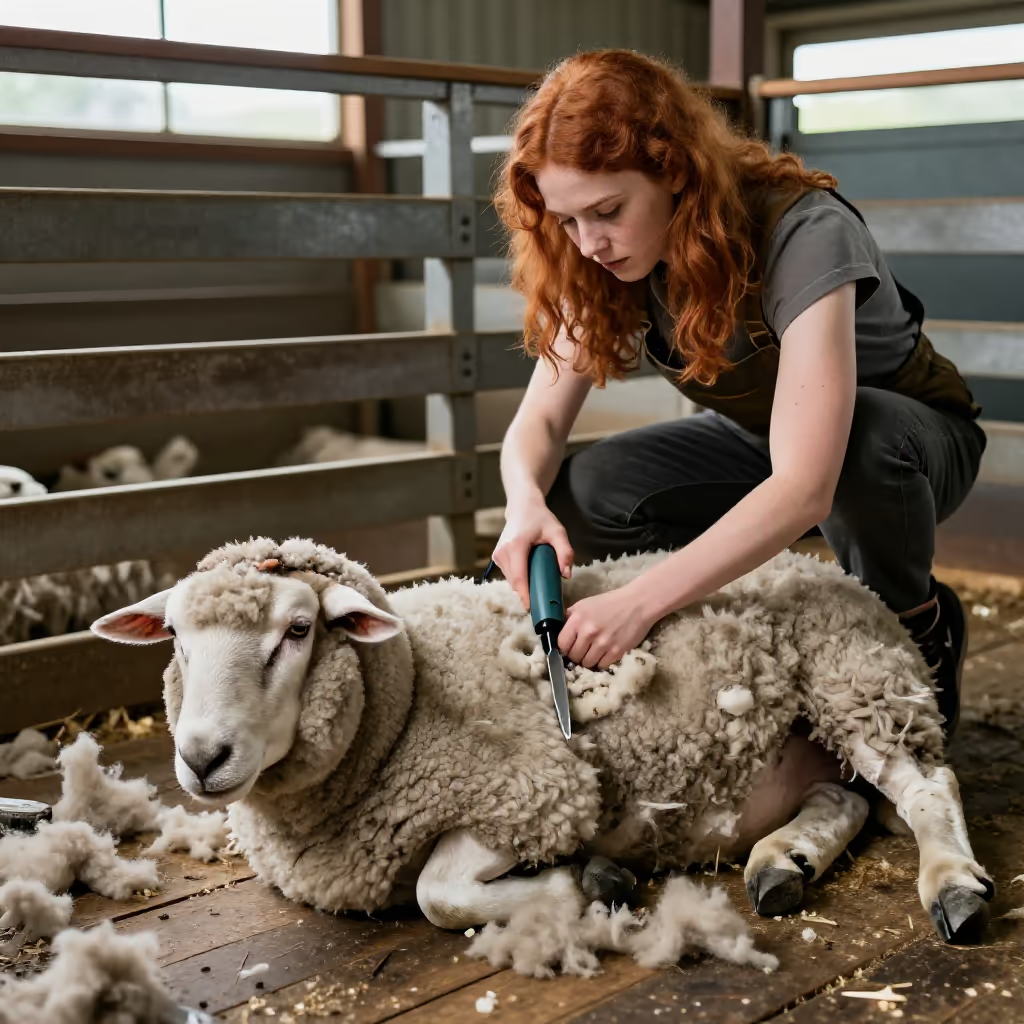
To cut the wool off sheep or the hair off other animals with shears or a clipper.
EXAMPLE
Im Frühling werden die Schafe auf der Weide geschoren.
In spring, the sheep in the pasture are sheared.
to shear / to care
Loading your saved state.
to shear
To cut the wool off sheep or the hair off other animals with shears or a clipper.
Im Frühling werden die Schafe auf der Weide geschoren.
In spring, the sheep in the pasture are sheared.

to care about
To care about something or be interested in something. This expression is used almost exclusively in the negative form to express indifference.
Er schert sich nicht darum, was andere Leute über ihn denken.
He doesn't care about what other people think of him.

to get lost
Colloquial and usually derogatory as an instruction to go away or disappear.
Scher dich zum Teufel und lass mich in Ruhe!
Go to hell and leave me alone!
to shear
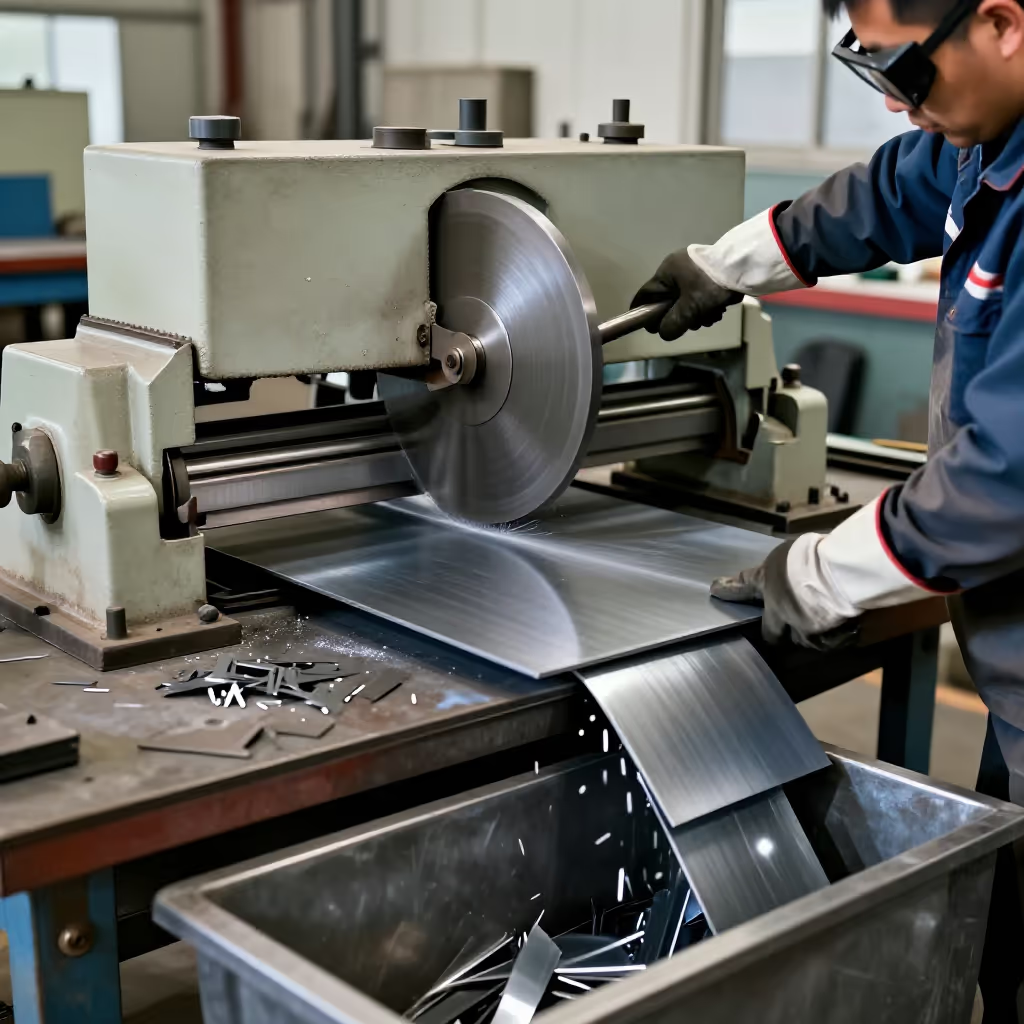
In engineering, the cutting of sheet metal or other materials by two blades moving against each other.
Das dicke Stahlblech wird in der Fabrik maschinell geschert.
The thick sheet steel is machine-sheared in the factory.
The verb 'scheren' (to shear) is the basis for the noun 'die Schere' (scissors). The basic meaning is a cutting motion with two blades.
Mit dieser alten Schere kann man kaum noch Papier schneiden.
You can barely cut paper with these old scissors anymore.
This reflexive expression has a fixed structure: 'sich um etwas scheren' (to care about something). It is almost always negated to express indifference. Pay attention to the reflexive pronoun and the preposition 'um' with the accusative.
Ich schere mich nicht darum, was die Nachbarn sagen.
I don't care about what the neighbors say.
In this meaning, 'sich scheren' is colloquial and rude. It is usually used as a command in the imperative to send someone away.
Scher dich hier raus, ich will dich nicht mehr sehen!
Get out of here; I don't want to see you anymore!
The grammatical form helps distinguish the meanings: the reflexive forms 'sich um etwas scheren' (to care about something) and 'sich scheren' (to go away) are clearly separate from the non-reflexive form with an object, such as 'Schafe scheren' (to shear sheep) or 'Blech scheren' (to shear sheet metal).
Der Bauer schert seine Schafe jedes Jahr im Mai.
The farmer shears his sheep every year in May.
to cut
Schneiden is the general term for separating something with a sharp tool. Scheren is more specific here: removing an animal’s wool or hair with scissors or a clipper. Therefore, scheren is the appropriate word for regularly grooming an animal’s entire coat.

Die Tierpflegerin schert das Schaf im Frühjahr mit einer Schermaschine.
The animal keeper shears the sheep with a clipper in the spring.
Die Tierpflegerin schneidet vorsichtig eine verklebte Haarsträhne ab.
The animal keeper carefully cuts off a matted strand of hair.