

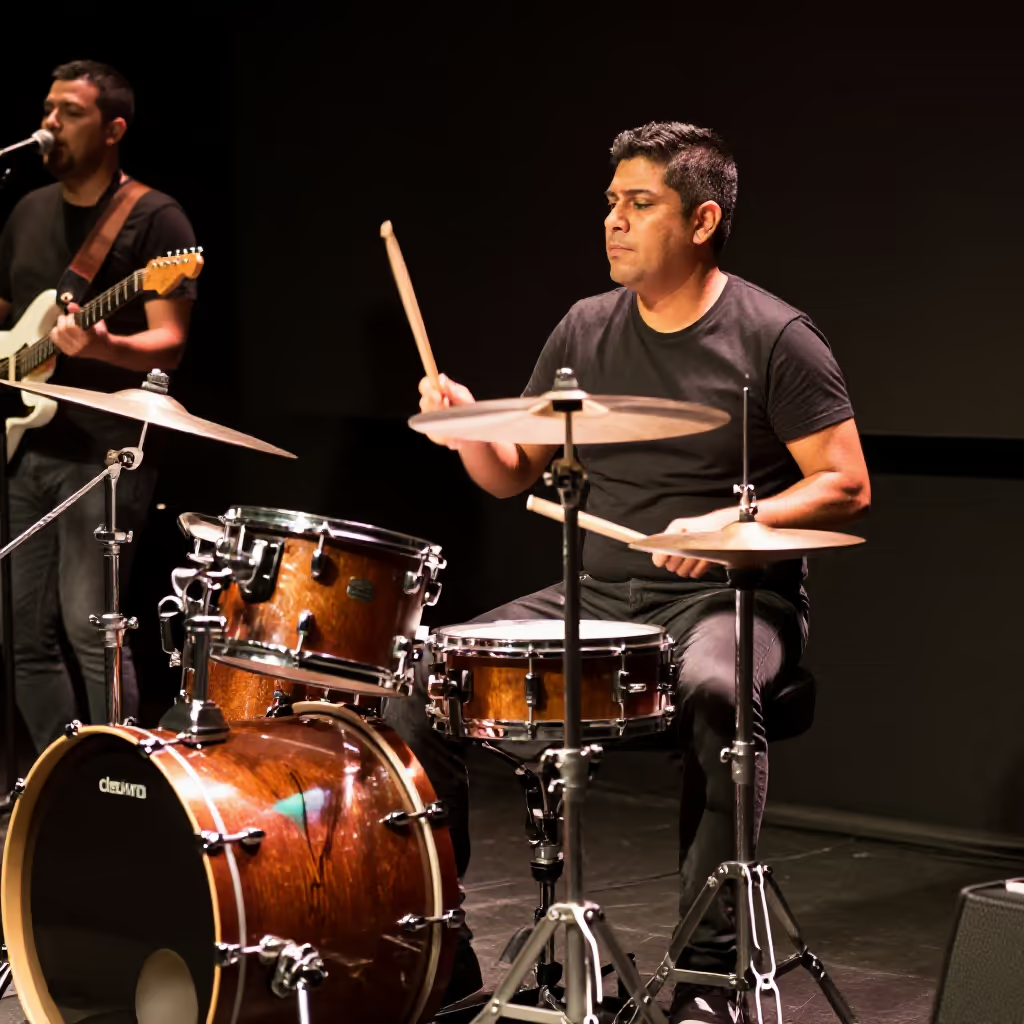
der Schlagzeuger
drummer
A person who plays the drums, usually in a band or orchestra.
EXAMPLE
Der Schlagzeuger gab den Rhythmus für das nächste Lied vor.
The drummer set the rhythm for the next song.
drummer
Loading your saved state.
drummer
A person who plays the drums, usually in a band or orchestra.
Der Schlagzeuger gab den Rhythmus für das nächste Lied vor.
The drummer set the rhythm for the next song.
The word is built logically: 'Schlag' (from the verb 'schlagen' (to hit/strike)) + 'Zeug' (equipment) gives 'das Schlagzeug' (the equipment for hitting). The ending '-er' refers to the person who does it.
Ein guter Schlagzeuger braucht ein exzellentes Rhythmusgefühl.
A good drummer needs an excellent sense of rhythm.
'Der Schlagzeuger' (the drummer) belongs to a word family. The instrument is called 'das Schlagzeug' (the drums), and the activity is 'Schlagzeug spielen' (to play the drums).
Er ist Schlagzeuger und übt jeden Tag auf seinem neuen Schlagzeug.
He is a drummer and practices every day on his new drum kit.
A drummer is usually part of a group. Therefore, the word is often used in connection with 'Band' (band) or 'Orchester' (orchestra).
Sie sucht einen neuen Schlagzeuger für ihre Rockband.
She is looking for a new drummer for her rock band.
drummer
Der Schlagzeuger and der Drummer both refer to a person who plays the drums. Schlagzeuger is the standard German term, while Drummer is a stylistically marked English loanword. Schlagzeuger is usually the better choice in neutral texts and in teaching; in a casual band setting, Drummer can also sound natural.
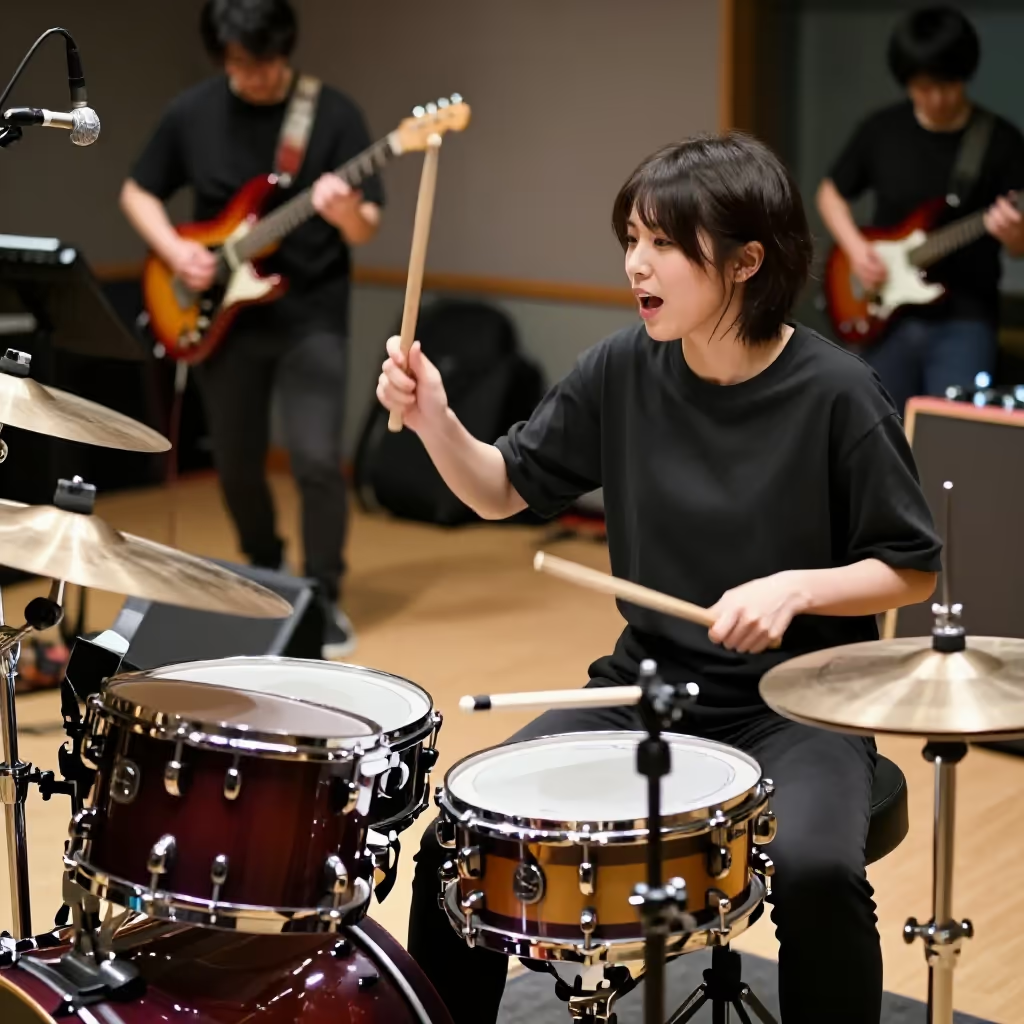
Der Schlagzeuger unserer Band übt jeden Abend für das Konzert.
The drummer in our band practices every evening for the concert.
Der Drummer unserer Band übt jeden Abend für das Konzert.
The drummer in our band practices every evening for the concert.