A piece of thin, often transparent fabric, usually worn by women to cover the face or as part of a headdress, such as by a bride.
example
Die Braut trug ein langes weißes Kleid und einen Schleier vor dem Gesicht.
The bride wore a long white dress and a veil over her face.

Usage tips
Word family
The verb 'verschleiern' (to obscure/conceal) is derived from the noun 'der Schleier' (the veil). It means to hide something or make it unrecognizable, often in a figurative sense, for example the truth.
EXAMPLE
Der Politiker versuchte, seine wahren Absichten zu verschleiern.
The politician tried to conceal his true intentions.
Figurative use
In a figurative sense, 'Schleier' (veil) is often combined with a noun in the genitive to express that something is hidden or unclear. Typical phrases are 'der Schleier des Schweigens' (the veil of silence) or 'der Schleier der Nacht' (the veil of night).
EXAMPLE
Ein Schleier des Geheimnisses lag über dem Verschwinden des Forschers.
A veil of mystery lay over the researcher's disappearance.
Context clue
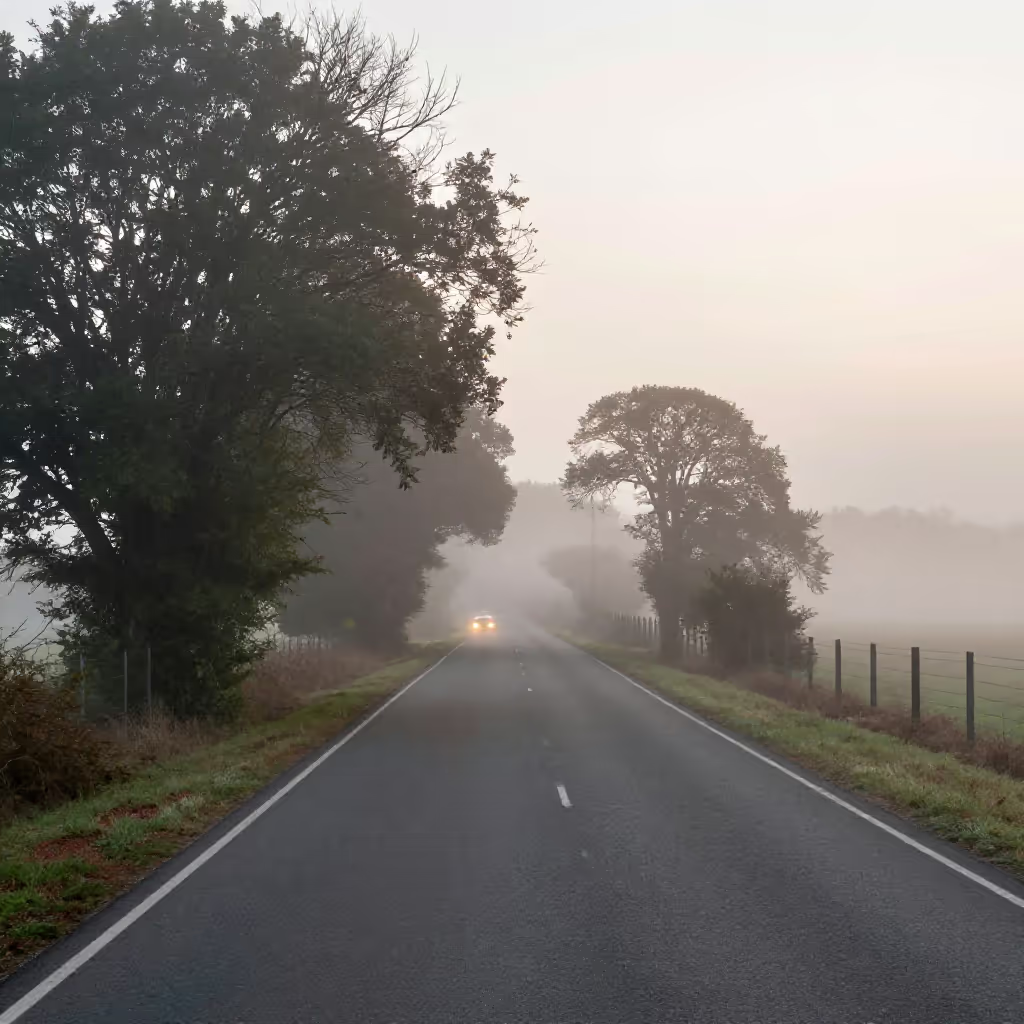
When 'Schleier' (veil) is used with abstract terms such as 'Geheimnis' (secret/mystery), 'Vergessen' (forgetting), or 'Schweigen' (silence), the figurative meaning is intended. If, on the other hand, it appears with words like 'Nebel' (fog) or 'Rauch' (smoke), it refers to an actual obstruction of visibility.
EXAMPLE
Über seiner Vergangenheit lag ein Schleier des Vergessens.
A veil of oblivion lay over his past.
Typical verbs
In the context of clothing, the most common verbs are 'einen Schleier tragen' (to wear a veil) and 'den Schleier lüften' (to lift the veil). The phrase 'den Schleier lüften' can also be used figuratively and then means to reveal a secret.
EXAMPLE
Die Ermittler hoffen, bald den Schleier über diesem Fall lüften zu können.
The investigators hope to lift the veil over this case soon.
Compare with
near_synonym · confusable
Schleier vs Rauch
smoke
'Rauch' and 'Schleier' can both refer to something visible in the air that makes it harder to see. However, 'Rauch' is produced by fire or combustion. Here, 'Schleier' refers more to a thin layer of fog, haze, or smoke that acts like a light curtain. Learners may confuse the words when smoke is only thinly spread through the air. In that case, you can speak figuratively of a 'Schleier'. If the cause is fire, 'Rauch' is more precise; if the thin, obscuring layer is what matters, 'Schleier' fits better.
Schleier
Ein leichter Schleier aus Rauch lag über der Straße.