

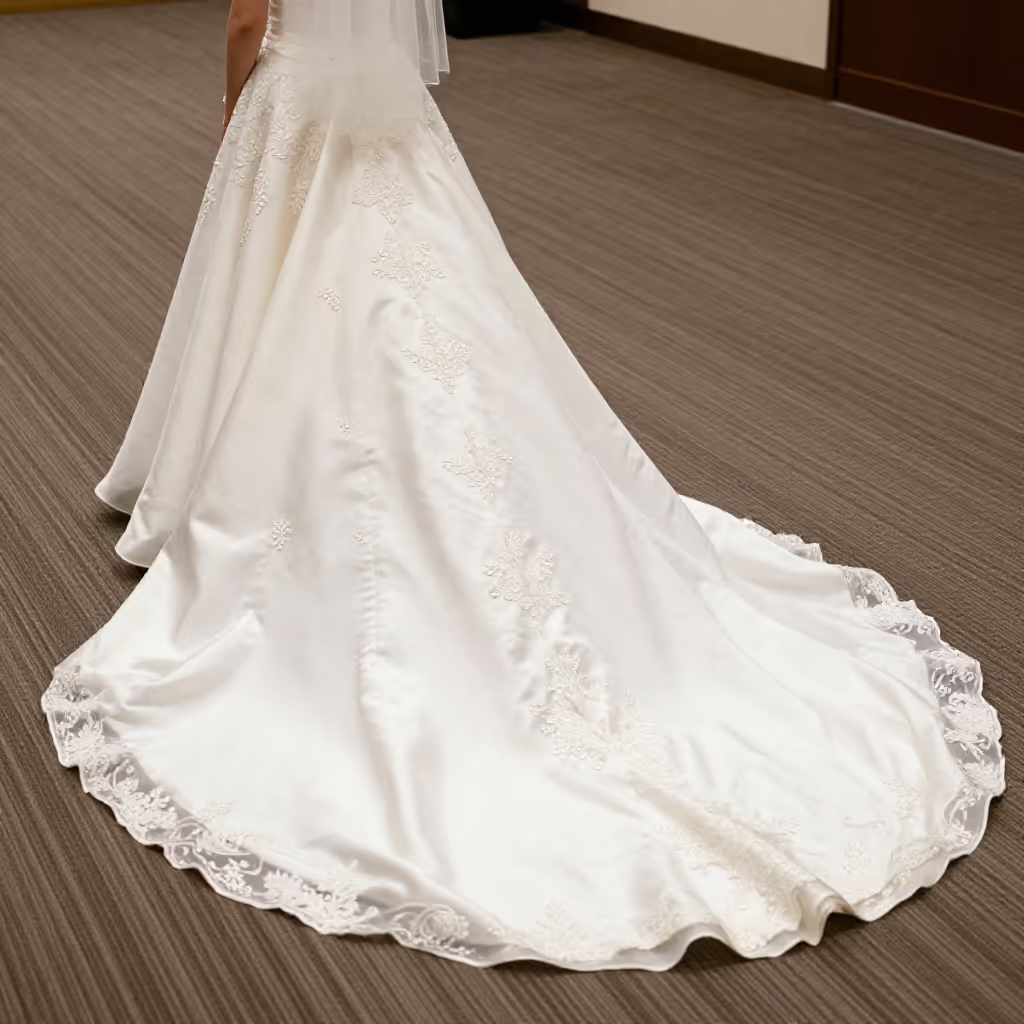
die Schleppe
train
The long back part of a formal dress, coat, or cloak that lies on the floor and trails behind.
Das Brautkleid hatte eine beeindruckende, mehrere Meter lange Schleppe.
The wedding dress had an impressive train several meters long.
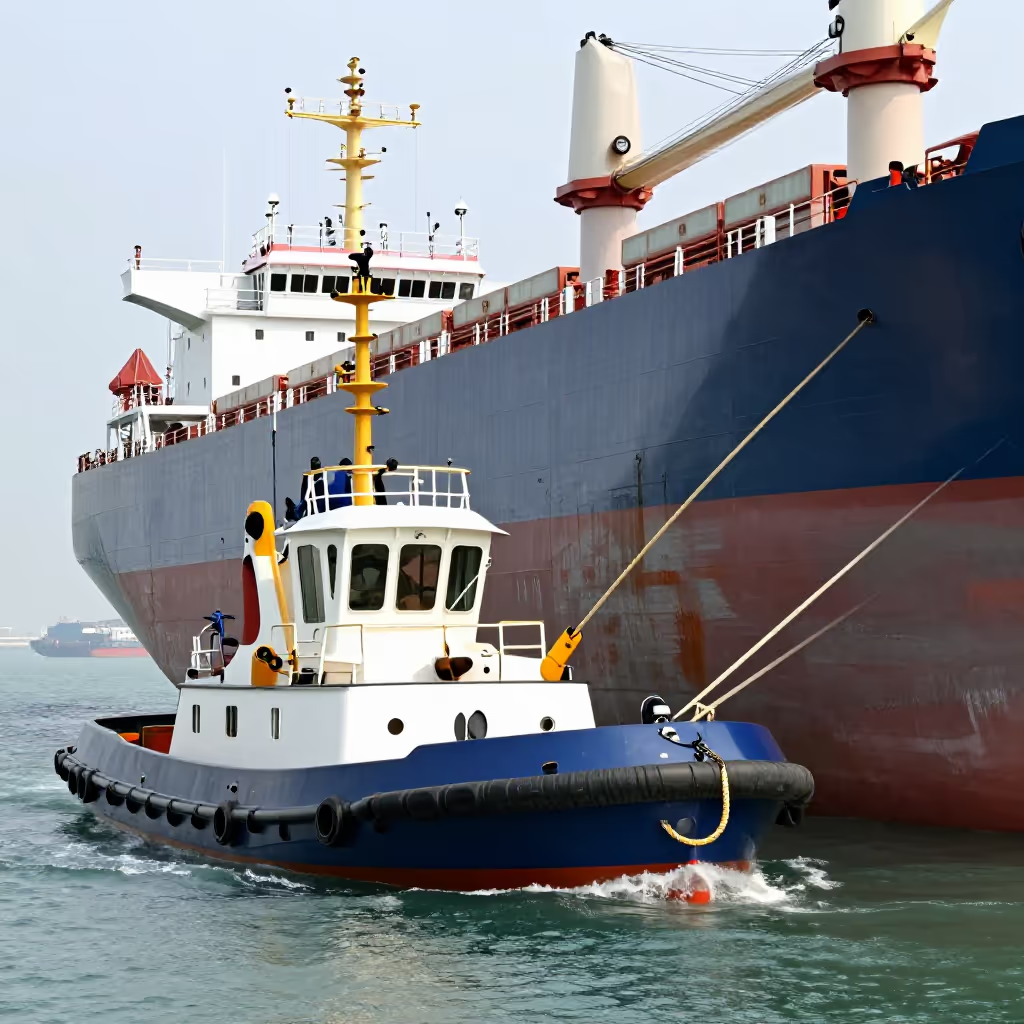
train / towline
Loading your saved state.
train
The long back part of a formal dress, coat, or cloak that lies on the floor and trails behind.
Das Brautkleid hatte eine beeindruckende, mehrere Meter lange Schleppe.
The wedding dress had an impressive train several meters long.

Both meanings of 'die Schleppe' (train/towline) derive from the verb 'schleppen' (to drag/haul), which means 'to pull something heavy' or 'to drag something behind oneself.' In one case, part of a dress is dragged along; in the other, an entire ship is pulled.
Die Kinder mussten helfen, die lange Schleppe des Brautkleides zu tragen.
The children had to help carry the long train of the wedding dress.
You can easily recognize the meaning from the context. Words like 'Kleid' (dress), 'Hochzeit' (wedding), or 'Mode' (fashion) point to the clothing part. Words like 'Schiff' (ship), 'Hafen' (harbor), 'Seil' (rope), or 'Schlepper' (tugboat) point to the rope used for pulling.
Ihr Ballkleid hatte eine elegante Schleppe aus Seide.
Her ball gown had an elegant silk train.
In maritime contexts, there is the fixed expression 'ein Schiff an die Schleppe nehmen' (to take a ship in tow). It means to pull or tow another ship with a rope.
Ein Rettungsboot nahm das Segelboot bei starkem Wind an die Schleppe.
A rescue boat took the sailboat in tow in strong winds.
rope
'Tau' and 'Schleppe' can both mean a strong rope, especially when something heavy or a vehicle is being pulled. 'Tau' is the more general term for a very thick, strong rope, for example on a ship or when climbing. 'Schleppe' is more specific in this meaning: it is used for towing, especially ships or vehicles. There is a risk of confusion because both can look like a strong rope. If only the rope itself is important, 'Tau' usually fits better; if the act of towing is the main focus, 'Schleppe' is more precise.

Mit der Schleppe wurde das beschädigte Boot langsam in den Hafen gezogen.
The damaged boat was slowly pulled into the harbor with the towline.
Der Matrose befestigt das Boot mit einem dicken Tau am Steg.
The sailor ties the boat to the dock with a thick rope.