

die Schmelze
melting
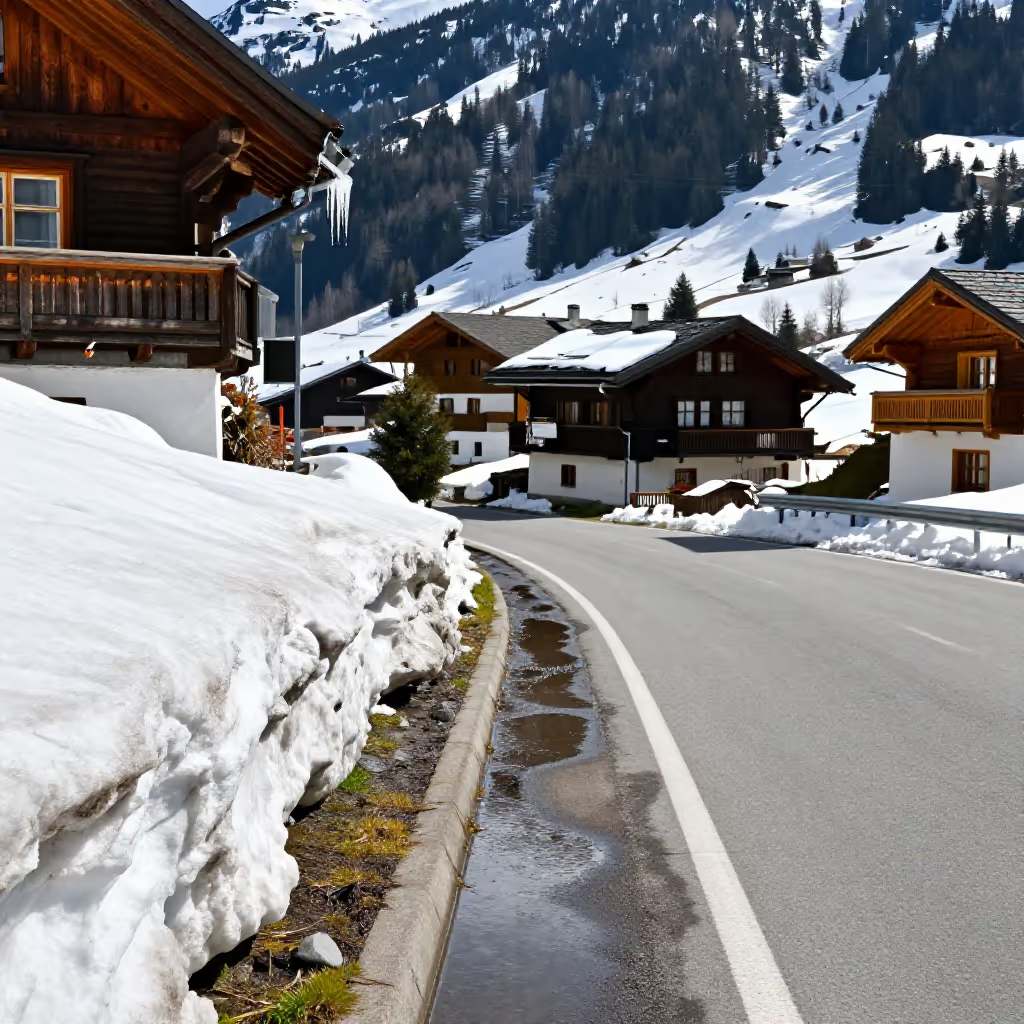
The process of solid substances melting due to the effect of heat, especially snow and ice.
Die Schneeschmelze im Frühling führt oft zu Hochwasser in den Tälern.
The snowmelt in spring often leads to flooding in the valleys.
melting / melt
Loading your saved state.
melting
The process of solid substances melting due to the effect of heat, especially snow and ice.
Die Schneeschmelze im Frühling führt oft zu Hochwasser in den Tälern.
The snowmelt in spring often leads to flooding in the valleys.

The noun 'die Schmelze' (melting/melt) is derived directly from the verb 'schmelzen' (to melt). It describes either the process of melting, the melted material, or the place where melting takes place.
Durch die Hitze des Feuers begann das Plastik zu schmelzen.
The heat of the fire caused the plastic to start melting.
This meaning almost always refers to natural phenomena. You can recognize it from words like 'Schnee' (snow), 'Eis' (ice), 'Gletscher' (glacier), or from the context of 'Frühling' (spring) and 'Berge' (mountains). The word 'Schneeschmelze' (snowmelt) is often used.
Wegen der starken Schmelze ist der Flusspegel gefährlich angestiegen.
Because of the heavy melting, the river level has risen dangerously.
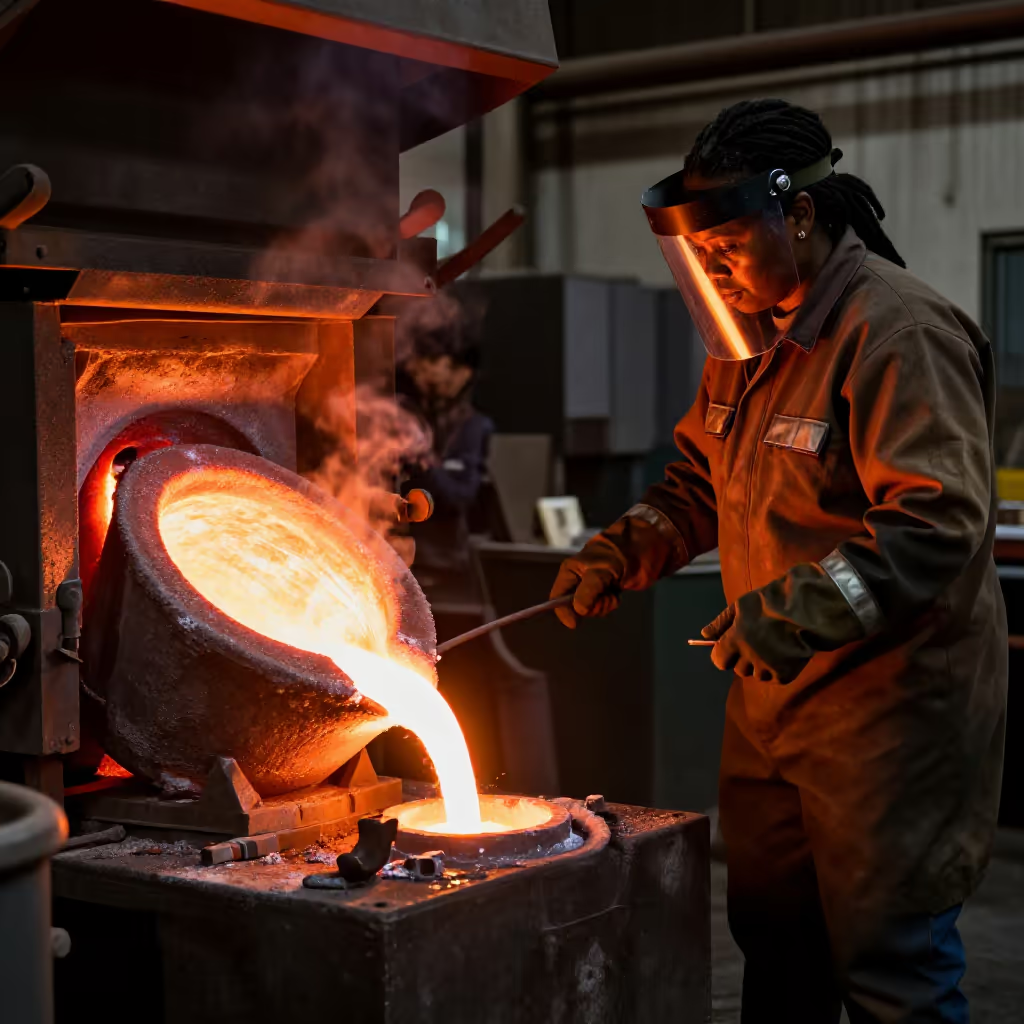
In this meaning, the word is found in technical or industrial contexts. Signal words are materials such as 'Metall' (metal), 'Glas' (glass), 'Stahl' (steel), or 'Erz' (ore), as well as adjectives like 'flüssig' (liquid) or 'heiß' (hot).
Die heiße Schmelze aus dem Ofen hatte eine Temperatur von über 1000 Grad.
The hot melt from the furnace had a temperature of over 1000 degrees.
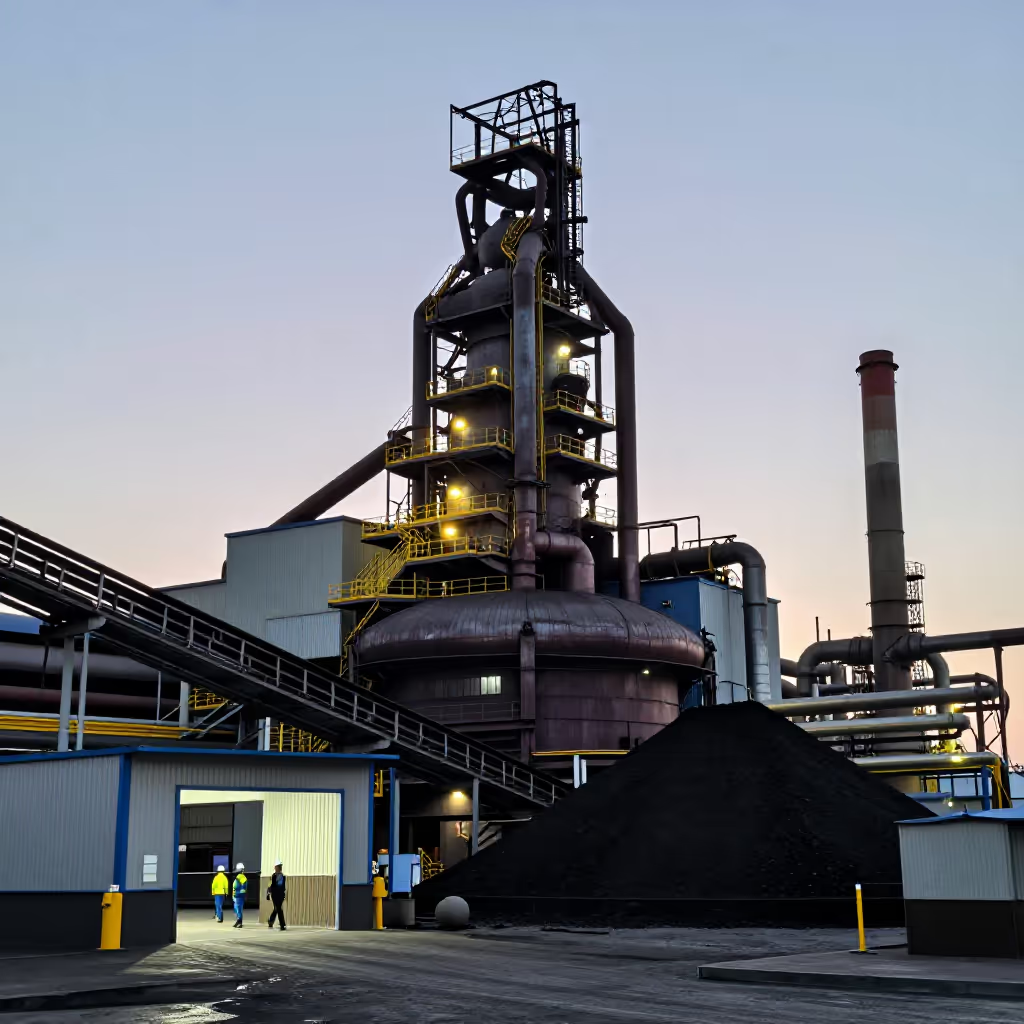
When 'die Schmelze' (the smelting works) refers to a place, it is treated like a building. You can recognize this meaning from prepositions of location, e.g. 'in der Schmelze arbeiten' (to work in the smelting works) or 'zur alten Schmelze fahren' (to drive to the old smelting works).
Die alte Schmelze wurde zu einem Museum umgebaut.
The old smelting works was converted into a museum.
hut / lodge
'die Hütte' and 'die Schmelze' can both refer in industry to a place where metal or ore is processed. In this sense, 'Hütte' is often a short form for 'Eisenhütte' (ironworks) or 'Stahlhütte' (steelworks). 'Schmelze' can also mean a facility where material is melted. The words can be confused because they overlap in technical contexts. 'Hütte' tends to emphasize the whole operation for producing or processing metal. 'Schmelze' is especially appropriate when the melting itself, or the corresponding facility, is the focus.

Die neue Schmelze verarbeitet täglich mehrere Tonnen Erz.
The new smelting works processes several tons of ore every day.
In der alten Hütte wurde früher Eisen verarbeitet.
Iron used to be processed in the old steelworks.