

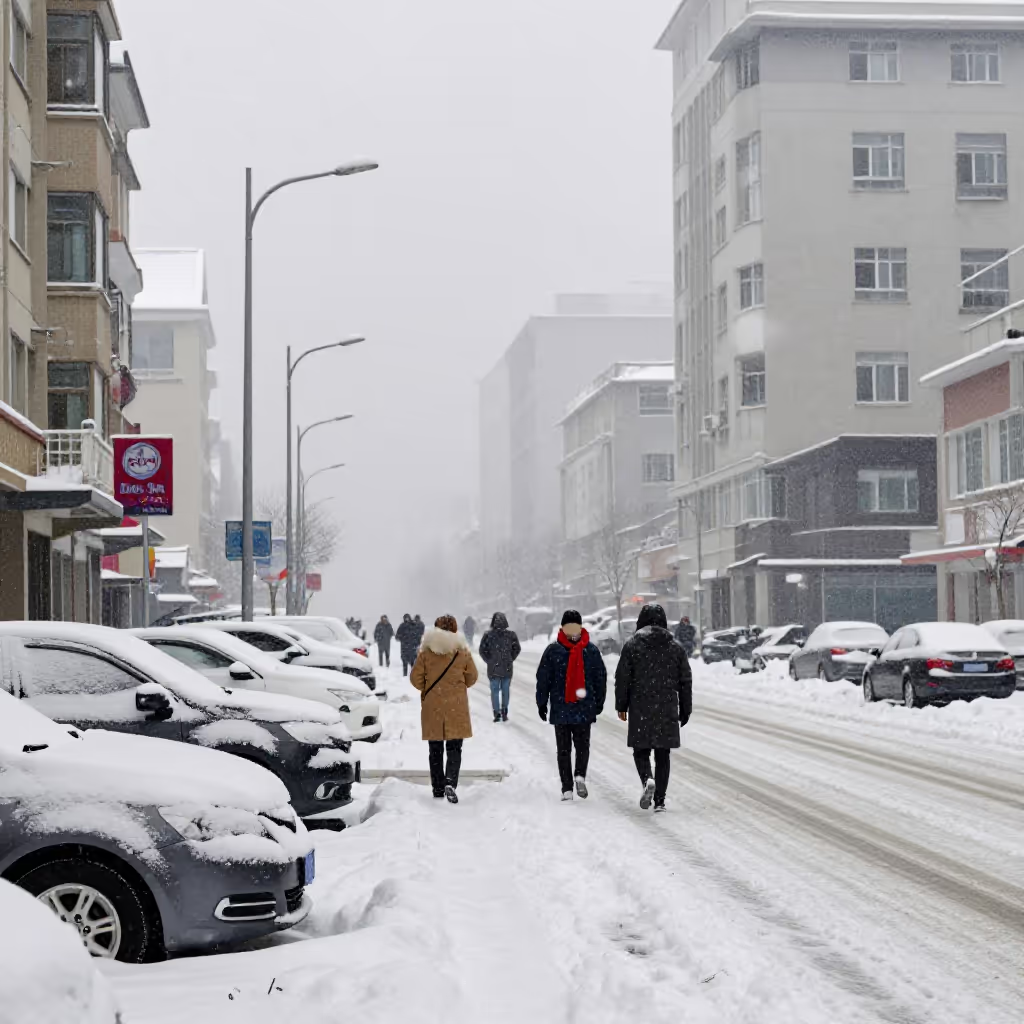
schneien
to snow
The falling of snow from the clouds. It is usually used impersonally with “es” (it).
EXAMPLE
Morgen soll es den ganzen Tag schneien.
Tomorrow it’s supposed to snow all day.
to snow
Loading your saved state.
to snow
The falling of snow from the clouds. It is usually used impersonally with “es” (it).
Morgen soll es den ganzen Tag schneien.
Tomorrow it’s supposed to snow all day.

to come pouring in
Colloquial and figurative for the unexpected and sudden arrival of something, often in large quantities. Usually used for people or mail/bills.
Gestern Abend sind plötzlich fünf alte Freunde bei mir hereingeschneit.
Yesterday evening, five old friends suddenly came pouring into my place.
The verb “schneien” belongs to the word family of “der Schnee” (snow). If you know the noun, you can easily work out the meaning of the verb.
Die Kinder hoffen, dass es an Weihnachten schneit.
The children hope that it snows at Christmas.
In the literal meaning “snow falls,” “schneien” is almost always used as an impersonal verb with the pronoun “es” (it) as the subject. You do not say “Der Himmel schneit” (the sky snows), but “Es schneit” (It is snowing).
Als wir aufwachten, hatte es die ganze Nacht geschneit.
When we woke up, it had snowed all night.
The figurative meaning is colloquial. It is often used with the separable prefix “herein-” as “hereinschneien” (to drop in / come pouring in) to describe a spontaneous, unannounced appearance.
Gestern Abend sind plötzlich meine Nachbarn zum Kartenspielen hereingeschneit.
Yesterday evening my neighbors suddenly dropped in to play cards.