

schnitzen
to carve
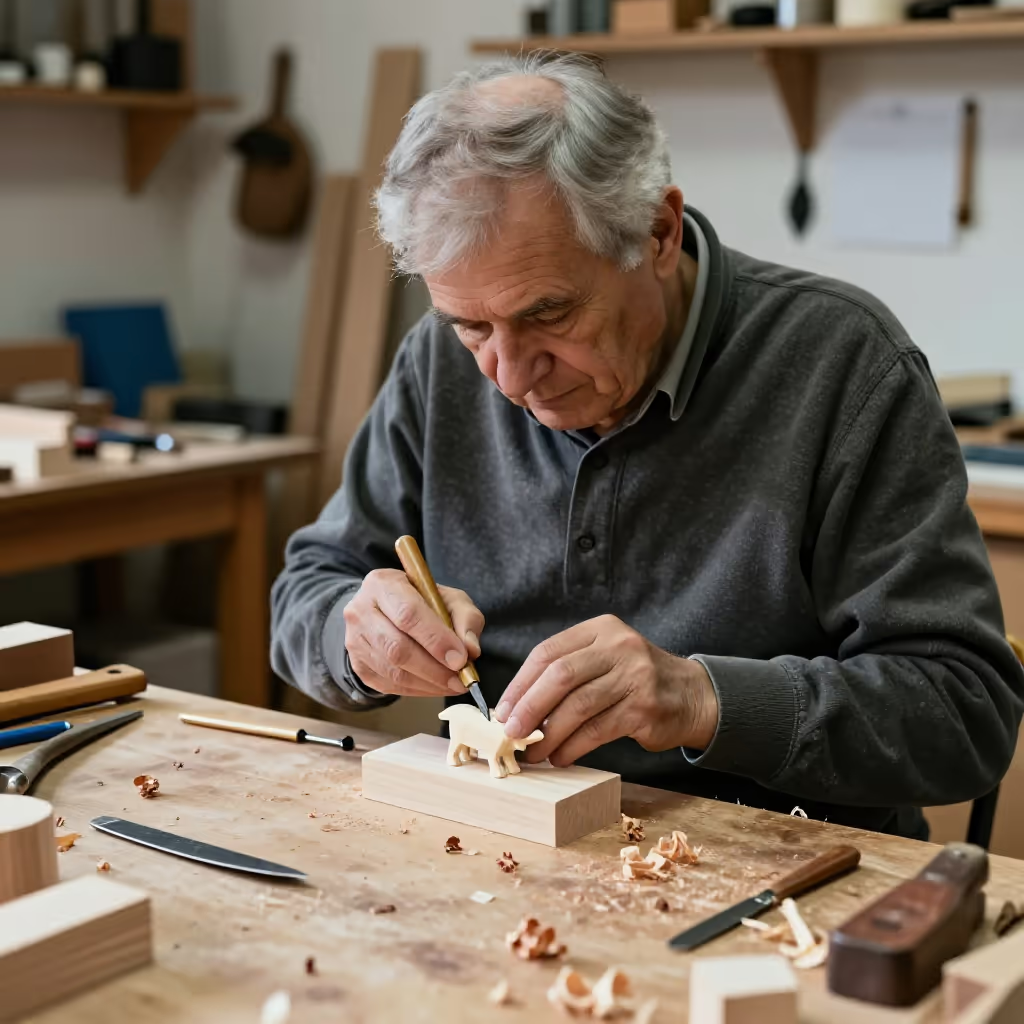
To work material, usually wood, with a knife or another sharp tool in order to create a shape, figure, or ornament.
EXAMPLE
Für seinen Enkel schnitzte er ein kleines Holzpferd.
He carved a small wooden horse for his grandson.
to carve
Loading your saved state.
to carve
To work material, usually wood, with a knife or another sharp tool in order to create a shape, figure, or ornament.
Für seinen Enkel schnitzte er ein kleines Holzpferd.
He carved a small wooden horse for his grandson.
to cut
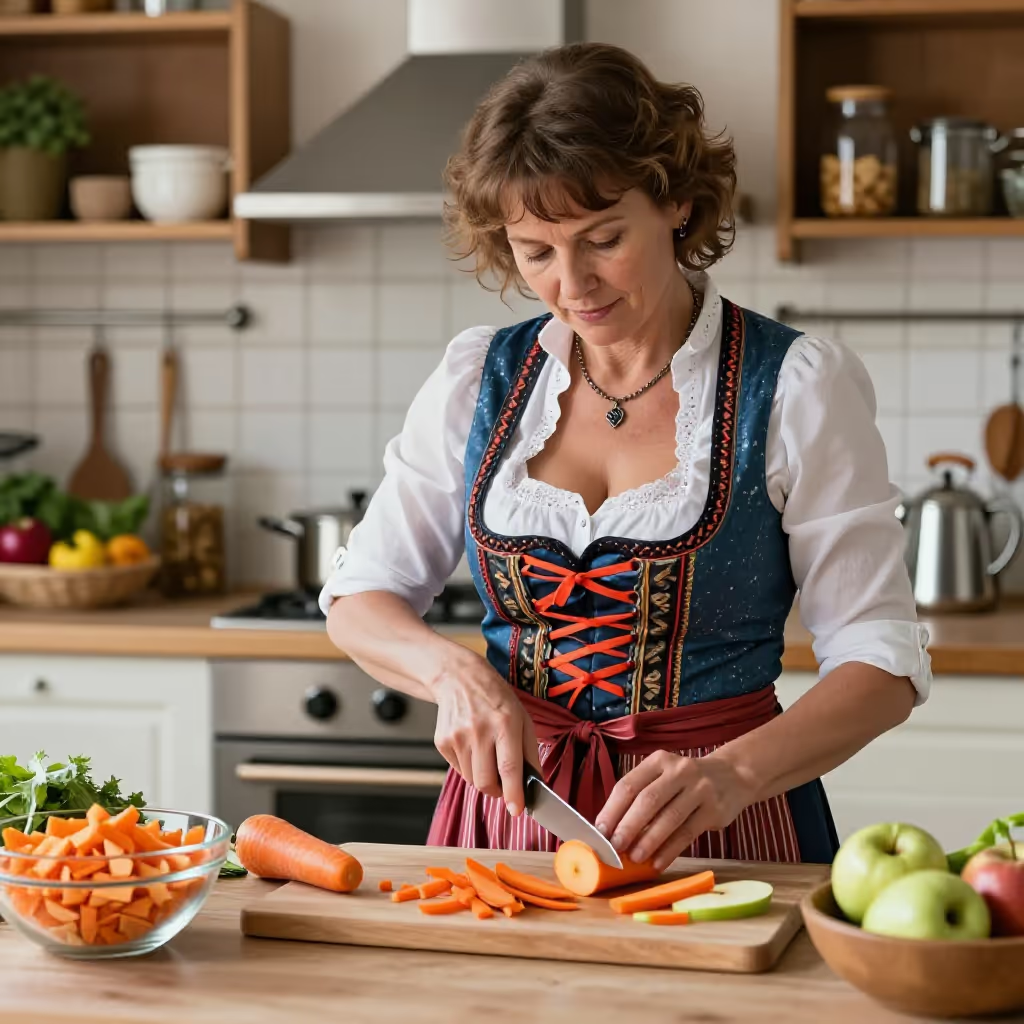
Regional, especially in southern Germany and Austria, for cutting vegetables or fruit into small pieces or strips.
Kannst du für den Salat noch schnell die Karotten schnitzen?
Can you quickly cut the carrots for the salad?
When naming the material something is carved from, you use the preposition 'aus' (from/out of). The created object is in the accusative.
Sie schnitzt eine kleine Eule aus einem Stück Lindenholz.
She carves a small owl from a piece of limewood.
'Schnitzen' (to carve) is most often associated with wood. Typical objects that you carve are 'Figuren' (figures), 'Tiere' (animals), 'Masken' (masks), or 'Ornamente' (ornaments). At Halloween, it is also common to carve faces into pumpkins.
Die Kinder haben im Herbst lustige Gesichter in Kürbisse geschnitzt.
In autumn, the children carved funny faces into pumpkins.
Careful: In southern Germany, Austria, and Switzerland, 'schnitzen' can also mean to cut vegetables or fruit into pieces. In other regions of Germany, only the verb 'schneiden' (to cut) is used for this.
Für das Gulasch müssen wir noch die Zwiebeln schnitzen.
For the goulash, we still have to cut the onions.
The person who carves is called 'der Schnitzer' (carver). The same word also occurs in the fixed expression 'einen Schnitzer machen', which means 'to make a mistake'—like a woodcarver who makes a wrong cut and ruins the workpiece.
Bei der Prüfung habe ich einen dummen Schnitzer gemacht.
I made a stupid mistake on the exam.
to cut
Schneiden generally refers to dividing or working on something with a sharp tool. Schnitzen is more specific: it usually involves working on wood with a knife to create a particular shape, figure, or decoration. Schnitzen is the appropriate word for gradually shaping the material.

Jonas schnitzt mit dem Messer eine kleine Figur aus dem Holzstab.
Jonas carves a small figure out of the wooden stick with a knife.
Jonas schneidet mit dem Messer ein kurzes Stück vom Holzstab ab.
Jonas cuts a short piece off the wooden stick with a knife.