

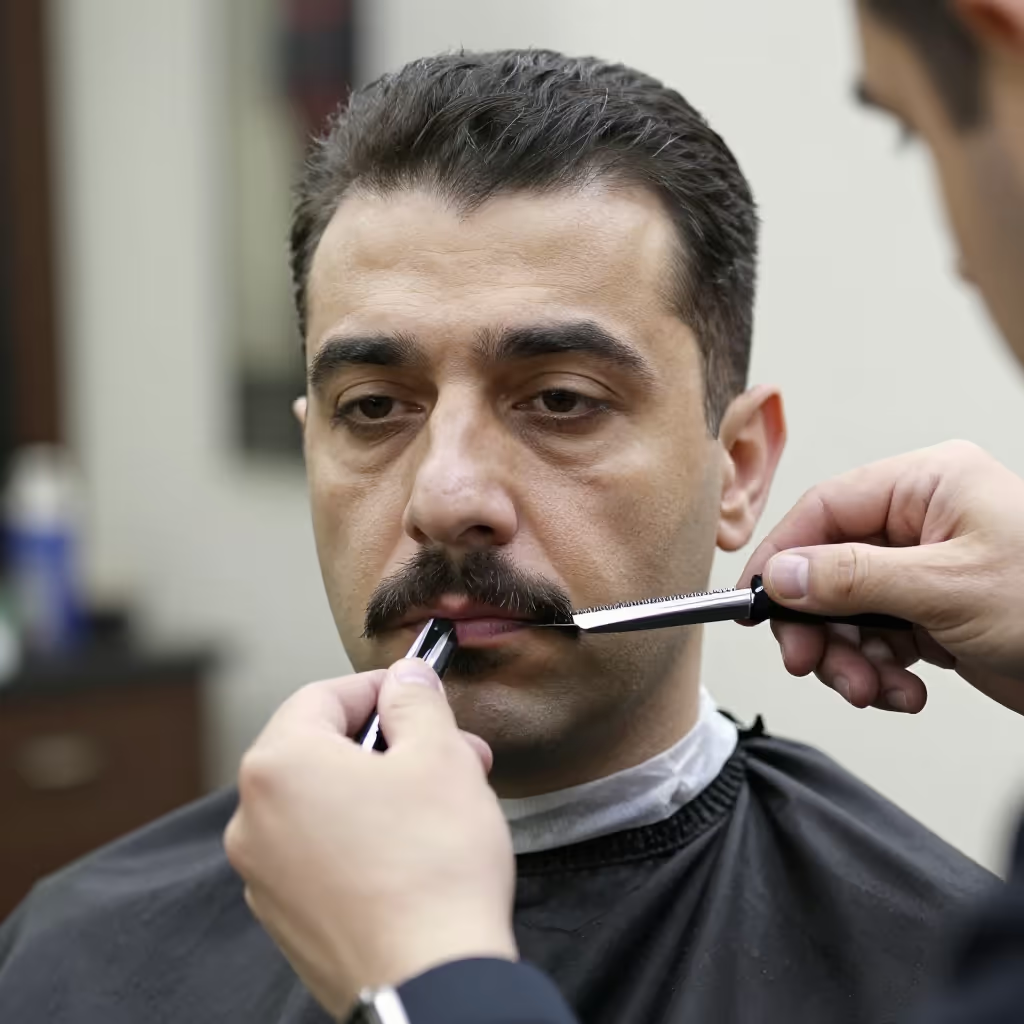
der Schnurrbart
mustache
The hair that grows on men's upper lip.
EXAMPLE
Er trägt einen sorgfältig gezwirbelten Schnurrbart.
He wears a carefully twirled mustache.
mustache / whiskers
Loading your saved state.
mustache
The hair that grows on men's upper lip.
Er trägt einen sorgfältig gezwirbelten Schnurrbart.
He wears a carefully twirled mustache.
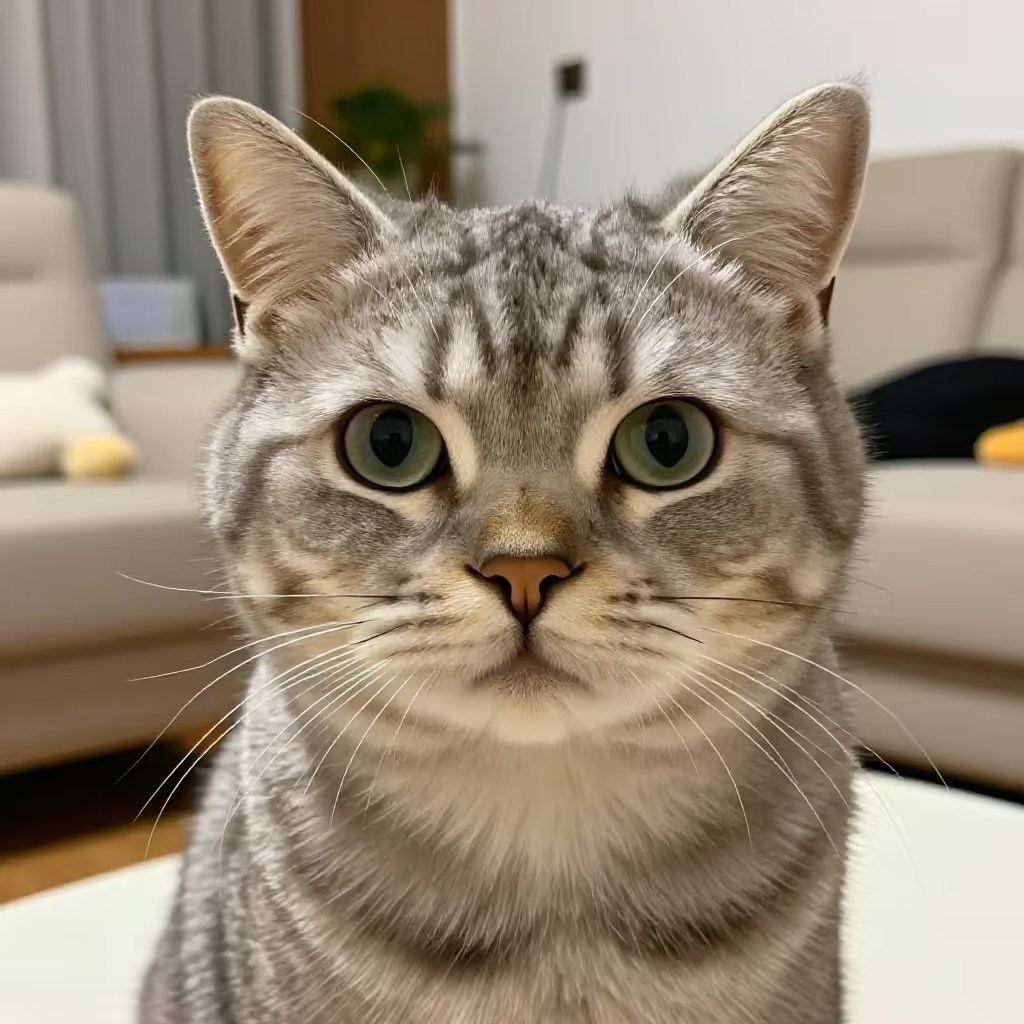
whiskers
The long, stiff sensory hairs around the snout of certain animals, such as cats or seals.
Die Katze orientiert sich mit ihrem Schnurrbart im Dunkeln.
The cat uses its whiskers to find its way in the dark.
The word is made up of 'Schnurr-' and 'Bart' (beard). You can imagine it as a kind of 'beard in the shape of a cord' above the mouth. That helps you remember its position.
Viele berühmte Detektive in Büchern tragen einen Schnurrbart.
Many famous detectives in books have a mustache.
The context makes clear which meaning is intended. If you are talking about a man, it is a mustache on the face. If you are talking about an animal like a cat or a seal, the sensory hairs are meant.
Mein Großvater hatte einen großen, grauen Schnurrbart.
My grandfather had a big gray mustache.
When referring to a man's facial hair, the verbs 'tragen' (to wear), 'sich wachsen lassen' (to grow), 'stutzen' (to trim), or 'rasieren' (to shave) are often used.
Er überlegt, ob er sich einen Schnurrbart wachsen lassen soll.
He is thinking about whether he should grow a mustache.
beard
Bart is the general term for facial hair and, when used on its own, is often understood as hair growth on the chin and cheeks. Schnurrbart refers unambiguously only to the hair above the upper lip. Use Bart for all facial hair and Schnurrbart for this limited area.
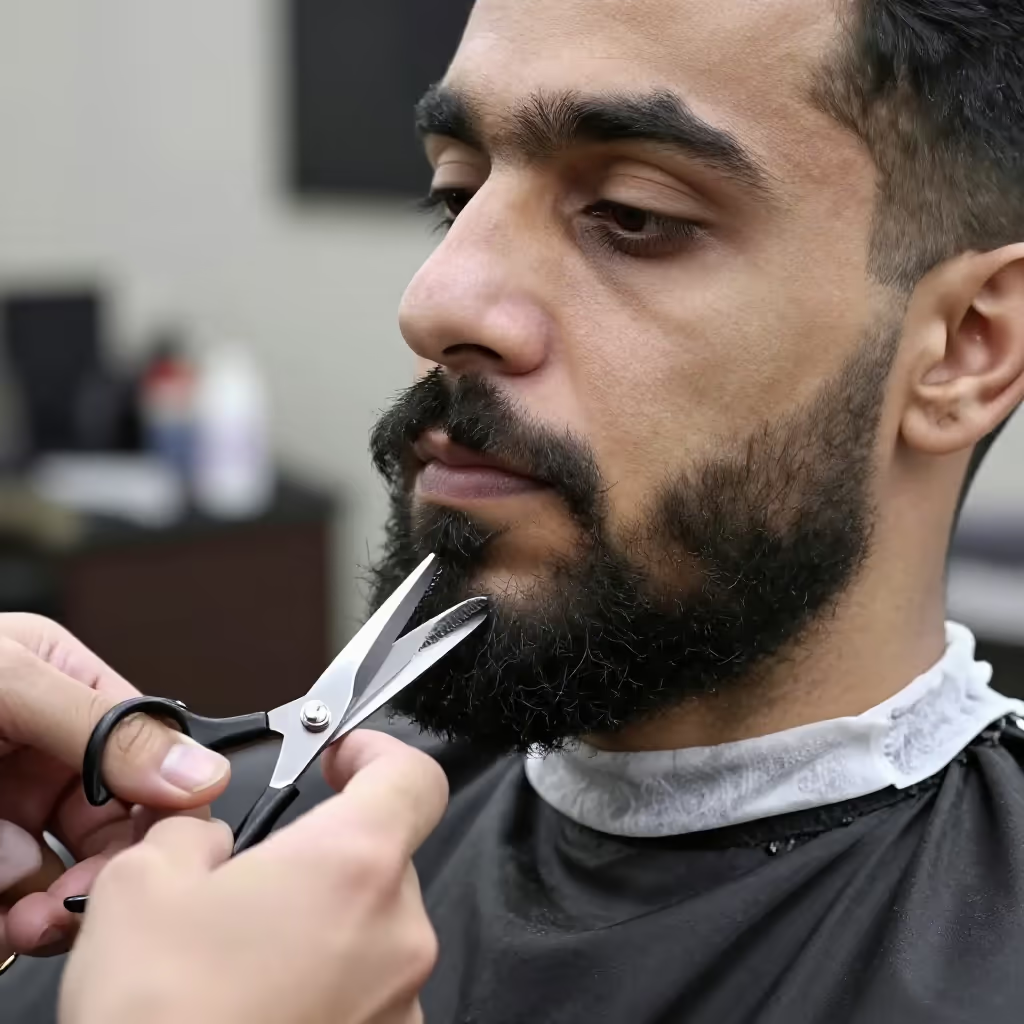
Nach dem Urlaub trägt Paul einen schmalen Schnurrbart auf der Oberlippe.
After the vacation, Paul is wearing a thin mustache above his upper lip.
Nach dem Urlaub trägt Paul einen dichten Bart an Kinn und Wangen.
After the vacation, Paul is wearing a thick beard on his chin and cheeks.