


der Schopf
shock of hair
A thick tuft of hair on a person's head, often somewhat messy.
EXAMPLE
Der Wind zerzauste seinen blonden Schopf.
The wind tousled his blond shock of hair.
tuft / crest
Loading your saved state.
shock of hair
A thick tuft of hair on a person's head, often somewhat messy.
Der Wind zerzauste seinen blonden Schopf.
The wind tousled his blond shock of hair.

to seize an opportunity
To seize a favorable opportunity decisively and immediately.
Als sich die Chance für das Praktikum bot, hat sie die Gelegenheit sofort beim Schopf gepackt.
When the chance for the internship came up, she immediately seized the opportunity.

crest
A tuft of feathers on a bird's head.
Der Wiedehopf ist an seinem auffälligen Schopf leicht zu erkennen.
The hoopoe is easy to recognize by its striking crest.
The most common use of 'Schopf' is in the fixed idiom 'die Gelegenheit beim Schopf packen' (to seize the opportunity). It means to make use of a good chance immediately and decisively.
Als das Jobangebot kam, habe ich die Gelegenheit sofort beim Schopf gepackt.
When the job offer came, I immediately seized the opportunity.
You can recognize the meaning from context. If people are being talked about, a tuft or shock of hair is meant. In connection with birds, feathers are meant. The idiom 'beim Schopf packen' always refers to an opportunity.
Er strich sich durch den dichten Schopf.
He ran his hand through his thick shock of hair.
When 'Schopf' is used for human hair, it often sounds somewhat poetic or slightly old-fashioned. It usually describes full, thick, and often somewhat messy hair.
Das kleine Kind hatte einen wilden Schopf aus roten Locken.
The little child had a wild shock of red curls.
braid / loaf
Zopf and Schopf can both refer to hair on the head. A Zopf is made by braiding several strands of hair, whereas a Schopf is a thick, often somewhat messy tuft of hair. The decisive difference is whether the hair is braided.
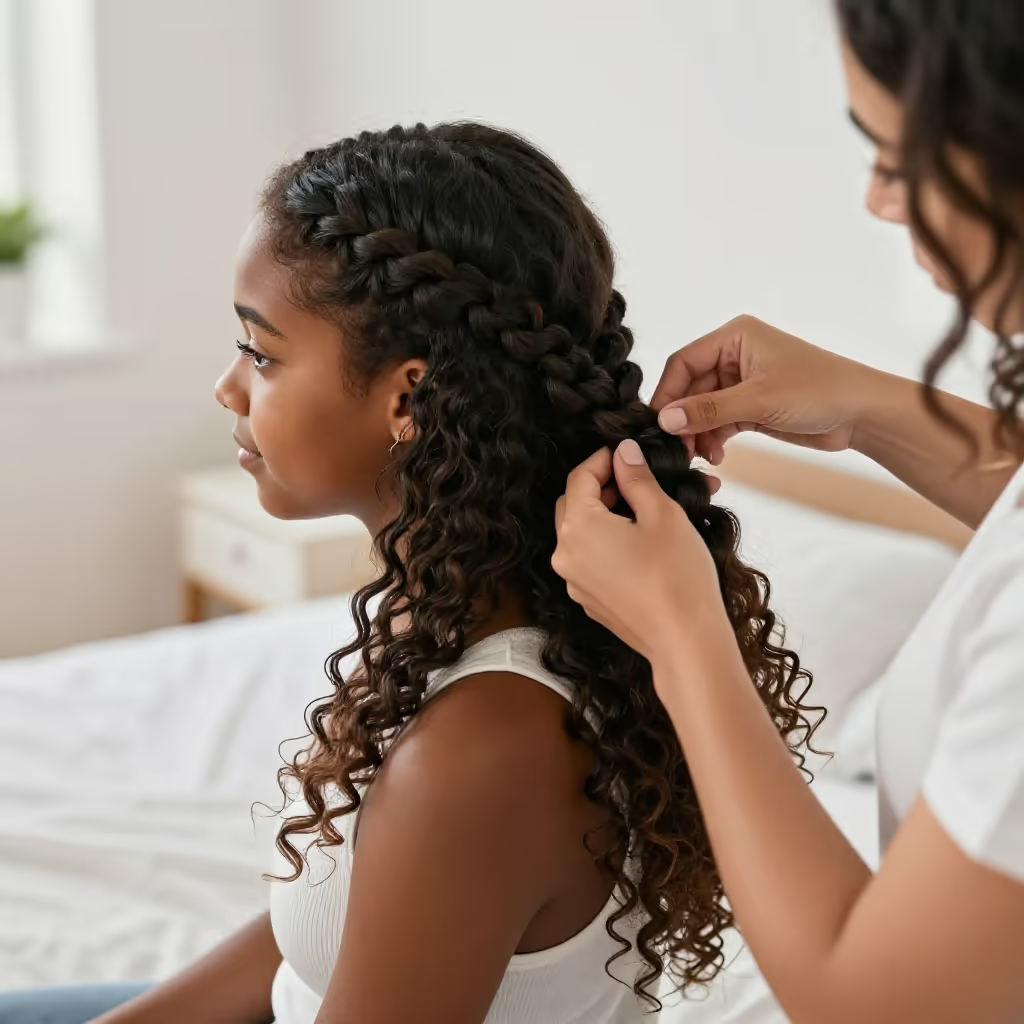
Nach dem Aufstehen stand ihr ein unordentlicher Schopf vom Kopf ab.
After she got up, a messy shock of hair was sticking up from her head.
Sie flocht ihr langes Haar zu einem Zopf.
She braided her long hair into a braid.