

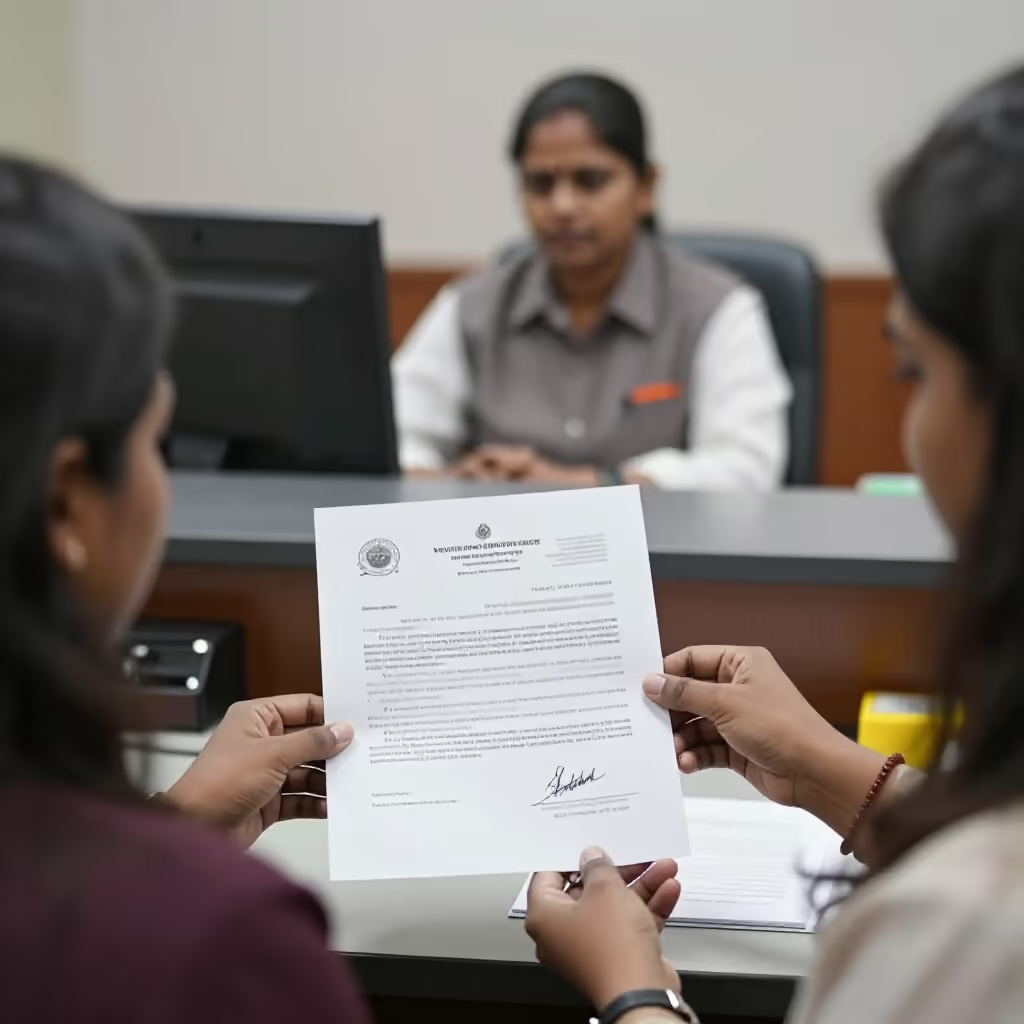
An official or formal document that is written or printed. The term is often used in legal or administrative contexts.
example
Der Notar überreichte ihm das wichtige Schriftstück zur Unterschrift.
The notary handed him the important document to sign.
Usage tips
Word composition
'Schriftstück' (document) is made up of 'die Schrift' (writing) and 'das Stück' (piece). So it literally means a 'piece of writing.'
EXAMPLE
Auf dem Tisch lag ein altes Schriftstück mit unleserlicher Handschrift.
There was an old document with illegible handwriting lying on the table.
Register and style
This word belongs to formal language, especially administrative and legal language. In everyday speech, you would more likely say 'Dokument' (document), 'Brief' (letter), or 'Text' (text). Use 'Schriftstück' (document) for official papers.
EXAMPLE
Der Anwalt prüfte das Schriftstück auf mögliche Fehler.
The lawyer checked the document for possible errors.
Typical verbs
In official contexts, 'Schriftstück' (document) is often combined with verbs such as 'aufsetzen' (to draft/create), 'unterzeichnen' (to sign), 'überreichen' (to hand over), or 'prüfen' (to check).
EXAMPLE
Der Vertrag wurde als Schriftstück aufgesetzt und beiden Parteien zugeschickt.
The contract was drafted as a document and sent to both parties.
Compare with
near_synonym
Schriftstück vs Text
text
'der Text' and 'das Schriftstück' can both be something written. 'Der Text' is the more general word and mainly refers to the sentences and how they fit together. 'Das Schriftstück' sounds more formal and usually means a document, for example at a government office, in court, or in an official letter. In everyday language, you usually say 'Text' for a message or an article. When it is about an official paper, 'Schriftstück' is more precise.
Schriftstück
Im Rathaus wurde das Schriftstück gestern abgestempelt.
The document was stamped at city hall yesterday.
Text
Zum Üben schreibt die Chefin einen kurzen Text für das Team.
For practice, the boss writes a short text for the team.