

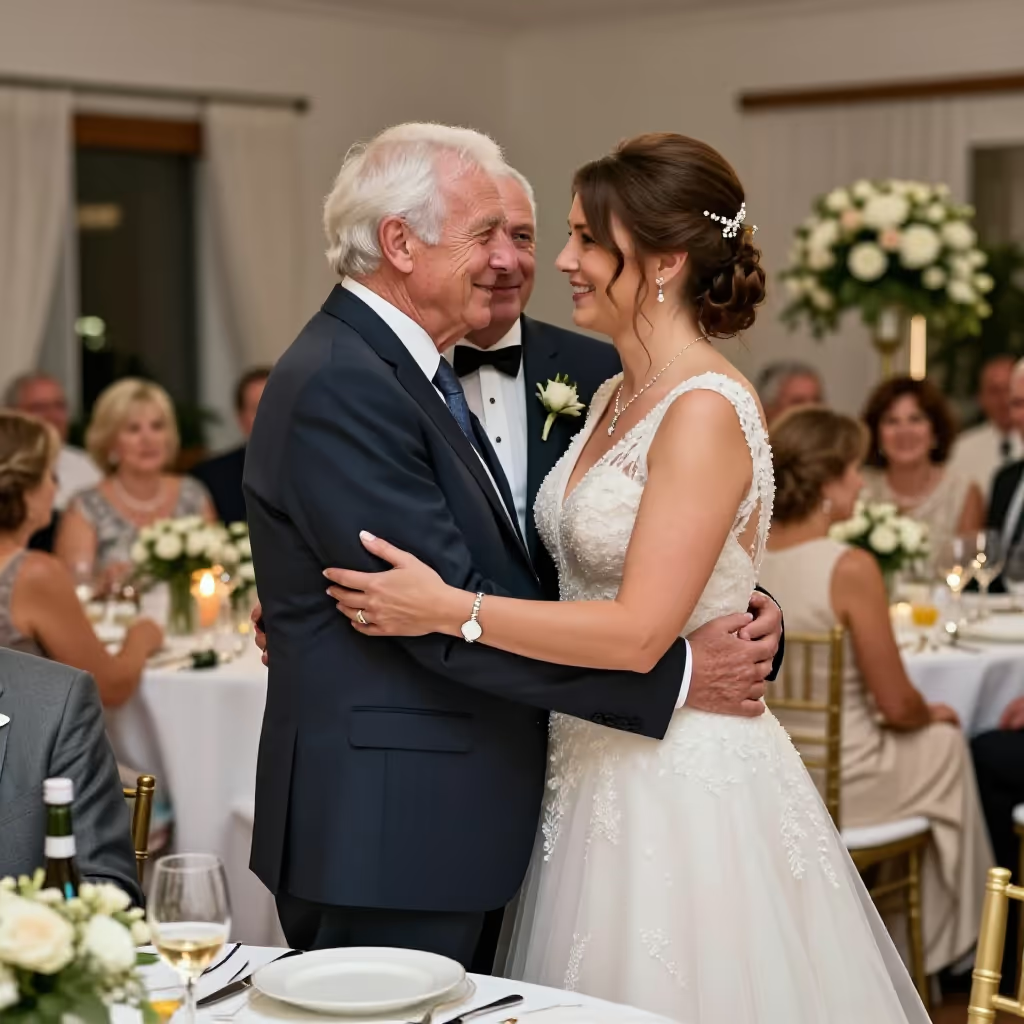
der Schwiegersohn
son-in-law
The husband of one's own daughter.
EXAMPLE
Am Wochenende besuchen uns unsere Tochter und unser Schwiegersohn.
Our daughter and our son-in-law are visiting us this weekend.
son-in-law
Loading your saved state.
son-in-law
The husband of one's own daughter.
Am Wochenende besuchen uns unsere Tochter und unser Schwiegersohn.
Our daughter and our son-in-law are visiting us this weekend.
The word is made up of the prefix 'Schwieger-' and 'Sohn' (son). 'Schwieger-' always refers to a family relationship that comes about through marriage (in-law), not through blood relation.
Mein Schwiegersohn ist ein sehr netter Mensch.
My son-in-law is a very nice person.
The prefix 'Schwieger-' is very useful. Once you have understood it, you can name the whole in-law family: 'die Schwiegermutter' (mother-in-law), 'der Schwiegervater' (father-in-law), and 'die Schwiegereltern' (parents-in-law).
Am Sonntag treffen wir die ganze Familie, auch meine Schwiegereltern.
On Sunday we are meeting the whole family, including my parents-in-law.
If the daughter is engaged but not yet married, people often say 'zukünftiger Schwiegersohn' (future son-in-law).
Mein zukünftiger Schwiegersohn kommt heute zum Abendessen.
My future son-in-law is coming for dinner today.